By Julie Schneider Ljubenkov (posted by D. Shaw)

A note to BAGSC members from the BAGSC Executive Board: Julie has the same email address, phone number and post office address as is listed in the roster. BAGSC is contributing a gift certificate to Target so that Julie and her husband can get things they need. If anyone would like to add to the gift certificate fund, please send checks made out to “The Botanical Artists Guild of Southern California” or “BAGSC” to Deborah Shaw, Treasurer. Please put a reference on the check to Julie and/or the fire. We will also be taking up a collection of art supplies for Julie at the January 19th BAGSC meeting. If you have any extra supplies please bring them to the meeting. Our thoughts and support are with Julie, her family and all of the victims of the fires as they work to put their lives back together.

Some of Julie’s artwork can be viewed on the BAGSC web site, at: http://www.bagsc.org/ljubenkov.html. This BAGSC gallery page has additional links to view Julie’s work on other sites as well.

On the night of October 23 we were asleep. Upon retiring we had felt fairly safe: all the big fires in San Diego County were at least 15 miles away and the wind was not blowing in our direction — plus the wind had died down and it was a beautiful, clear autumn afternoon. We did get a few things ready to evacuate earlier that day, since we thought it would be typical that some nut would try to start a fire here and it would be wise to be ready. We’ve been evacuated twice before in the last 13 years. It is a very tiring experience — like moving — so we didn’t do a complete job getting stuff ready to go because we were very tired. At 3:50 a.m. my husband woke up and opened the window, smelled smoke and saw an orange glow in the eastern sky. The winds had picked up and again were howling. We knew this meant we were probably going to lose our home and that we needed to get out quick. We called our next door neighbors and they had just woken up too.

We threw clothes and prescription drugs in waiting suitcases and made a total of three trips to each of our cars with the stuff we had waiting by the door — mostly stuff to keep us working. My husband is a marine biologist; he grabbed his microscope and some of his most important literature for identifying animals. For me, this was a couple of sketch books; some computer disks; some stuff for teaching which had been packed up already for next week’s classes; some botanical and landscape prints I had packed for an upcoming engagement; plus, our pre-packed fire suitcase with all our important papers and some photographs.

Those trips to the car took ten minutes. Within that time the flames surrounded the house on three sides. There was a large fire funnel tornado on the hill above the house which advanced towards us. Luckily our driveway was only burning on one side, and as we backed into the flames we knew the house would be gone. We filed down the dirt road behind other fleeing neighbors. There were no fire fighters in sight and no evacuation calls.

Our friends, the Marx’s (Wes Marx is author of Frail Ocean) had called us previously wondering how we were fairing with the winds and the fires. At 4:15 a.m. on the way out, unable to reach my husband on his cell phone and wondering if he had actually got out behind me, I pulled over to the side of the road and called them. They let us stay in their downstairs apartment for three weeks and took care of us for the first week, as we were zombie basket cases for a few days. They shopped for us, picked up our prescription drugs, and took us to the relief centers to get us started on the recovery process.

With the help of the insurance company, we are currently renting a small place while our manufactured home gets rebuilt. We hope to be back to our property in May 2008.

People have asked us what we need. Here is our current list. We don’t want anyone to feel compelled to get us anything, but maybe if you have two of something, or you would like to get us something on the list that would be wonderful. We know our insurance will not cover replacing the contents of our home, and we don’t qualify for FEMA or SBA, so we appreciate anything anyone wants to give us.

Here’s our current list:

  • Mattress pad, California King
  • Pillow liners, king size
  • Stepping stool for indoors
  • Wire brush (for cleaning up charred and burnt stuff)
  • Bottle brush, large and small sizes
  • Kitchen serving trays/or for eating (2 to 4)
  • Basting kitchen tool
  • Bread maker
  • Clothes line with wooden clothes pins
  • Indoor clothes drier/rack (wooden or metal)
  • Letter opener (2)
  • Colored folders with pockets for class outlines (10)
  • Copy holder for computer typing
  • Book ends
  • Head sets and microphone for landline phones
  • Blank cassette tapes
  • Electric pencil sharpener
  • River walker shoes, women’s size 7
  • Warm down coat – women’s medium size 12
  • Warm down coat – men’s XL or XXL
  • Women’s cotton socks, dark colors
  • Fax machine
  • Topo map program of California on CD for a PC computer
  • Pictures from magazines or calendars of flowers, landscapes, and animals (for my classes – we use these as image libraries)

I also miss all my 60’s and 70’s rock and roll music:
Elton John, The Beatles, James Taylor, Paul Simon, Gordon Lightfoot, ELO, Supertramp. Right now I can listen to both cassette tapes or CD’s.

Our very efficient and proactive Membership Chair, Joann Leonard sent out her annual email reminder notice for membership dues in early December. (Thank you Joann!)

You should be receiving your quarterly December 2007 issue of the ASBA newsletter soon, which announces a membership dues increase for 2008 of $20.00 for the national portion of the dues, approved at their annual Board meeting in Pittsburgh this past September.

At the BAGSC meeting in October, it was voted to keep our local chapter portion of the dues the same (please see your October BAGSC minutes).

What does this increase mean to you as a member of the Botanical Artists Guild of Southern California? It means that the cost of a dual ASBA/BAGSC membership will be $85 in 2008 ($60 ASBA + $25 BAGSC). Please send a check for $85 to Membership Chairperson, Joann Leonard at her address in the BAGSC roster, in order to continue your participation in two exciting international organizations. (The exceptions are those new members who joined the Guild in November and so have already paid their dues for the coming year.)

International members will pay $100 in 2008 ($75 ASBA + $25 BAGSC).

To the record number of BAGSC members who have responded promptly and early this year (thank you all!), please send your additional $20.00 to Joann. We apologize for any inconvenience this may cause.

If you have not yet had an opportunity to visit our website, www.bagsc.org please do so. As a member of the Botanical Artists Guild of Southern California you are entitled to your own gallery page where you can exhibit up to three images of your artwork on the website. Guidelines for submission can be found on the website. Just click the link “For Members Only.”

Thank you. We wish the best to you and yours during this season, and look forward to an exciting 2008.

Our BAGSC blog is a success! We’ve had a total of 812 visits. Our best day ever was the first 24 hours of our launch, when we received 234 visits. A warm welcome to those of you who have signed up to be contributors, and we’d like to encourage all of you who are “thinking about it” to join in anytime.

For those artists who may be interested in learning about gilding with 23K
gold. A free opportunity is being offered at the Getty Museum.

Each Thursday through January 17, artist Sylvana Barrett will be giving a
detailed demonstration of fine art gilding on parchment from 1:00–2:00 p.m.

This will be followed at 2:00–3:00 p.m by a demonstration of painting,
including the paint making process as it was done during the Renaissance.

Since the demonstrations are free, seating is limited and no reservations
are required, it would be a good idea to show up early. Parking at the Getty
is $8.00 per car. Admission is free.

This a demonstration, not a hands-on class. I have taken a number of classes
with Sylvana Barrett at the Getty and at the Huntington. She is excellent at
clearly conveying complex information.

Botanical Paintings from the garden of HRH The Prince of Wales

An exhibition at the Gallery of the New York School of Interior Design
January 23 – April 12, 2008

The Gallery of the New York School of Interior Design will exhibit 75 watercolors of plants, fruits and vegetables growing in the garden at Highgrove, the Gloucestershire residence of HRH The Prince of Wales. The works on view have been painted by some 55 international artists and depict a selection of botanical varieties from the 15 acres of Highgrove’s garden. The show, organized according to botanical classification, marks the first public display of the watercolors, which are owned by A. G. Carrick Limited and loaned with the kind permission of HRH The Prince of Wales.

Named after the Latin word for a collection of pictures of garden flowers, the Highgrove Florilegium unites two of the Prince’s passions – horticulture and painting – and is produced by some of today’s leading botanical artists. The works in the Florilegium revitalize the art of botanical drawing and painting, which can be traced back to the ancient Greeks but became especially popular during the 17th, 18th and 19th centuries.

HRH The Prince of Wales purchased Highgrove in 1980 and has been working to transform its grounds to reflect his gardening interests, and adhere to strict organic principles. Managed without the use of any artificial materials, chemical fertilizers or generically modified organisms, the garden at Highgrove is considered one of the finest gardens of our time.

Alecto Publications Limited of London has been commissioned to produce a two volume facsimile in a limited edition of 175 copies, the first volume of which will be available in 2008. The Prince’s Charities Foundation will receive a royalty on the sale of the books to support its activities.

The New York School of Interior Design is most grateful to HRH The Prince of Wales for giving permission for the watercolors to travel to New York so that they can be enjoyed by the American public.

The School also wishes to thank Condé Nast’s House & Garden for its support of the exhibition and the related public programs that will focus on horticultural and sustainable topics.

Public programs scheduled in conjunction with the exhibition include:

• Wednesday, January 23, 2008 at 6pm
David Howard, Head Gardener for HRH The Prince of Wales, on the Garden at Highgrove.

• Wednesday, February 20, 2008 at 6pm
Martin Lane Fox, architect and internationally acclaimed garden and landscape designer, on Garden Structure.

• Wednesday, March 12, 2008 at 6pm
Patrick Bowe on Gardens of the Roman World, one of the eight books he has authored or co-authored on garden history.

• Wednesday, April 9, 2008, at 6pm
Professor David Cadman, urban land economist, writer, senior fellow and former chairman of the Prince’s Foundation for the Built Environment, on Beauty as the Informing Principle of Sustainability.

• In addition, the Friends of Horticulture at Wave Hill will hold three lectures at the School on January 30th with Patricia Jonas, curator of the Brooklyn Botanic Garden Florilegium Collection; February 27th with Alexander Redford on the Jardin de Metis in Quebec; and March 19th with garden designer Pepe Maynard.

The Gallery of New York School of Interior Design
170 East 70th Street (between Lexington and Third Avenues), NY
Gallery Hours: Mon – Sat, 10 am – 5 pm, Closed Sundays & Holidays
Access: Free admission, open to the public, and wheelchair accessible
Public Info: 212.472.1500 www.nysid.edu

Founded in 1916, New York School of Interior Design is New York’s only private, not-for-profit college devoted entirely to interior design education.

Deborah Shaw

Note: A longer version of this article with detailed instructions has also been posted as a permanent “page” as one of the links across the top of the blog. Please click on the “How to Blog” tab in the upper right.

It’s finally here. The BAGSC Blog now officially replaces our quarterly newsletter. The advantage of our blog is that it allows us to really be a community — our members can comment and discuss articles; contribute stories and reviews; and let other members know about “calls for entries”, galleries, openings, and learning opportunities.

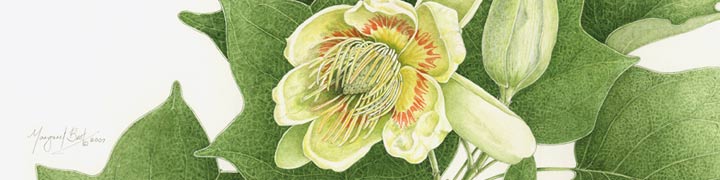
A big thank you to Sasha McMullen for contributing the funds to secure our blog URL address; to Margaret Best for allowing us to use part of a new painting (that hasn’t even been exhibited yet) for the first header; and to Clara Josephs, Arillyn Moran-Lawrence, and Suzanne Kuuskmae for contributing our first articles. An additional thank you goes to all of you for your patience in the time it’s taken for me (Deborah Shaw) to get this out.

How to read the blog:

We already have quite a bit of content posted. Only ten articles show up in the main window at a time. After that, the information is automatically archived by date and by the categories on the left side. Click on each category name to see all of the articles in that category. You can also search by any keywords you remember. The articles will always be in the archives; you’ll be able to go back and find previous information. Please explore the categories to make sure you don’t miss anything. If you click on the images, they’ll open in a new window at a larger size. (They may take a little while if you have a slower connection.)

In the “How to Blog” tab in the upper right corner, you’ll find instructions on how to:

  • Keep in touch
  • Please comment
  • Become a blogger yourself
  • Another way to contribute
  • Put your artwork in the header

To our members who aren’t connected to cyberspace:

No worries. We’ll periodically print out the blog and mail it to you.

Happy blogging to all!

Co-sponsored by the Santa Barbara Botanic Garden and BAGSC

Saturday and Sunday

January 26th and 27th, 9:00 a.m. – 3:30 p.m.

Whether you are a beginner who is interested in exploring botanical art, or are at a more experienced level, Margaret can help you improve your observational and technical skills to produce a scientifically accurate, yet appealing artwork. This workshop will focus on watercolor. Participants can purchase plants from the Santa Barbara Botanic Garden nursery, or bring a favorite specimen from home. Come and enjoy this great opportunity in the glorious setting of Santa Barbara.

Fee:
$125, members of the Santa Barbara Botanic Garden and/or BAGSC
$145, non-members

For registration, a materials list and further information, please call (805) 682-4726, ext. 102

BAGSC members may also contact Leslie Walker or Deborah Shaw with questions.

BAGSC member Irene Horiuchi was accepted into the Watercolor West XXXIX Annual Juried Exhibition with her painting Silent Watch. The exhibition is in Riverside, through January 26.

Watercolor West XXXIX Annual Juried Exhibition
Riverside Art Museum
December 6, 2007 – January 26, 2008
Monday – Saturday, 10 am – 4 pm
http://www.riversideartmuseum.org
951-684-7111

Directions and general information can be found at: http://www.riversideartmuseum.org/about/index.html

Guest Speaker, Linda Doll
The Watercolor Artist in the Digital Age
Saturday, December 8, 2007
3 pm – 5 pm

Exhibition Opening Reception
Saturday, December 8, 2007
5 pm – 7 pm

Save the Date! Anne-Marie will be at Robinson Gardens February 5 – 8, 2008. Look for more information later.

BAGSC members, Margaret Best and Elaine Searle exhibited at the 12th International Exhibition of Botanical Art & Illustration at the Hunt Institute at Carnegie Mellon University, Pittsburgh, PA. The opening reception of this international exhibit coincided with the 13h Annual Meeting & Conference of the American Society of Botanical Artists (September 27 – 29, 2007). The show is open from 30 September–20 December 2007 and features 111 artworks by 64 artists from 14 countries (Australia, Belgium, Brazil, Canada, China, England, France, Italy, Japan, Scotland, South Africa, Sweden, the United States, and Wales).

Elaine exhibited two paintings: Echeveria laui, and Astrophytum myriostigma var. nudum. Elaine’s web site can be viewed at: http://www.paintbotanical.com/

Margaret’s watercolor painting of Mespilus germanica (English medlar) can be viewed at her web site: http://www.bestbotanical.com/

Information about the exhibition can be viewed on the Hunt Institute for Botanical Documentation web site at: http://huntbot.andrew.cmu.edu/HIBD/Exhibitions/Exhibitions.shtml The catalogue for the show can also be purchased from their web site: http://huntbot.andrew.cmu.edu/HIBD/Publications/HI-Pubs/Pub-IE-09.shtml

Margaret also had two paintings in the ASBA show at the Horticultural Society of New York, Tenth Annual International Juried Exhibition, Malus baccata (Siberian Crabapple Blossoms) and Malus baccata (Siberian Crabapple Leaves).

On November 12 – 16, 2007, master colored pencil artist Gary Greene came to the Manhattan Beach Creative Arts Center in Manhattan Beach, California and taught how to paint startlingly realistic flowers with colored pencil. Using simple floral studies, the class studied the colored pencil techniques Gary uses in his floral paintings. A sample of Gary’s work is shown below (click on the image to open an enlargement in a new window):

Maturity becomes you

Participants in the class were enthusiastic. Some comments:

“I really enjoyed Gary Greene’s Colored Pencil Class. I am a rank beginner. He took me through the colored pencil techniques step by step. By the end of the week I felt I was able to turn out a pretty good product using the techniques he taught. He was very encouraging and always helpful. Thank you so much Gary! Your class was a fun, informative, and an all around wonderful experience!” — S. Tanner

“I feel this class was well worth the time as I did learn two interesting new techniques. One was with wax-based color pencils (using Bestine) and the other was with water soluble pencils using water in three different ways. I plan to use both techniques in the future for better effect with certain subjects. Happy coloring!” — R. Hopper

Thanks to Sue Kuuskmae for arranging the class.

Gary Greene

Gary Greene class

Gary Greene class

Suzanne Kuuskmae

An exhibition at the Creative Arts Center in Manhattan Beach by BAGSC closed Friday, November 16, after a month-long stay. The show got off to a great start at our reception in early October when visitors were treated to the saxophone playing of Ken Gable with refreshments planned by Cristina Baltayian and participating artists. Over 60 paintings were shown by 15 artists. The venue showed our work beautifully in their high ceiling-ed, well-lighted gallery.

During the month of October, free lectures were offered each Saturday. Several were under the auspices of the Botanical Garden, covering gardening with native California plants, container gardening, and water conservation. On October 20, guild members Suzanne Kuuskmae taught a drawing class, and Gloria Whea-Fun Teng taught a Chinese Brush Painting class to over 15 enthusiastic participants.

ASBA, Opening 2009 (Tentative Date)

To increase public awareness of plants that are threatened with extinction here and around the world, the ASBA will be collaborating with the World Conservation Union (IUCN) and the Center for Plant Conservation to produce an exhibition of endangered plants. This juried exhibition will include approximately 45 original artworks in 3 framed sizes: 24” X 18”, 30” X 24”, and 40” X 34”. These sizes can be horizontal or vertical, and the work need not be for sale. “Losing Paradise?” promises to be an exciting project that will build relationships between artists, institutions, conservation organizations, scientists, and horticulturists.

Submission Deadline: May 2008

Additional information can be found at the ASBA website: http://huntbot.andrew.cmu.edu/ASBA/ASBotArtists.html

Clara Josephs 

I spent two delightful and enlightening days at Filoli in July taking Catherine Watters’ class on painting roses.  Catherine is on the Board of Directors of ASBA and a teacher in the new Botanical Art Certificate Program at Filoli.  Her classes sell out fast, so I was glad to get a seat. We began our first day with a tour of the annual exhibit.  BAGSC was well represented, both in number and quality.  Christina, Nancy B., Akiko, Sue, and Gilly had paintings in the show.

Back upstairs in the class, Catherine demonstrated the correct use of dividers to measure our choice of rose specimens.  She circulated constantly throughout the class, making sure every student received their share of attention. By the end of the first day, most students had their composition tea-washed and ready to paint.  I was able to complete my simple subject by the end of the second day and was thrilled with all I had learned.  Catherine uses a limited palette of (Winsor Newton) Alizarin, Crimson, French Ultra, Winsor Violet, Perm Rose, Neutral Tint, Burnt Umber, Hooker’s Green, and Holbein’s Gamboge Nova.  She recommends using those 20 cent plastic round palettes with 10 compartments, keeping each color (greens, reds, yellows) on a separate palette. Color is built slowly, with as many as 10 thin washes.  Shadows are a mixture of French Ultramarine and Neutral Tint applied in almost transparent layers. Some intense points of shadow are accented by graphite delicately applied and the sealed with a wash.  Catherine’s beautiful green “mother mix” is made from a mix of Hooker’s Green, Gamboge Nova, Burnt Umber, and Neutral Tint.  Her acronym for this recipe is “Get Your Botanicals Now (green, yellow, brown, neutral tint).

At the end of our second day we admired the array of beautiful works the class had produced.  I was thrilled with how much was accomplished in only 2 days and I’m looking forward to my next opportunity to return to Filoli!

The next day we headed to Alcatraz to see “The Softer Side of the Rock – The Historic Gardens of Alcatraz” exhibit by 18 artists in the Botanical Illustration Program at the San Francisco Botanical Gardens, directed by Mary Harden  http://www.sfbotanicalgarden.org/news/pr/alcatraz-art.htm.  These 38 paintings, while painted is a somewhat looser style than we are used to, were vibrantly colored and strikingly composed.

This is the process I used for getting involved in the ASBA”Paradise Lost” project that will be due in 2008. It is not mandatory to participate but I found it a fascinating adventure into Hawaiian endangered species.

Arillyn Moran-Lawrence

Hibiscus arnottianusThe project began by contacting the Ho’omaluhia Botanical Gardens on the windward side of Oahu, near Kaneohe. I had visited that garden the year before and thought they could help me with my project. Ho’omaluhia did not have any endangered species so they referred me to a botanist at the Foster Gardens. I contacted that botanist and discussed the ASBA project with her. She assisted me by informing me about Koko Crater and Lili’uokalani Botanical Gardens. She also provided me with the name of a botanist at Lyon Arboretum, whom I contacted regarding meeting me to introduce me to endangered species in that arboretum. I previously had visited the Waimea Valley Audubon Arboretum, on the North Shore, so called the office and they put me in contact with a very helpful botanist. We kept in touch via email.

My husband and I made plans for the trip to Hawaii in late March/April when the plants would hopefully be flowering. I emailed the botanists regarding my arrival date and worked out a schedule so that I could cover the 4 different botanical areas on the island of Oahu during my week long visit. I would be covering the rain forests, the dry land area and the city environment.

I began an in-depth study of the Hawaiian Endangered Plant Species on the internet. I read about the plants in many books but especially used the book Remains of a Rainbow. I also began sketching plants of interest. I tried to be well informed about the plants that I wanted to see. I found that the task of focusing on a small number of plants overwhelming as Hawaii has more endangered plants than any other state and more and more became of interest.

Most of the arboretums and gardens did not have lists of endangered species that they had in their collection. However, with the help of my books I was able to find species listed in the various gardens and on which islands they were located. This process was most critical as I only had 7 days to study, photograph, sketch and paint the plants.

I carried with me in a backpack, a small ultralight umbrella, insect spray, a W&N traveling watercolor set, water, one very versatile Aquabee 808 sketch book and colored pencils. I had a digital camera in a carrying case around my waist and my helpful husband by my side. I had a small 11″ x 13″ expandable plastic portfolio with cut hot press paper, a note pad, a light plastic ruler and pencils and pens. As a plein air painter of 15 years I thought I was traveling light, organized and well prepared but I wasn’t. The umbrella was very useful as rain is always available. However, sitting perched on a slope, on an uncomfortable volcanic rock, juggling an umbrella, a sketchbook and cameras was not an easy task. Adding rain to the mix really made life difficult. A small portable chair was not an option as the terrain would not have been secure. Not all sites were difficult but some were a challenge in that you had to deal with long walks and carrying a lot of gear would have been a struggle. In most cases you could not have used a wheeled case. I also found the most interesting species at the top of a long uphill walk. The camera became my best friend as did the colored pencils and sketchbook. My husband helped me with noting measurements. Having two people doing this job is perfect especially when your feet are on uneven ground and you are wrapped around rocks and trees and can’t manage writing anything. I also suggest that someone is with you at all times if you are in a remote area. I was so fascinated with a healthy specimen on a lose hillside that I fell down the hill when I turned to leave. The earth was soft and no damage was done but it is best not to investigate some areas alone.

The botanist at the Waimea Audubon Arboretum, showed me around this beautiful and fascinating garden and introduced me to many endangered species in their collection. We traveled in a golf cart but hiked over difficult terrain to remote species. Everything moved along very quickly. I did not have time to make notes so I photographed the plant ID tags. That way I would remember the plants and where they were located. Some were in very difficult locations and you had to climb and watch your feet for fear of stepping on some endangered plants. The botanist spent about 2 hours with me. He helped me over difficult terrain, to photograph plants and kept me from falling down slopes, as well as educating me. I was most impressed with him and his tour. After lunch I returned to study and photograph specific plants of interest, to measure, to sketch and observe.

Hibiscus ClayiiI met with the botanist at the Lyon Arboretum, in the Manoa Valley, the next day. The Lyon is a gorgeous rain forest arboretum and is stunningly beautiful and interesting. This garden contains a Hawaiian section, an economic section, a fern valley, gingers and palms and a host of other treasures. I was fascinated by one lone endangered Pritchcardia remota Palm that stood in a marvelous setting. We spent about 2 hours covering an area of mainly native and endangered species. I was also shown the greenhouse and saw some endangered plants of interest and was allowed to photograph them. I was very appreciative of the time that they gave to me as well as the education that I received. Leaving the botanist my husband and I walked up into the valley to the Hawaiian section and I found a Hibiscus clayii. What a thrilling find! After photographing and measuring and sketching this treasure we returned to our hotel where I made notes on the day’s plants and worked on sketches.

Two days later we visited the Koko Crater Botanical Garden. We were on our own in this garden. There was a map to guide you to the Hawaiian Section which was at the highest point in the crater, of course. It was hot and dry in this garden so you needed to be prepared with water and a cell phone as it was not well populated. Because it was virtually empty I would suggest that you not go alone. The Hawaiian section was worth the long walk as I found some very healthy endangered plants and some wonderful endangered palm trees. I was able to photograph, make notes and take measurements. Painting was not an option because I knew that the long up and down walk would be tiring and carrying the gear would be draining. There were some benches in the area and a picnic would have been fun but that was knowledge after the fact. A very nice garden.

Lil’uokalani Botanical Garden is set Honolulu. It is a small but charming botanical garden. The botanist at Foster Gardens helped me by providing me with a map of the species in this garden. I was on my own with the help of my husband who carried things for me and helped me with measurements. I found endangered Hibiscus, Abutilon and Gardenia. I photographed, sketched and measured the focus of my interest.

I returned to all of the gardens for a second visit during the remaining days and I continued to study, sketch and photograph. My only regret is that I did not have a notebook computer with me. It would have been very helpful to have one in the car and at the hotel at the end of the day.

I gave thank you gifts to the botanists who personally helped me and spent so much valuable time educating me.

Jade Vine

March 2026
M T W T F S S
 1
2345678
9101112131415
16171819202122
23242526272829
3031  

Enter your email address to follow this blog and receive notifications of new posts by email.

Join 161 other subscribers