You are currently browsing the category archive for the ‘Feature Articles’ category.
by Patricia Van Osterhoudt

(left to right) Lori Fields, Arillyn Moran-Lawrence, Cristina Baltayian, and Gayle Uyehara gather around Lee McCaffree (seated) while she demonstrates a masking fluid technique. Photo by Clara Josephs, © 2013.
Hairs, dots, indentations! It’s enough to make the hairs on your neck stand up and salute! Who can count the hairs on a lime green Icelandic Poppy stem or the odd shaped rectangles on a peanut shell, and more importantly, why would one want to? This is the question all botanical artists wrestle with in the process of drawing and painting from nature, and it is one Lee McCaffree skillfully guided fourteen artists through in a two-day workshop on November 9 – 10, 2013 at the Environmental Nature Center (ENC) in Newport Beach. The classroom is in a LEED Platinum building at the ENC; the space is light and airy, perfect for botanical painting.
Through Lee’s expertise as an artist and teacher, we were encouraged to experiment with several specimens including peanuts, dry grasses, pussy willows, and various types of bumpy leaves. We began with careful observations and then did tracings for form, shape, and texture. From these we did graphite drawings as a reference point to come back to often during the actual painting. Lee continually stressed the importance of an accurate drawing for a successful painting. In the painting process we mixed color and did washes staying within the lines of the pencil lead, which all built up to texture. Many of the artists used color pencils as well. Most importantly, Lee encouraged everyone to move along rather than dally over any one particular part so we could “get the feel” for various types of texture. That nudge kept us all going!
Throughout the workshop, Lee consistently demonstrated the techniques she wished us to attempt. During the demos, she made comments such as the “importance of letting each layer of paint dry so that after several layers the light from other colors could shine through.” Later as we painted and drew, she consistently came around to each student giving constructive and creative comments that helped us move to a new and improved place. As she circled back to see our progress, she made very encouraging comments such as, “Great, see how much better that shading looks now!” As we worked side-by-side with our attention focused completely on the subject at hand (peanuts in the shell), Cristina Baltayian looked up and quietly stated, “We are the Peanut Gallery!”
In our final critique, as each artist laid her many paintings and drawings on the end of each table, Lee asked, “What did you like and not like about creating your art?” Overall, we had a general feeling that we were encouraged to try new and more challenging subjects having learned the techniques for how to get there. I always think of the botanical workshops as “a booster shot,” and I certainly got that from Lee!
A special thank you goes out to Leslie Walker, Deb Shaw, Clara Josephs, and Diane Daly for organizing this fantastic workshop!!
by Deb Shaw
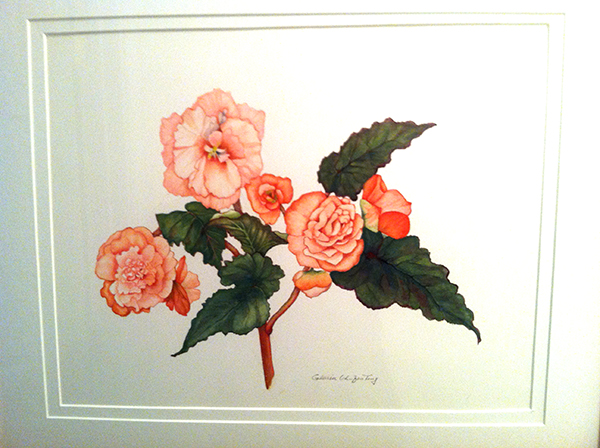
Begonia, snapshot of watercolor by Gloria Whea-Fun Teng, © 2013
BAGSC member Gloria Whea-Fun Teng has an exhibition at the Long Beach Main Library from November 1, 2013 through December 22, 2013.
Gloria has started painting in oils, and has still life paintings and landscape watercolors on display in addition to her botanical art and Chinese brush paintings.
The Long Beach Main Library is located at 101 Pacific Avenue, Long Beach, California 90822. Hours are Tuesday, 12:00 noon – 8:00 pm; Wednesday, 12:00 noon – 6:00 pm; Thursday, 12:00 noon – 7:00 pm; and Friday and Saturday, 10:00 am – 5:00 pm. The Library is closed Sunday and Monday.
Congratulations Gloria!
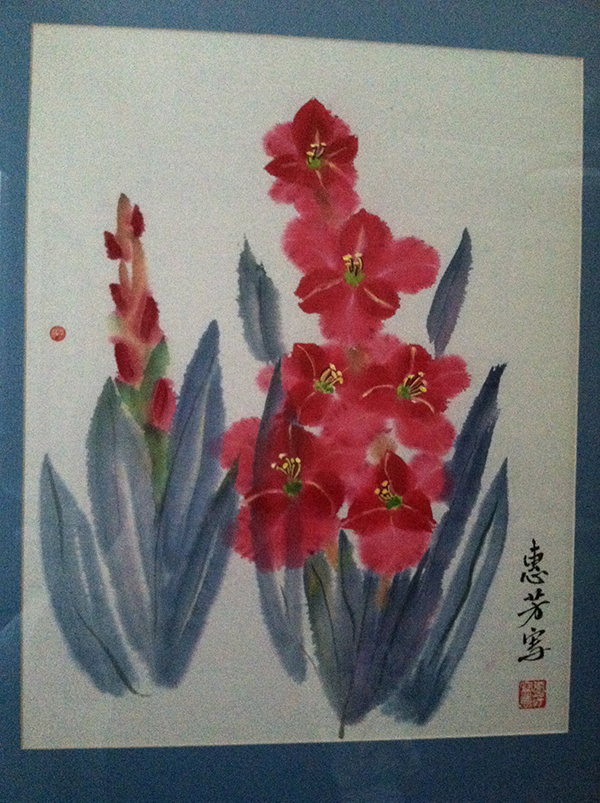
Snapshot of Chinese Brush Painting by Gloria Whea-Fun Teng, © 2013
by Deb Shaw and Leslie Walker

“One Truth, Many Lies: A New View of Art and Natural History Collections,” Artist Residency Program, California Academy of Sciences.
One Truth, Many Lies: A New View of Art & Natural History Collections [click on the title to view web page application information] is a new Artist Residency Program being offered to West Coast visual artists by The California Academy of Sciences in Golden Gate Park, San Francisco.
The deadline is coming up soon: proposals are due December 13, 2013, by email by 5:00 pm.
The Academy will select a total of four Artists for the program, to take place during the Spring/Summer of 2014. Artists will receive an honorarium and compensation for travel, lodging, meals and incidentals for three days and two nights in San Francisco, California.
Selected artists will be require to present two programs during their residency, at least one of which will be a public educational program consisting of a lecture or demonstration for the general public. A “hands-on” workshop or other class taught by the Artists in Residence will be offered free of charge to the public.
Artists will have at least one day to work with researchers at the Academy and with the collections housed in the Academy’s Institute for Biodiversity Science and Sustainability.
Questions? Contact Diane T. Sands, Collection Development Librarian, California Academy of Sciences by email, or phone, (415) 379-5489. Additional application information and information about the Artist Residency Program can be found on the website. This Residency is made possible in part by a generous grant from the Institute for Museum and Library Services.
by Deb Shaw
BAGSC member Tania Norris has generously donated 41 rare books from her personal collection to The Getty Research Institute (GRI).
Tania has been collecting these books individually for the past 13 years from booksellers in the United States, the United Kingdom, Europe and Australia. The collection provides the opportunity to study and compare the contributions of natural science and the visual display of scientific and botanical illustration from the sixteenth through the nineteenth centuries.

“Chrysanth,” Crispijn van de Passe, 1614
From Crispijn van de Passe, Hortus floridus (Arnhem, 1614)
The Getty Research Institute, 2898-803
Donated by Tania Norris
Two important works include Crispin Van de Passe’s Hortus Floridus, published in 1614, and Johann Christoph Volkamer’s Nürnbergische Hesperides, published in 1708. The Hortus Floridus is believed to be the first illustrated book to illustrate plants using magnifying lenses. Johann Christoph Volkamer’s Nürnbergische Hesperides is a fascinating documentation of the introduction of Italian citrus to Germany, as well as the revolution in urban planning and the design of parks.
The collection also includes a copy of Maria Sibylla Merian’s Derde en laatste deel der Rupsen Begin (Birth of the Butterfly), published in 1717, the first book to depict insect metamorphosis. The volume is believed to be one of the few surviving copies that was hand-colored by Merian’s daughter. Tania’s donation will have a companion in the GRI vaults: Merian’s stunning Metamorphosis of the Insects of Surinam (1719), the self-published book which documented the her explorations and documentation of the wildlife of the South American jungles. BAGSC members will remember the Metamorphosis fondly, as it was featured prominently in the Getty Museum’s exhibition, Merian and Daughters in 2008, which celebrated the extraordinary contributions of Maria Sibylla Merian and her daughters.
“The Getty Research Institute is deeply honored to receive the donation of the Tania Norris Collection of Rare Botanical Books from one of the founding members of our GRI Council. This gift promises to open novel paths to explore the complex historical intersections between science and art,” said Marcia Reed chief curator at the Getty Research Institute. “Tania’s passionate interests and her collecting instincts have created a very generous gift which has also served to raise the profile of an important subject with strong relevance for researchers who use our special collections.”
David Brafman, curator of rare books at the GRI, said “The Norris Collection offers inestimable rewards for scholars researching global botanical trade and the ensuing stimulus of cultural exchange to the trend of collecting curiosities spawned in Renaissance and Baroque European culture. Other books in the collection document the codependent progress of technologies in the history of medicine, pharmacology, and the color and textile industries from the sixteenth to nineteenth centuries. No less important are the opportunities to study the complex artistic relationship between physiognomy and ‘naturalism’ in visual representation, as well as developments in urban planning and landscape architecture. Ms. Norris’ generous donation enhances significantly GRI’s existing collections in such subjects and promises to transform the way art historians examine the past in the future.”
The Norris Collection will also provide insights in ongoing research in landscape- and still-life painting, as well as recipes and global trade in color and pigments.
Tania was a founding member of the Getty Research Institute Collections Council, and also serves on the J. Paul Getty Museum Disegno Drawing Council and Paintings Conservation Council. “It was one of the proudest moments of my life when the Getty Research Institute accepted my books for their library. I never collected expecting anyone else to think my books of interest, “ she said. “But now at the GRI, anyone can view them; some have been or will soon be in exhibitions and programs. More importantly, they will be preserved for generations to come.” She added, “You don’t need much money, just passion to collect and you just never know what treasures you may have.”
by Sue Kuuskmae, posted by Deb Shaw
 BAGSC member Sue Kuuskmae, along with other artists and art organizations from the South Bay area are grouping together to create a Studios/Gallery called Destination: Art. View a three-minute video about the concept by clicking here.
They are in the process of finding a permanent location, but will debut in San Pedro at the Fall Fine Art Fest at CRAFTED at the PORT of LA:
October 18, 19, 20
11:00 am to 6:00 pm each day
Come meet the artists and see the demos. Destination: Art has a website, and a facebook page. They can also be contacted by email.
by Deb Shaw
If you’re a fan of RadioLab, you may have heard the last episode about “Colors.” If you haven’t heard it, you’re in for a treat. You can listen, stream, or download the RadioLab Episode on “Colors” (Episode 13) by clicking here.
The piece jumps into all kinds of subjects about color, including interview snippets with Victoria Finlay, who wrote the book by the name of Color. From Issac Newton and Homer; to how we see (as opposed to dogs, birds, butterflies, and mantis shrimp); to our language about color; to how Gamboge is made — it’s a great show with a fun soundtrack.
If you haven’t listened to RadioLab before, be sure to stick with it. Their station identification pieces are a little longer than most, and I do know people who have thought the program was over, when it was really just getting started.
Enjoy!
by Deb Shaw
Even with budget cuts and sequestering, many of our nation’s National Parks offer Artist-in-Residence programs for all different types of artists, including botanical artists.
Applications are open for one such program: the Artist-in-Residence Program at Acadia National Park, SCHOODIC District, in Winter Harbor, Maine. This program offers artists housing for two-week to four-week periods so they can pursue their art while surrounded by the inspiring landscape of the park. The program is open in the spring and fall. No additional stipend is available.
In return, participating artists are asked to donate a piece of work representative of their style and their stay to the park collection. The park collection artworks are displayed to the public on a rotating schedule. Artists are also asked to participate in one public program per week of their residency, based on their preference for educational outreach. These may include demonstrations, talks, or workshops, and are only for a few hours of your stay.
Applications for the Arcadia artist-in-residence program must be received by October 28, 2013.
There are many such programs across the United States, with different applications and due dates. Most applications will need to include at least a few samples of your artwork. Be sure to read about the accommodations in each park before you apply. Some are quite nice; others extremely rustic, but all are available for a botanical adventure.
by Deb Shaw

Getty signage and flyer announcing the “Artist-at-Work Demonstration: Botanical Drawing,” © 2013 J. Paul Getty. Used with permission.
BAGSC members will be participating in a wonderful opportunity at the Getty this summer. To complement the Getty‘s “Gardens of the Renaissance,” BAGSC members will be demonstrating botanical art in a variety of media at the Artist-at-Work Demonstration: Botanical Drawing.
Join us in the Central Garden as we demonstrate the materials and techniques used to render plants and flowers. Learn about the botany of fruits, vegetables, and spices, and how explorations in the New World changed dinner tables around Europe. See the “Gardens of the Renaissance” exhibition, and explore Renaissance gardens and their stories (from scandalous to virtuous) in this beautiful exhibition of illuminated manuscripts. Meet botanical artists, ask questions, and get close to the action as you learn about materials and techniques seen in works of art on display at the Getty Center.
This is a free, drop-in program:
Sunday, July 7 & 21, and
August 4 & 11, 2013
12:30–2:30 p.m.
Participating BAGSC artists (on various days) include: Tania Marien, Deborah Shaw, Linda Erickson, Cristina Baltayian, Patty Van Ousterhoudt, Suzanne Kuuskmae, Jan Clouse, Arillyn Moran-Lawrence, Akiko Enokido, Lori Vreeke, Estelle DeRidder, Tania Norris, Alyse Ochniak, Leslie Walker, and Patricia Mark.
by Deb Shaw
The ASBA’s new website now has Online User Accounts for all current members — this includes all current BAGSC members (although very recent members may not yet be in the ASBA system). Your Online User Account allows you to access exclusive “member only” features on the site. You should have received an email from the ASBA with instructions on how to activate your Online User Account. Just in case you haven’t, you’ll find the instructions in this article below.
You must activate your Online User Account in order to register for the ASBA’s 2013 conference in Pittsburgh. Conference registration begins Saturday, 29 June at noon Eastern time, so be sure to activate your Online User Account now to be able to register in a timely manner.
INSTRUCTIONS: Activating your Online User Account is a two-step process:
1) You’ll activate your Online User Account, and;
2) You’ll review and update the information in your “ASBA Member Profile.”
This should take less than 10 minutes.
1) To activate your “Online User Account”
- Go to www.asba-art.org and click on the “Member Login” link in the upper right-hand corner of the homepage. OR, click on this link: www.asba-art.org/user
- Click on “Request New Password.”
- Type in your email address. (Be sure you use the email address you gave to the ASBA when you joined or renewed — that is the email address that was used to enter you into the database.)
- Click “Email New Password.”
- You will immediately receive an email message from asbaonline@asba-art.org, Check your email box. NOTE: there have been reported problems with Verizon email addresses. If you have a verizon.net email address and/or do not receive an email when requesting a new password, please contact webmaster@asba-art.org for assistance.
- Click on the link provided in the email.
- The link will bring you back to the ASBA website. Click on “Login,” enter and confirm a password, and set your time zone setting.
- Click “Save” which returns you to the same screen with the phrase “The changes have been saved.”
(If you ever forget your password, you can always make a new one by repeating the steps above.)
2) Review and update your “ASBA Member Profile”:
- Click on “Edit your ASBA Member Profile” in the list of links under the Individual Member heading.
- Review the information in your member profile. This information can ONLY be viewed by ASBA members:
- Basic Contact Information
- Directory Instructions
- Chapter and Artists’ Circle Affiliation
- Personal Webpage Options
- Optional Profile Information
- Add any missing information
- Correct any erroneous or outdated information
- If you’re unsure, read the hints below each item
- Still have questions? Contact webmaster@asba-art.org
Once you activate your Online User Account, you’ll be able to do the following:
Available NOW
- Update your own membership record: change your address, email, etc.
- Search an interactive list of classes
- Submit articles, class listings and calls for entry to the journal and for the website
- Make donations via credit card
- Renew your membership and pay your dues via credit card
- Search the member directory, by name, chapter, etc. (member-only access)
- Register for the Annual Meeting & Conference
Coming Soon
- Upload exhibition entries, pay the entry fee via credit card, and apply for Artists and Education grants
- View announcements of ASBA volunteer opportunities
- Take a video tutorial
- Update your own Teacher Directory & Member Gallery page
If you haven’t already done so, be sure to activate your Online User Account today!
by Tania Norris, posted by Deb Shaw

Akiko Enokido, Chrysanthemum morifolium “Kokka Seija”
© 2013
Watercolor, 11″ x 16″
Akiko Enokido is a long time member of the Botanical Artists organizations in America and Japan and has been accepted in major exhibitions. Her beautifully rendered paintings are known for their exquisite color, detailing and composition and are prized by their owners. Akiko has shown her work in the United States and Japan, including the ASBA/Horticultural Society of New York exhibitions, and the 13th Annual Exhibition of Botanical Art and Illustration from the Hunt Institute for Botanical Documentation.
In Akikoʼs words her class:
“will observe the shapes and shadows of leaves. You may be surprised to realize how often you are drawing from your own assumptions and not from how the object is actually expressing itself. I will demonstrate the approach of placing multiple layers of color, putting emphasis on capturing reflection of light and to show depth of the objectʼs dimensions.”
Classes will be held at Virginia Robinson Gardens, August 5, 6, and 7, 2013, from 9.30 am – 3.30 pm daily. A supplies list will be sent to all participants.
Coffee, tea and water will be provided, but please bring your own lunch. Fees for the three day session will be $375. for members and $450. for non-members. A deposit of $100. to hold space can be accepted but is non-refundable. Full payment must be made by August 1, 2013.
To make reservations, visit the Virginia Robinson Gardens website, or call (310) 550-2068.
Mail check to:
Friends of Robinson Gardens
1008 Elden Way, Beverly Hills, CA 90210
If you have any questions, please contact Tania Norris.
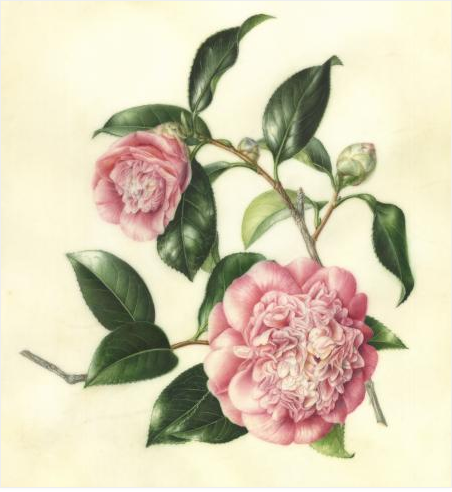
Camellia japonica ‘Chandleri Elegans’, Variegated Camellia, by Akiko Enokido, watercolor on vellum, © 2012, all rights reserved.
by Joan Keesey

Common Poppy, photo by John Keesey, © 2013
Consider the “campi fiori,”
Arrayed in their natural glory.
Their existence is brief
Unless an artistic thief
Memorializes their story.
John Keesey, June 2013
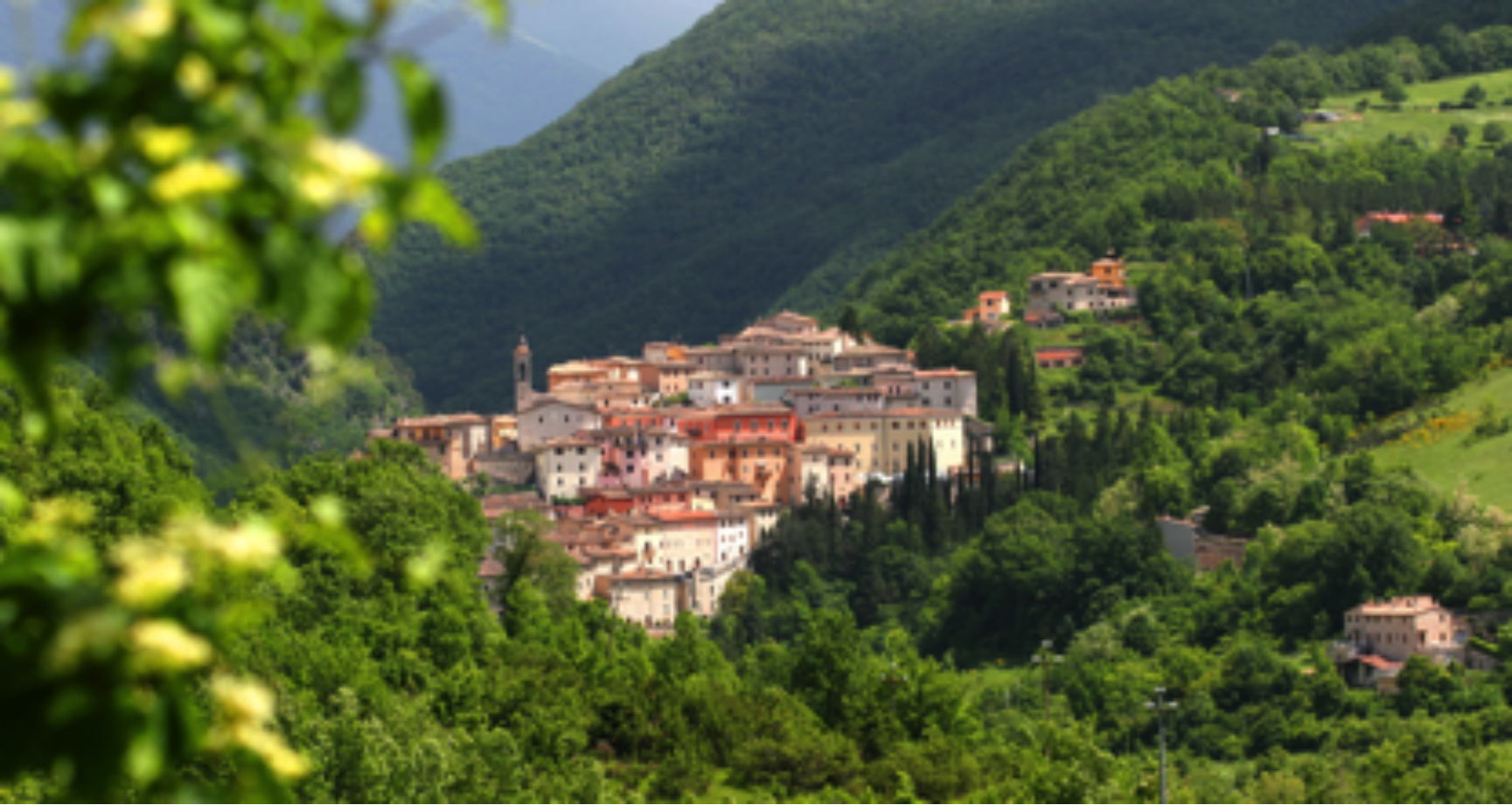
Preci, Umbria, photo by John Keesey, © 2013
John and I just returned from Umbria, Italy, where I took Elaine Searle’s Botanical Art Class. We stayed for eight days at a resort, Il Collaccio, in the mountains near the walled hill town of Preci and adjacent to the Monti Sibillini National Park. The views of the mountains and valleys were beautiful; the fields were filled with wildflowers: red poppies, small wild orchids, fringed hyacinths, buttercups, and many flowers that I had never seen before.

The Studio, photo J. Keesey, © 2013
We were a group of 13 including Elaine: four Americans including Deborah Friedman and myself from BAGSC, six women from Britain, three ladies from Finland, Japan, and Trinidad respectively. We stayed in a lovely stone building in which the studio was also located. Il Collaccio provided all of our meals. They were very good, especially the lunches which were interesting, varied and served outside if the weather permitted.
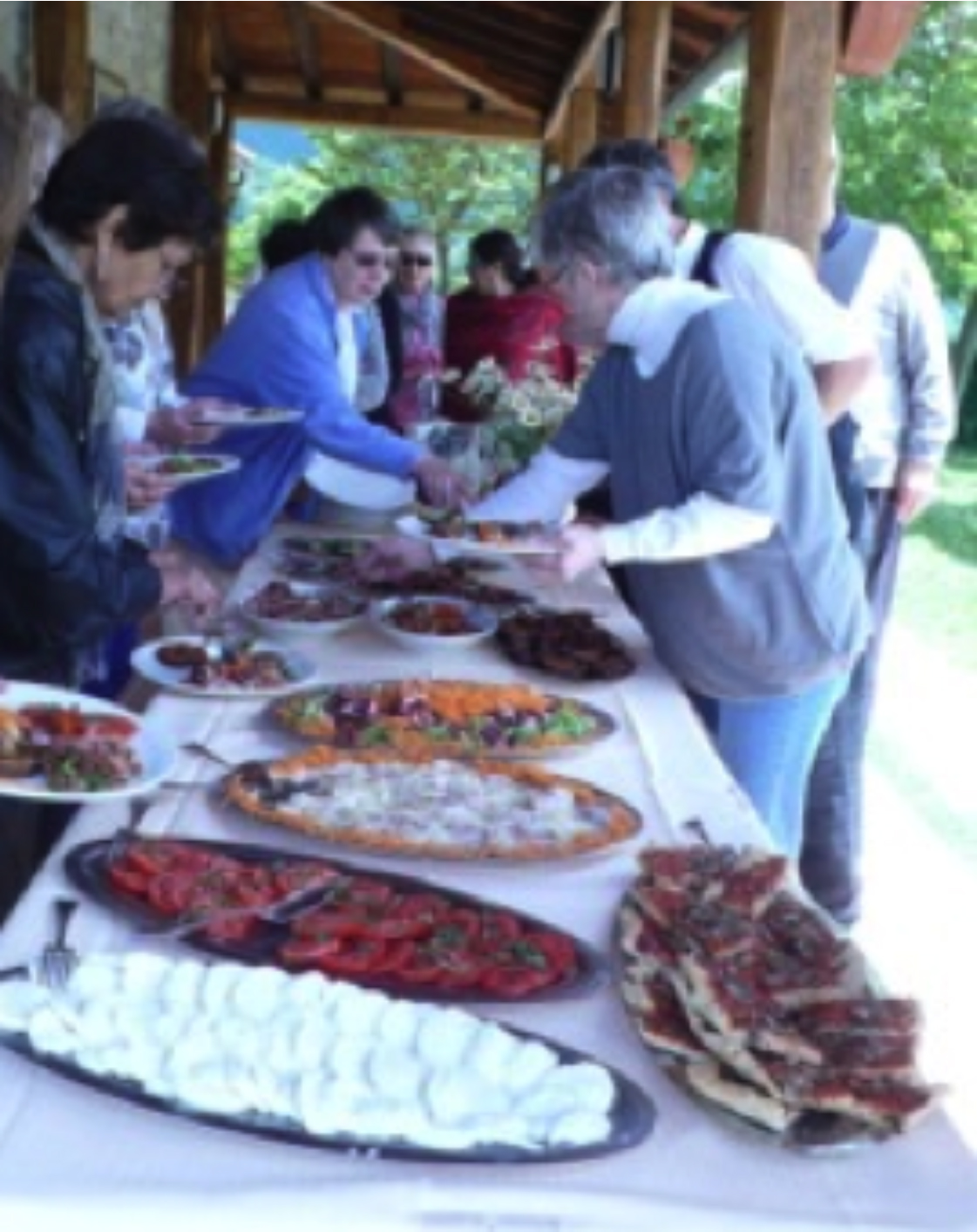
Lunch at Il Collaccio, photo by J. Keesey, © 2013
There was no assigned subject. We could paint wildflowers, vegetables from the local market, or roses growing on the wall of our building. I chose to paint the poppies and a small orchid called the Bee Orchid.
Elaine gave a demonstration every morning on one of the selected subjects. We worked from 9:30 am until 1:00 pm when lunch was served. After lunch Elaine was available in the studio if we wished to continue painting, or we could take the afternoon off for a hike in the hills or a visit to one of the many Umbrian hill towns.
On one of the days we had a group outing to Spello, another beautiful walled town, and Fabriano where we were given a tour of the Fabriano Museum. Fabriano not only makes high quality art paper, they also make the paper for the Euro. We were shown how paper was originally made by hand in the 16th century and their extensive collection of watermarks. At the end of the tour we all made a piece of paper.
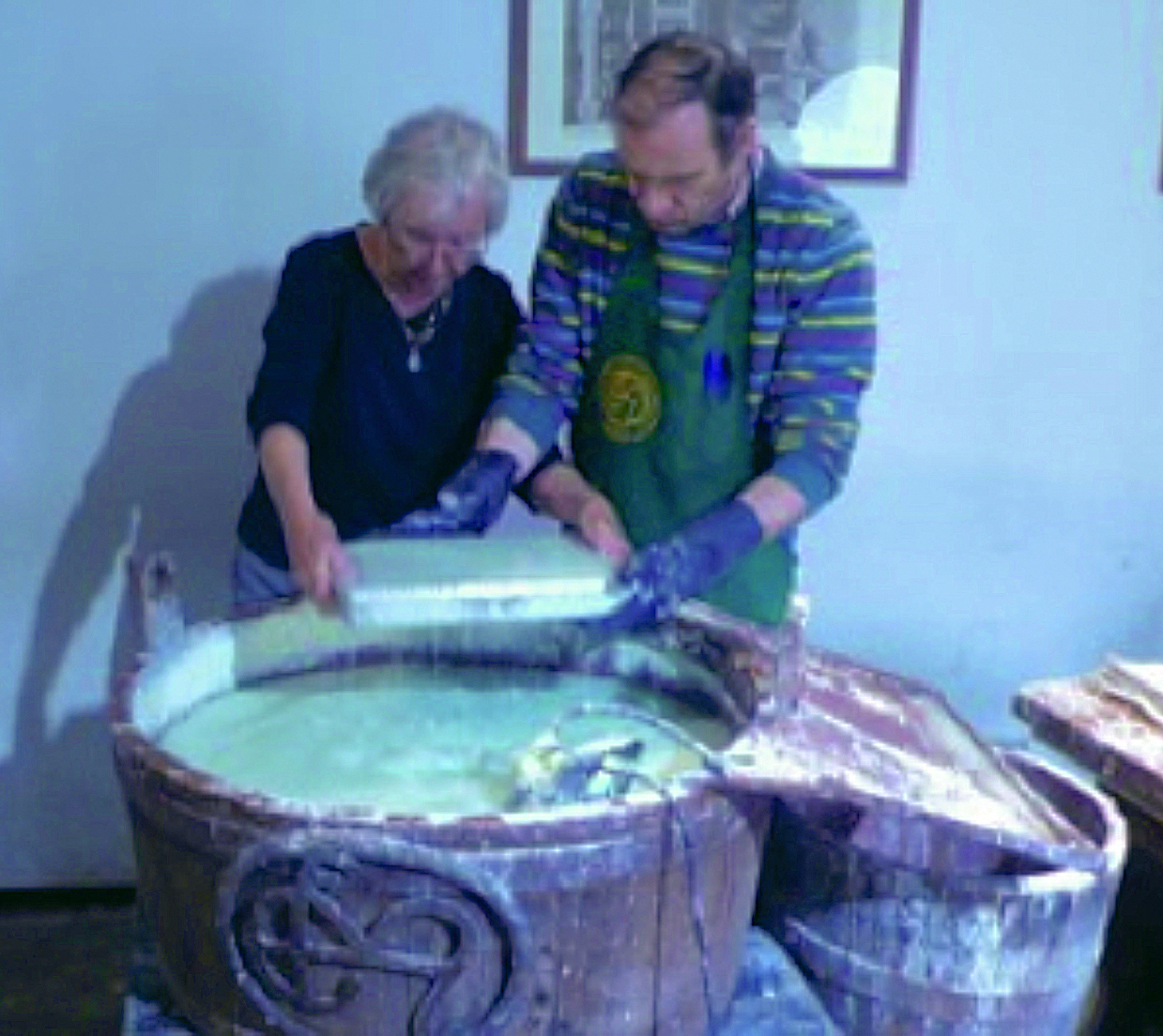
Making Paper at the Fabriano Museum, photo by J. Keesey, © 2013
It was a great trip—an opportunity to see a really beautiful part of Italy, to meet new and interesting people, and to concentrate on drawing and painting without the many distractions and obligations of daily life.
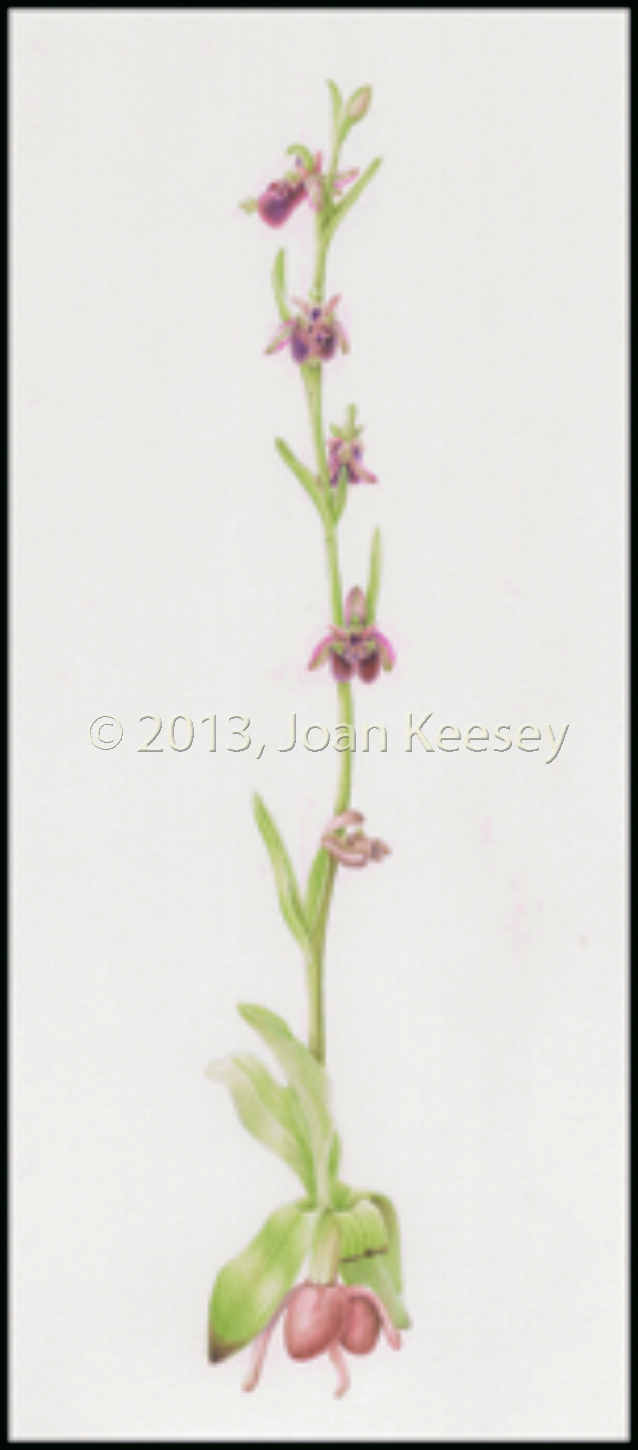
Bee Orchid, Ophrys apifera, watercolor by Joan Keesey, © 2013, all rights reserved.
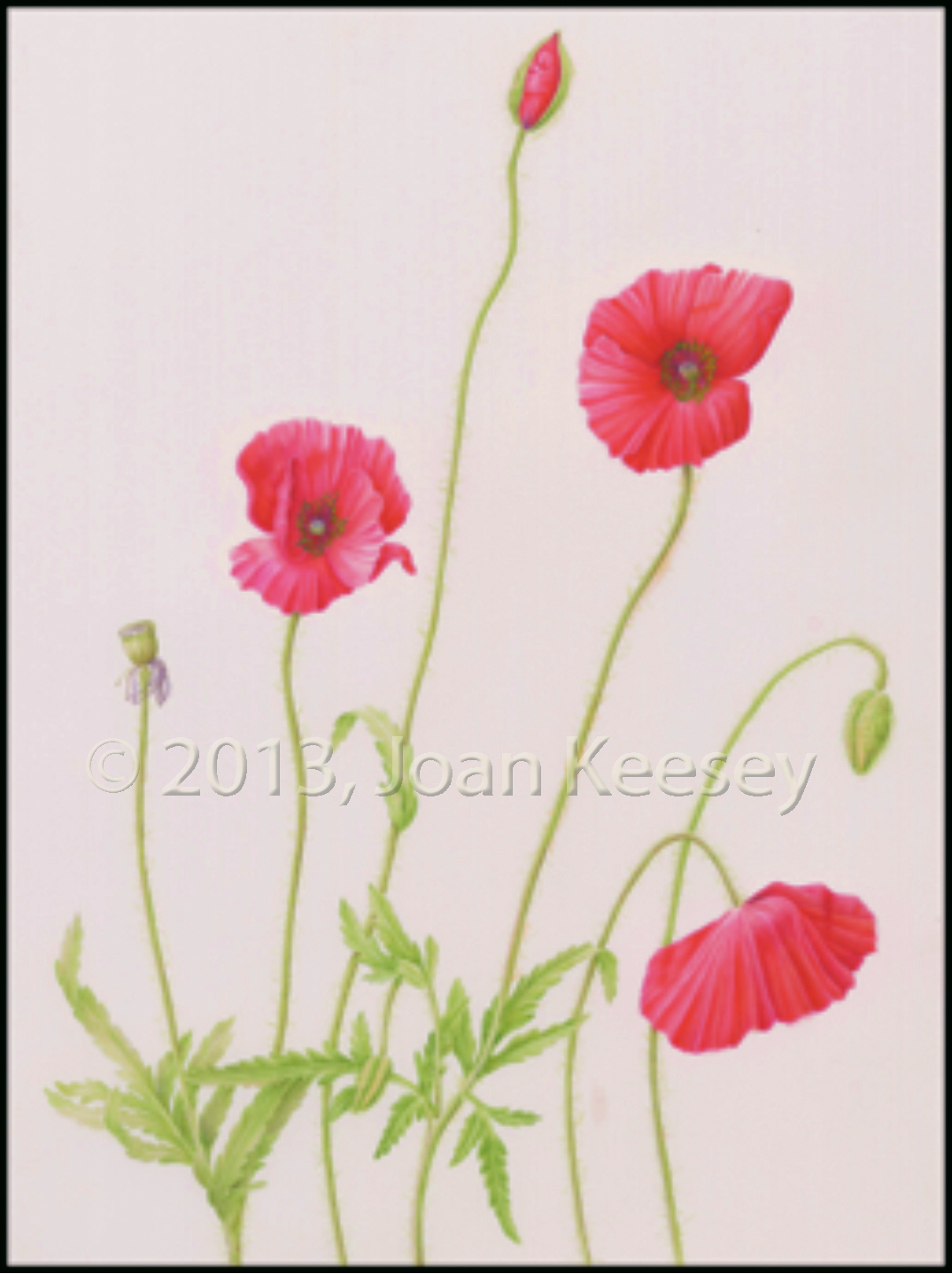
Common Poppy, Papaver rhoras, watercolor by Joan Keesey, © 2013, all rights reserved.
by Deb Shaw

Aristolochia gigantea, ink on paper, Lesley Randall, © 2013, all rights reserved
Lesley Randall’s Aristolochia gigantea has been accepted into the 14th annual exhibition for the Hunt Institute for Botanical Documentation.
Lesley became interested in botanical illustration while a landscape architecture student at Cornell University. Working at a botanical garden in Hawaii, she found the plants fascinating to draw, and started illustrating professionally after moving to Davis, California in 1986. Lesley won first prize in the 2007 Margaret Flockton Award for Excellence in Botanical Illustration from the Royal Botanic Garden in Sydney, Australia. The award was created to recognize excellence of botanical illustrations in scientific publications and commemorates the contributions Margaret Flockton made to Australian scientific botanical art.
The Hunt established the International Exhibition in 1964 with the hope of supporting and encouraging contemporary botanical artists. Every three years, the International Exhibition features the works of talented botanical artists from around the world. The Hunt Institute for Botanical Documentation will host the 14th International Exhibition of Botanical Art and Illustration in Fall 2013 in conjunction with the annual ASBA conference, September 26 – 28. The exhibition is open to all botanical fine artists and illustrators working in any medium on paper or vellum whose work has achieved a standard of excellence and who have not yet been represented in the Hunt Institute’s series of International Exhibitions.
by Deb Shaw

Elaine Searle, “Rhubarb” (Rheum rhabarbarum), watercolor, © 2013, all rights reserved
Elaine Searle‘s “Rhubarb” (Rheum rhabarbarum), and Joan Keesey‘s “Hummingbird Sage” (Salvia spathacea), were both accepted into the 16th Annual International American Society of Botanical Artists at The Horticultural Society of New York.
Congratulations to both of you!
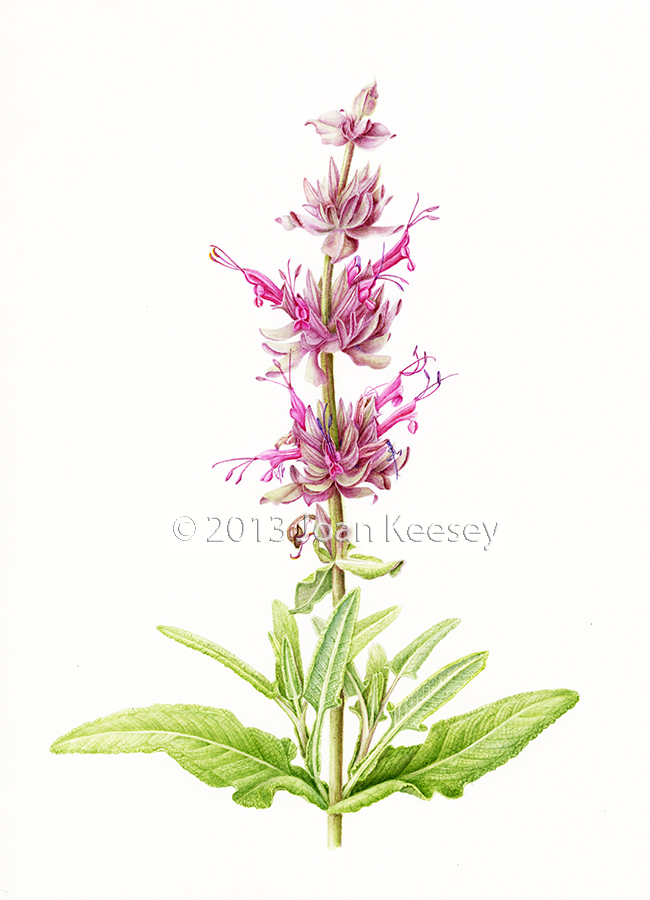
Joan Keesey, “Hummingbird Sage” (Salvia spathacea), watercolor, © 2013, all rights reserved
by Deb Shaw
BAGSC members Akiko Enokido and Mitsuko Schultz have been accepted into the 16th Annual International American Society of Botanical Artists at The Horticultural Society of New York. Congratulations to both of you!
Akiko Enokido, Chrysanthemum morifolium “Kokka Seija”
© 2013
Watercolor, 11″ x 16″
Akiko wrote about her painting:
Since ancient times, Cherry blossoms in Spring and Chrysanthemum in Fall are both loved by the Japanese people. The chrysanthemum enthusiasts put a lot of effort to make straight stems and big beautiful flowers on each of the stems.
Flower exhibitions are held all over Japan during the season. We not only enjoy them for viewing but also for their taste in salads or tea.
I found this particular one in my neighborhood. The flower is not good shaped to show in exhibitions, but I was fascinated by its energy to grow. This will be a memorable piece. My first painting in Japan.
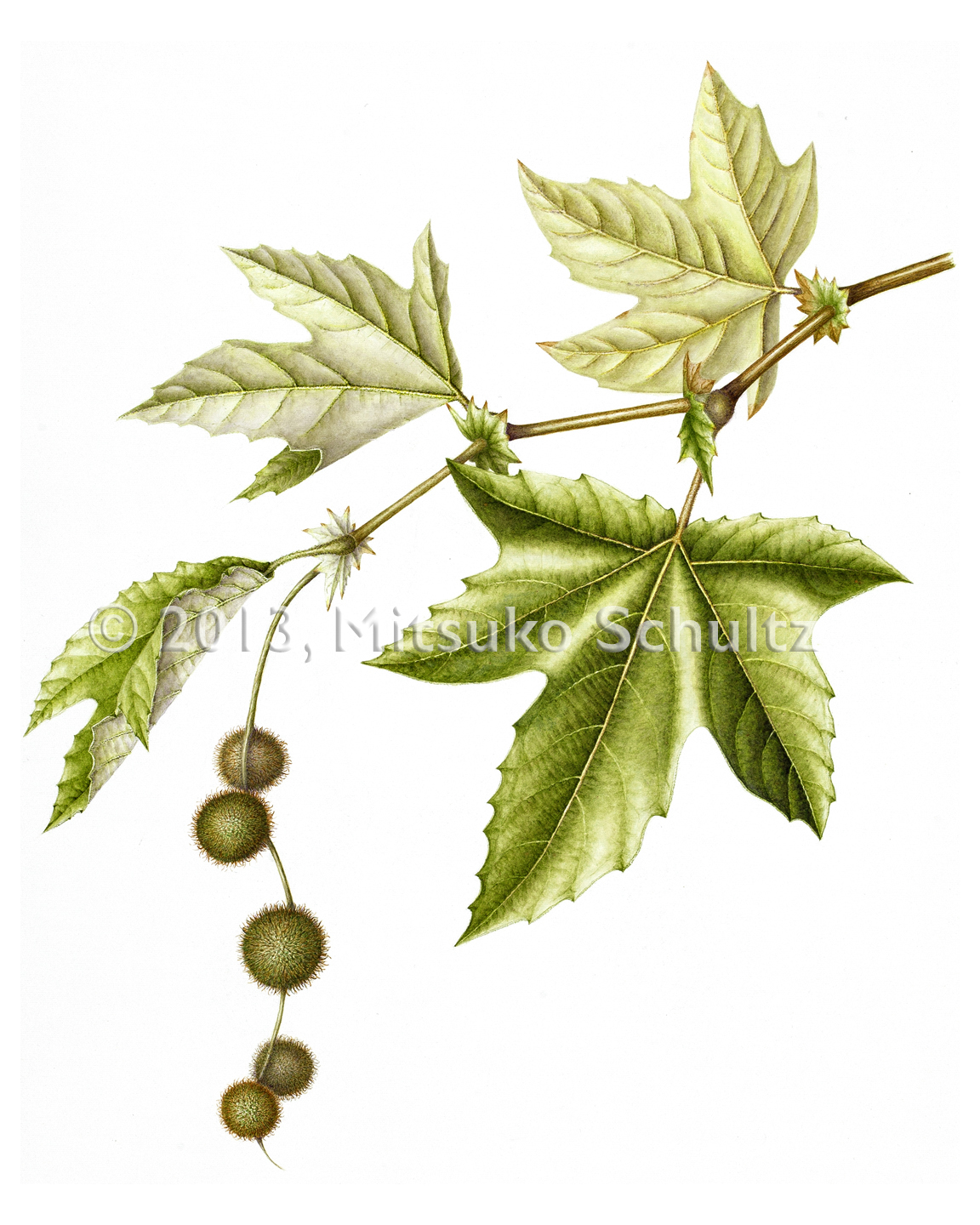
“Plantanus racemosa,” California Sycamore, Watercolor by Mitsuko Schultz, © 2013, all rights reserved.
Mitsuko wrote about her painting:
This is my first time to be accepted to the ASBA Horticulture show and I am so happy and excited. I have been studying watercolor with Akiko Enokido since July 2011 and she helped me immensely and has given me a lot of encouragement.
While painting this sycamore piece, Akiko continued to offer advice and encouragement even though she had returned to Japan. Thank goodness for email!
By Joan Keesey; Photography by John Keesey, posted by Deb Shaw

The Sunken Garden at Filoli. Photo by John Keesey.
On Thursday, April 18th, John and I attended the Artist’s Reception at Filoli. We spent the morning checking out the exhibit and looking at the garden, always beautiful, but sensational in the spring. The garden is a series of “garden rooms” similar to the Hidcote Gardens in England; each room is surrounded by a hedge of shrubs or trees and usually contains a fountain or pool. Each “garden room” has a color scheme. I spoke with one of the volunteer gardeners who said that the colors change with the seasons and from year to year, but each year there is a master plan. The first garden you see is the sunken garden. This year it is cobalt blue and white columbine, cerulean blue forget-me-nots, and hansa yellow tulips. The wisterias that climb up the brick walls of the Georgian style house were all in bloom and spectacular.
There were also many bushes with a very small, quinacridone red azalea that was quite stunning. It was a perfect day.
Quinacridone Red Azaleas at Filoli. Photo by John Keesey.
There were 64 works of botanical art by 50 artists including the two jurors, Carol Hamilton and Susan Fisher. The Botanical Artists Guild of Southern California (BAGSC) was very well represented with seven artworks by five artists—Alison Denning, Joan Keesey, Sue Kuuskmae, Mitsuko Schulz, and Deborah Shaw.
We went back for the Artists’ Reception at 5:00 pm. It is always very pleasant with wine, very nice appetizers, and the opportunity to meet other botanical artists. Carrie DiCostanzo won the 2013 Roth Award for distinction with an emphasis on traditional botanical art presentation with a beautiful picture of “Ponderosa Pine” (Pinus ponderosa). Maria Cecilia Freeman won the Juror’s Award with an exquisite picture of “Tan Oak” (Notholithocarpus densiflorus), and Ingrid Finnan won the Horticulture Aware with a delicate picture of “Dandelion” (Taraxacum offivinale).
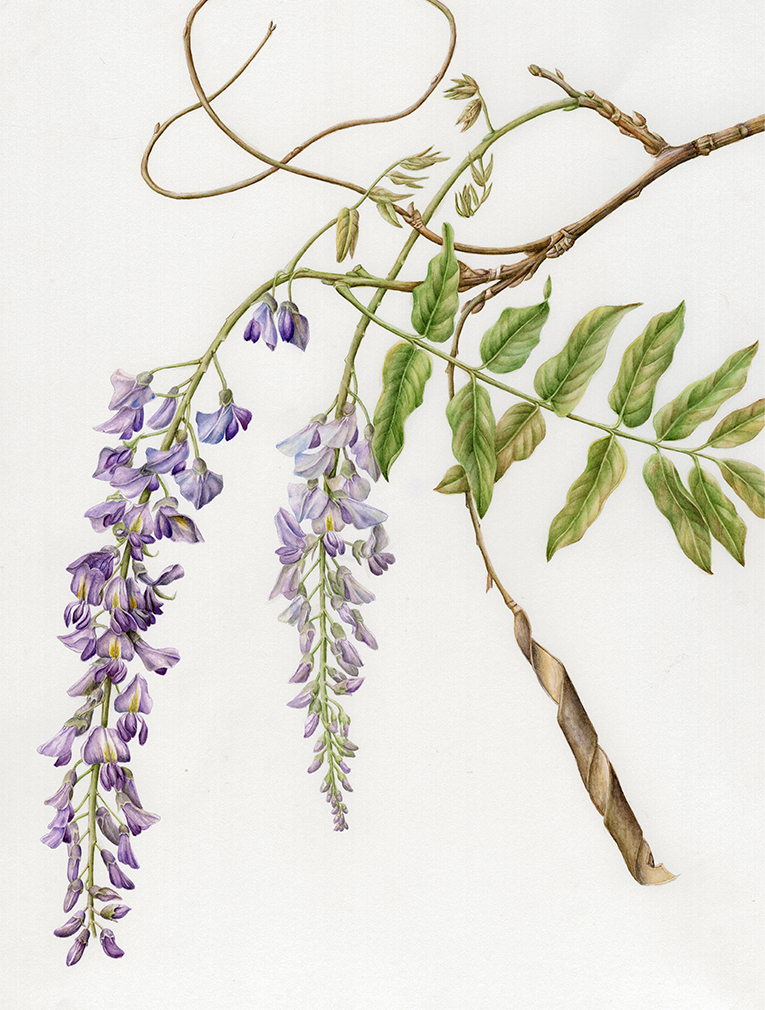
“Aesculus californica,” California Buckeye, watercolor by Joan Keesey, © 2013, all rights reserved.

“Aesculus californica,” California Buckeye, Watercolor by Joan Keesey, © 2013, all rights reserved.

“Fragaria x ananassa ‘Fragoo Pink’,” Strawberry, watercolor by Mitsuko Schultz, © 2013, all rights reserved.

“Iris,” Iris, watercolor by Alison L. Denning, © 2013, all rights reserved.
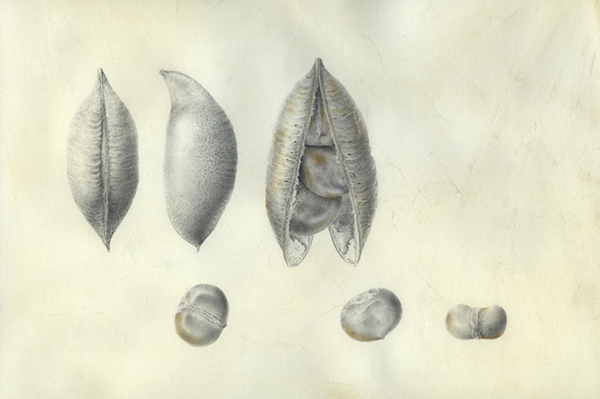
“Castanospermum australe,” Blackbean, or Moreton Bay Chestnut, seed pod and seeds, Graphite and Watercolor on Vellum by Deborah B. Shaw, © 2013, all rights reserved.

“Plantanus racemosa,” California Sycamore, Watercolor by Mitsuko Schultz, © 2013, all rights reserved.
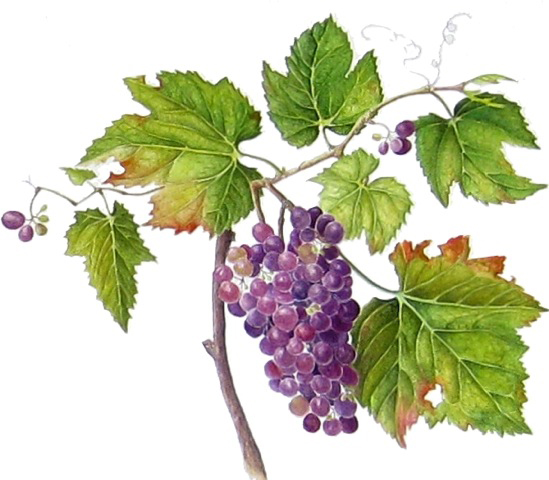
“Vitis vinifora,” Grapes, watercolor by Suzanne C. Kuuskmae, © 2013, all rights reserved.
 BAGSC News