You are currently browsing the tag archive for the ‘ASBA’ tag.
by Deb Shaw

Pincushion Protea, watercolor and colored pencil on paper, © 2015 Estelle DeRidder, all rights reserved.
The American Society of Botanical Artists and The Horticultural Society of New York announce the opening of the 18th Annual International at a new venue: the New York Design Center at a new venue. The ASBA’s longest-running collaboration, this prestigious exhibition will be held for the first time in mid-town Manhattan.
The opening reception will be on Wednesday, November 4, 2105 from 6 pm – 8 pm. Awards will be announced at 7 pm.
The evening’s events will begin with a book talk by author Amy Goldman at 5 pm. Limited seating is available. To attend Amy Goldman’s talk, an RSVP is required: scourtade@thehort.org. No RSVP is required to attend the opening reception.
As always, the catalog of the exhibition is available through ArtPlantae, starting November 4th.
BAGSC artists accepted into the exhibition include: Margaret Best, Melanie Campbell-Carter, Estelle DeRidder, Akiko Enokido, Asuka Hishiki, Joan Keesey, and Lesley Randall. Jurors for the exhibition were: Susan Fraser, Director, Mertz Library, The New York Botanical Garden; David Horak, Curator of Orchids and Aquatic House, Brooklyn Botanic Garden; Catherine Watters; Botanical Artist and ASBA Board Member.
The New York Design Center is located at: 200 Lexington Ave. New York 10016, (212) 679-9500.
by Clara Josephs, posted by Deb Shaw

Jim Henrich, Curator of Living Collections, Los Angeles Arboretum, lectures about their tree collection. Photo by Clara Josephs, © 2015, all rights reserved.
On Saturday October 11, 14 BAGSC members were treated to an hour and a half walking tour of a portion of the exquisite tree collection of the Los Angeles County Arboretum and Botanic Garden. Our gracious guide, Jim Henrich, Curator of Living Collections, enthralled attendees with detailed descriptions of the life cycle and history of about 30 unique or rare trees in the Arboretum’s extensive collection.
The tree collection was begun in the 1950s, and includes some specimens that are grown outdoors in the US only at the Arboretum. BAGSC members used Jim’s handout of significant trees to take detailed notes and reminders about tree locations. After a great morning, the group enjoyed lunch on the patio of the Peacock Café.
Other Tree Walks are planned to help members prepare paintings for submission to the New York Botanic Garden’s Triennial, “Out of the Woods.” Read the call for entries on ASBA’s website.
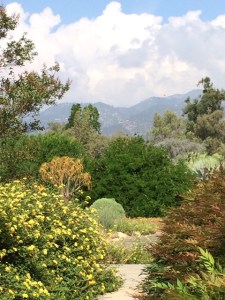
A beautiful day at the Arboretum. Photo by Beth Stone, © 2015, all rights reserved.
by Estelle DeRidder, posted by Deb Shaw
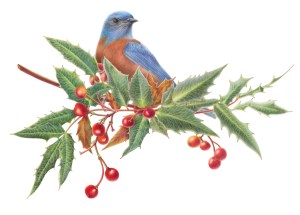
Nevin’s Barberry with Bluebird, by Estelle DeRidder, © 2015, all rights reserved.
As an extension of the ‘Flashcard Project’ which was started through a grant from the ASBA to illustrate the plants of the Madrona Marsh in Torrance, California, Estelle DeRidder has illustrated twelve more species, which are now on exhibit.
The exhibit is open to the public until December 3, 2015, with an opening reception on Sunday, November 15 from 1:00 – 3:00pm. Dessert and coffee will be served.
The Madrona Marsh is located at 3201 Plaza Del Amo, Torrance, California 90503, (310-782-3989) and is open Tuesday through Thursday 10:00am – 5:00pm.
Congrats Estelle!
by Alyse Ochniak, posted by Deb Shaw
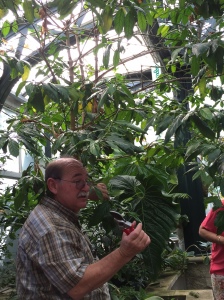
Jim Folsom lecturing during the “Weird, Wild & Wonderful Symposium.” Photo by Clara Josephs, © 2015, all rights reserved.
More looking forward to the next New York Botanical Garden Triennial, “Out of the Woods”:
Jim Folsom, Marge and Sherm Telleen Director of the Botanical Gardens, will be teaching two workshops about the structure of trees at The Huntington Library, Art Collections, and Botanical Gardens, on:
October 24, 2015 (limit 30 students) in the Brody Teaching Lab, from 8:30 am – 12:00 pm, and
January 17, 2016 (limit 20 students) in the Engemann Applied Tech Lab, from 8:30 am – 12:00 pm
Cost is $10.00 each session, payable at the workshop. Reservations are required, however; please RSVP to Alyse Ochniak. Reservations are first come, first served.
Come to one or both! Each session will be a 3-hour demonstration/workshop. Students will use dissection and compound microscopes to examine tree architecture, growth patterns, and structural characteristics using fresh and prepared material (provided by the Gardens). Discussion will include characteristics and terminology used to describe trees, and most useful in identification. Instruction will give particular attention to natural growth patterns and specific details of tree morphology and anatomy that would impact veracity of depiction.
Workshops only require pencil/pen and sketchbooks for taking notes, although artists are welcome to bring whatever materials they would like to use. Attendees are welcome to stay and draw in the Gardens after the class.
For more information about the New York Botanical Garden Triennial “Out of the Woods, Celebrating Trees in Public Places” visit the ASBA website.
The Huntington is located at: 1151 Oxford Road, San Marino, California, 91108.
About the instructor:
Jim Folsom, PhD., rides the demographic peak of baby boomers, having been born in southeastern Alabama in 1950. His lifelong love of plants is reflected in a BS in Botany from Auburn University, an MA in Biology from Vanderbilt University, and a PhD in research botany from The University of Texas at Austin. Though his research has centered on the orchid family, with much of the research time spent in Tropical America (including a year in Colombia on a Fulbright Pre-Doctoral Fellowship), Jim’s botanical interests are wide-ranging. As Curator of the Botanical Gardens at The Huntington in San Marino, CA, he dedicates much of his effort to educational programs that increase public interest and understanding of the science, culture, and history of plants and gardens. He lives at The Huntington with his wife, Debra (also a botanist) and children Molly and Jimmy. Jim was recognized as a Friend of the Cactus and Succulent Society of America in 1996, a Member-at-Large of the Garden Club of America in 1998, and presented a Professional Citation by the American Association of Botanical Gardens and Arboreta in 1999. The Garden Club of America awarded him their Medal of Honor in 2007.
by Deb Shaw

Damselfly, Carnation, Firebug, Caterpillar, Carnelian Cherry, and Centipede; Joris Hoefnagel (Flemish / Hungarian, 1542 – 1600), and Georg Bocskay (Hungarian, died 1575); Vienna, Austria; 1561 – 1562; illumination added 1591 – 1596; Watercolors, gold and silver paint, and ink on parchment; Leaf: 16.6 x 12.4 cm (6 9/16 x 4 7/8 in.); Ms. 20, fol. 68. Digital image courtesy of the Getty’s Open Content Program.
The Getty has a treasure in its collections, prized by botanical artists all over the world: the Mira Calligraphiae Monumenta by Georg Bocskay and Joris Hoefnagel. Commissioned in 1560 by the Holy Roman Emperor Ferdinand I, Georg Bocskay, court scribe, displayed his astonishing calligraphy skills in this small book. Thirty years after he completed the volume, Joris Hoefnagel, the court illuminator to Ferdinand’s successor, the Holy Roman Emperor Rudolf II, painted incredible portraits of flowers, insects, snails, seeds, frogs, snakes and more in the spaces on each page.
ASBA member Denise Walser-Kolar was inspired by Hoefnagel’s work after seeing the modern reproduction, Nature Illuminated: Flora and Fauna from the Court of Emperor Rudolf II in a bookstore. She is working on a 25-painting series, Hoefnagel-Inspired. To see more of her work, visit the article in the Getty Iris, the online magazine by the Getty. To order your own copy of Nature Illuminated, visit the Getty Store.

Hoefnagel-Inspired #4 2014, Denise Walser-Kolar. Watercolor and gouache on calfskin vellum, 4 x 6 in. Courtesy of and © Denise Walser-Kolar.
by Gilly Shaeffer, posted by Deb Shaw
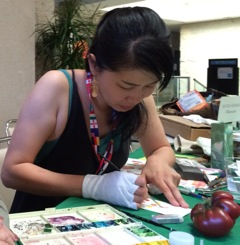
Asuka Hishiki demonstrating during the “Weird, Wild & Wonderful” Symposium at The Huntington, July 2015. Photo by Gilly Shaeffer, © 2015.
During the recent “Weird, Wild & Wonderful” Symposium at The Huntington, I watched Asuka Hishiki as she demonstrated how she would paint a segment of an heirloom tomato skin. Here are my impressions of the way she went about developing this small sample of the tomato skin with paint.
- Asuka says every time she approaches her subject it is new for her.
- Asuka starts sketches on tracing paper.
- She uses a wood pencil in a pencil holder which she sharpens with a box cutter.
- She goes over her pencil lines with a lighter color paint or yellow ochre. So she will have thin lines in watercolor for her drawing.
- At this point she erases any pencil lines.
- She covers the entire form with a Chinese white wash. (The Chinese white that she likes is the Holbein brand.) She says one should stay very light when applying the first layer of this white paint. This Chinese white wash acts as a protection for the paper. Much of it gets taken off during the removal of the masking fluid (to be mentioned later).
- Asuka will add more Chinese white paint on the places where she wants the paint to bleed to create soft color transitions. She also mentions the importance of keeping harmony in the colors used as the form develops.

Asuka Hishiki masking fluid technique. Photo by Gilly Shaeffer, © 2015.
- She mixes three colors together in a small amount to be used to develop the form using the dry brush technique. She uses Interlon brand brush #3/0 for her dry brush work.
- In preparing to use masking fluid to prevent certain areas of the paper from getting painted, she would prime the brush to be used with liquid soap. The soap helps to keep the masking fluid brush in good shape for future use. This brush is used exclusively for masking fluid.
- She will use the masking fluid to hold the places that she does not want to get painted—in this case the place where a leaf would be (which looks like a skinny wiggly line in the photos), where the highlights would be and where imperfections would be found on the tomato skin.

Asuka Hishiki masking fluid technique. Photo by Gilly Shaeffer, © 2015.
- Asuka stipples on the masking fluid with a very skinny brush on the section that she has begun to paint.
- She uses tissue to blot any extra paint from her paper.
- Then she adds a second layer of masking fluid. So, this layer of masking fluid dots will have more tone than the first layer of dots that she applied that prevent any paint from getting through to the paper.
- She always makes sure that the paint and the masking fluid that she has applied are absolutely dry before proceeding.
- She says that you can lift paint more easily when you have first applied a Chinese white wash to the paper.
- She applies a layer of Yellow Ochre wash.
- She continues to develop the form through her dry brush technique. At this point the masking fluid remains on the painted area.

Asuka Hishiki masking fluid technique. Photo by Gilly Shaeffer, © 2015.
- Asuka uses Winsor Newton Series 7 brushes, #5 and #3 for the colored washes.
- She adds a third layer of masking fluid dots.
- With WN Series 7 #5 brush, she puts a colored wash on the section that she had previously dry brushed. This makes any lines from dry brushing disappear.
- Now she lifts the masking fluid dots. When she does this she is also lifting the Chinese white paint that was applied to the paper at the very start. The white of the paper now shows through in the places that had masking fluid on them.
- She decides that she wants to apply another layer (this would be the fourth layer) of masking fluid dots. This will make the dots appear lighter and less visible than the layers applied earlier.
- Next more dry brushing with a deeper color paint. Some stippling is used. Then some more wet strokes (colored washes) to further the development of the form.
- When she removes the fourth layer of masking fluid, it is easy to see the section of the heirloom tomato skin developing on the paper with its highlights, its shiny smooth skin, its roundness, its imperfections and its rich colors of orange, red, and purple.
by Clara Josephs, posted by Deb Shaw
Are you looking for a tree to portray for the The Third New York Botanical Garden Triennial, “Out of the Woods”? We have a wonderful opportunity to participate in a guided tour of the unique tree collection of the Los Angeles County Arboretum and Botanic Garden, arranged just for pre-registered BAGSC members.
On the morning of Saturday, October 17, Jim Henrich, LA Arboretum Curator of Living Collections will take 20 pre-registered BAGSC members on a one hour, vigorous walk through the Arboretum to see and learn about some of their very special trees. Jim will explain what makes these trees stand out, their history and uses. After the tour you will be free to sketch and take pictures or just enjoy the Arboretum and Peacock café.
So that everyone can hear the discussion, this tour is limited to 20 members. To reserve a spot, email Clara Josephs. Confirmation and additional details will be sent to you by return email.
For more details about the exhibit “Out of the Woods: Celebrating Trees in Public Gardens”, read the Call for Entries in the Exhibitions section of the ASBA website.
The Los Angeles County Arboretum and Botanic Garden:
626.821.3222
301 North Baldwin Ave, Arcadia, CA 91007
by Alyse Ochniak and Deb Shaw
Please join us for a brief BAGSC Quarterly meeting and a much deserved Celebration(!!), on Saturday, September 12, 2015 as “Weird, Wild & Wonderful: The New York Botanical Garden Second Triennial Exhibition” goes off across the country to the Frost Museum in Florida to coincide with the 2015 ASBA Annual Meeting and Conference.
The meeting will be at Diane’s home and will include workshop announcements and programs for next year! An email blast will be sent out to all BAGSC members with directions. Coffee and tea is at 9:30 am, and the meeting starts at 10:00 am sharp. Please email Diane to RSVP and let her know what you will bring for potluck.
Please bring any artwork you created (or started) at the Weird, Wild & Wonderful Symposium, along with other drawings and paintings you are working on to share as we celebrate a milestone event.
Calling all “Weird, Wild & Wonderful” Stories and Photos
We want to post stories, reviews of lectures and workshops, and photos (of course) from the Weird, Wild & Wonderful Symposium and the BAGSC adjunct exhibition on the BAGSC Blog. Send your stories and images to Deb Shaw, and a BAGSC Blog committee will edit and post them. Be sure to include caption information for your photos, who took the photo (for copyright) and names of the people or plants in the photo if you know them.
Want to learn how to be a BAGSC Blogger? Contact Deb and have your own byline.
You can see images from the WWW Symposium on ASBA’s site under “RECAP“.
Hope to see you at the BAGSC meeting!
by Deb Shaw
Close on the heels of the “Weird, Wild & Wonderful” Symposium at The Huntington Library, Art Collections and Botanical Gardens, the Botanical Artists Guild of Southern California (BAGSC), opened their supplemental exhibition of botanical oddities, in the Brody Botanical Center’s Banta Hall at The Huntington.

The reception for the BAGSC adjunct exhibition was packed with family, friends, colleagues and the public. Weird, Wild & Wonderful Second New York Botanical Garden Triennial Exhibition was also open for viewing and enthusiastically received. Photo © Gayle Uyehara, 2015.
The opening reception on Saturday, 1 August was well-attended and great fun. BAGSC members have been rotating shifts, providing botanical art demonstrations and talking with the public all week, including:
- Bonnie Born Ash
- Cristina Baltayian, colored pencil
- Nancy Beckham, colored pencil
- Melanie Campbell-Carter, colored pencil and watercolor
- Jan Clouse
- Diane Daly, watercolor
- Estelle DeRidder
- Kate Gaman
- Cynthia Jackson
- Susan Jackson
- Clara Josephs, watercolor
- Suzanne Kuuskmae
- Tania Marien
- Patricia Mark
- Terri Munroe, graphite and watercolor
- Kathy Morgan, watercolor
- Marilyn Parrino
- Lesley Randall
- Gilly Shaeffer, watercolor
- Mitsuko Schultz, watercolor
- Janice Sharp, metal point and colored pencil
- Deborah Shaw, graphite on vellum
- Beth Stone
- Leslie Walker
- Jude Wiesenfeld
The BAGSC adjunct exhibition features 72 artworks by 37 members, including: Bonnie Born Ash, Cristina Baltayian, Nancy Beckham, Melanie Campbell-Carter, Jan Clouse, Diane Daly, Estelle DeRidder, Nancy Grubb, Asuka Hishiki, Cynthia Jackson, Susan Jackson, Clara Josephs, Joan Keesey, Suzanne Kuuskmae, Teri Kuwahara, Patricia Mark, Lee McCaffree, Arillyn Moran-Lawrence, Kathy Morgan, Terri Munroe, Alyse Ochniak, Marilyn Parrino, Dolores Pope, Kathlyn Powell, Lesley Randall, Veronica Raymond, Robyn Reilman, Norma Sarkin, Mitsuko Schultz, Gilly Shaeffer, Janice Sharp, Deborah Shaw, Beth Stone, Gayle Uyehara, Lori Vreeke, Leslie Walker, Jude Wiesenfeld.
An exhibition of Botanical Oddities, illustrations by the Botanical Artists Guild of Southern California will continue each day through Sunday, August 9, 2015, 10:30 am – 4:30 pm in The Frances Lasker Brody Botanical Center at The Huntington.
The Weird, Wild & Wonderful: The New York Botanical Garden Second Triennial Exhibition exhibition also will be open each day, Friday – Sunday, August 7 – 9, plus will continue to be open on weekends only until August 23.
Exhibition information and hours posted at huntington.org
Join us before the BAGSC paintings are whisked away!
by Janice Sharp, posted by Deb Shaw
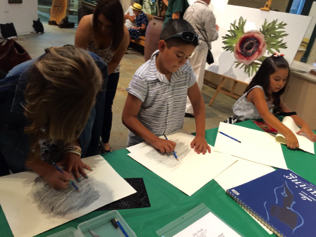
Exploring stencil leaf rubbings in graphite and colored pencil at The Huntington. BAGSC artists are demonstrating for the public August 1 – 9 in conjunction with our group show of botanical oddities by the Botanical Artists Guild of Southern California. “Weird, Wild & Wonderful,” The New York Botanical Garden Second Triennial Exhibition, will be open each day through August 9, and then weekends only through August 23. Photo © Janice Sharp, 2015.
Today was a great family day at The Huntington Library, Art Collections and Botanical Gardens. All afternoon groups of children were attracted to the stencils, pencils and paper we had set out to try their hand at preparing botanical themed rubbings.
Children had fun creating leaf and flower rubbings from stencil templates. They explored the different graphite pencil hardnesses and the effect that could be achieved with light and hard pressure on the pencils. Some ventured into color pencils choosing a favorite color to create shapes or writing their name to claim ownership of their creations. One adventurous artist started with graphite to define outlines then filled in with color.
While most of the budding artists were very young, there were also older “children” who wanted to create a work of art.
I had a fun afternoon giving basic instructions on how to do a rubbing, although most of my time seemed to be spent handing out fresh pieces of paper and sharpening pencils.

Exploring stencil leaf rubbings in graphite and colored pencil at The Huntington. Photo © Janice Sharp, 2015.
A number of parents had to use all their persuasive powers to convince their children that The Huntington offered activities other than rubbings and they should explore them before the close of day.
by Beth Stone
It’s pre-dawn on Friday and we’ve loaded our sleepy selves into The Huntington van with Jim Folsom at the wheel. We’re off to see the flowers, the wonderful flowers of the LA Flower Mart!

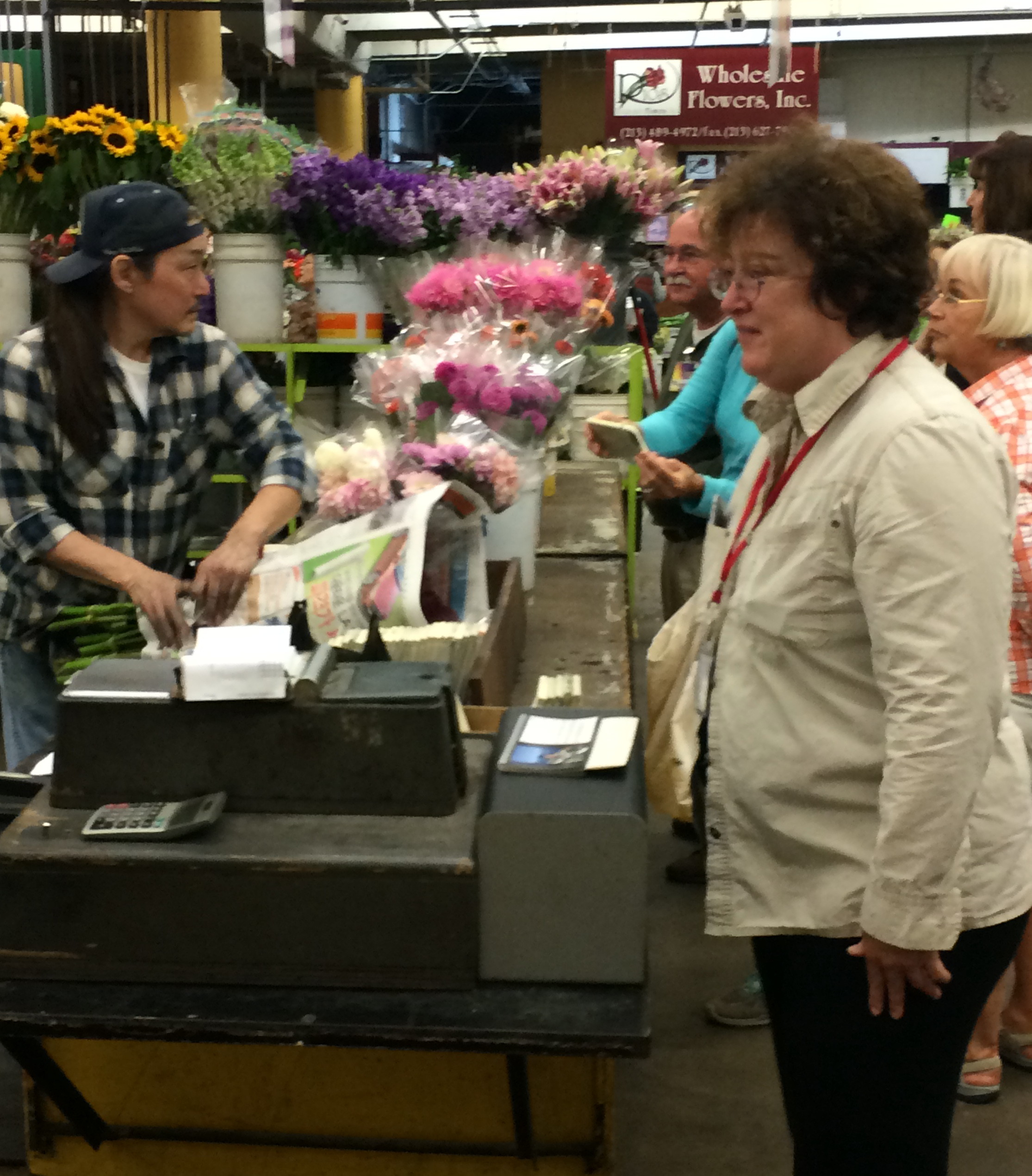
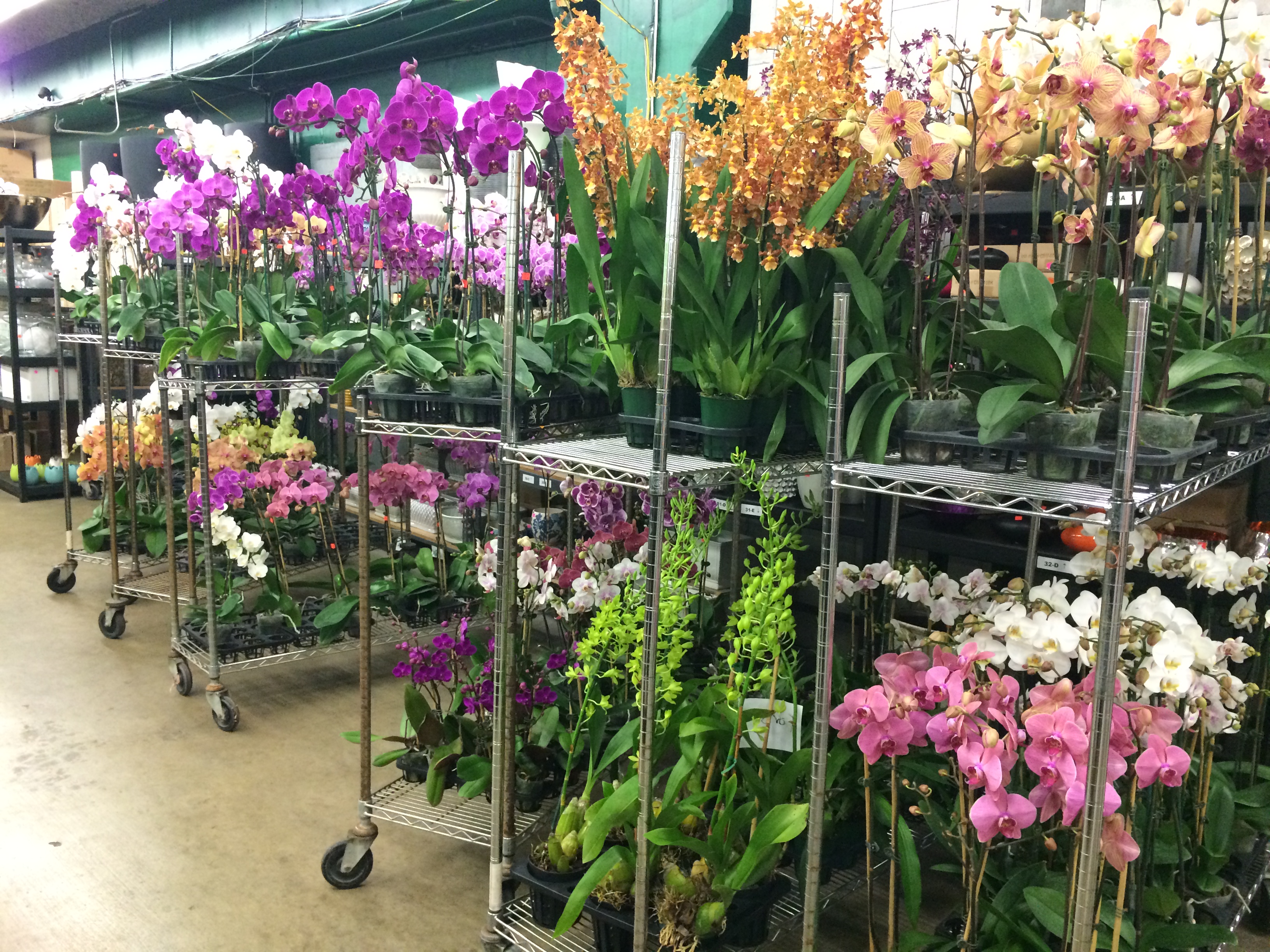
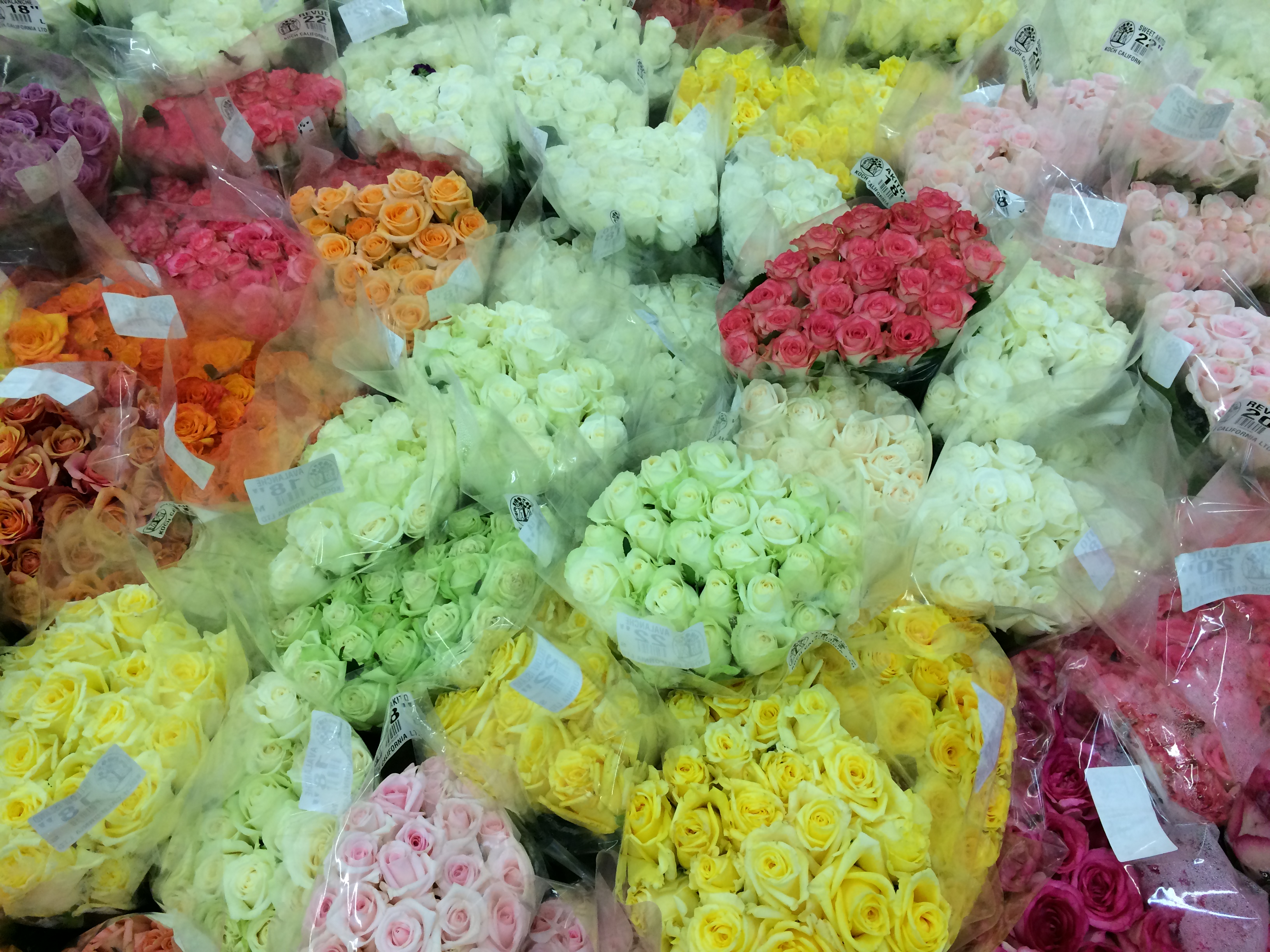
Peonies, Clematis and Lilies oh my!


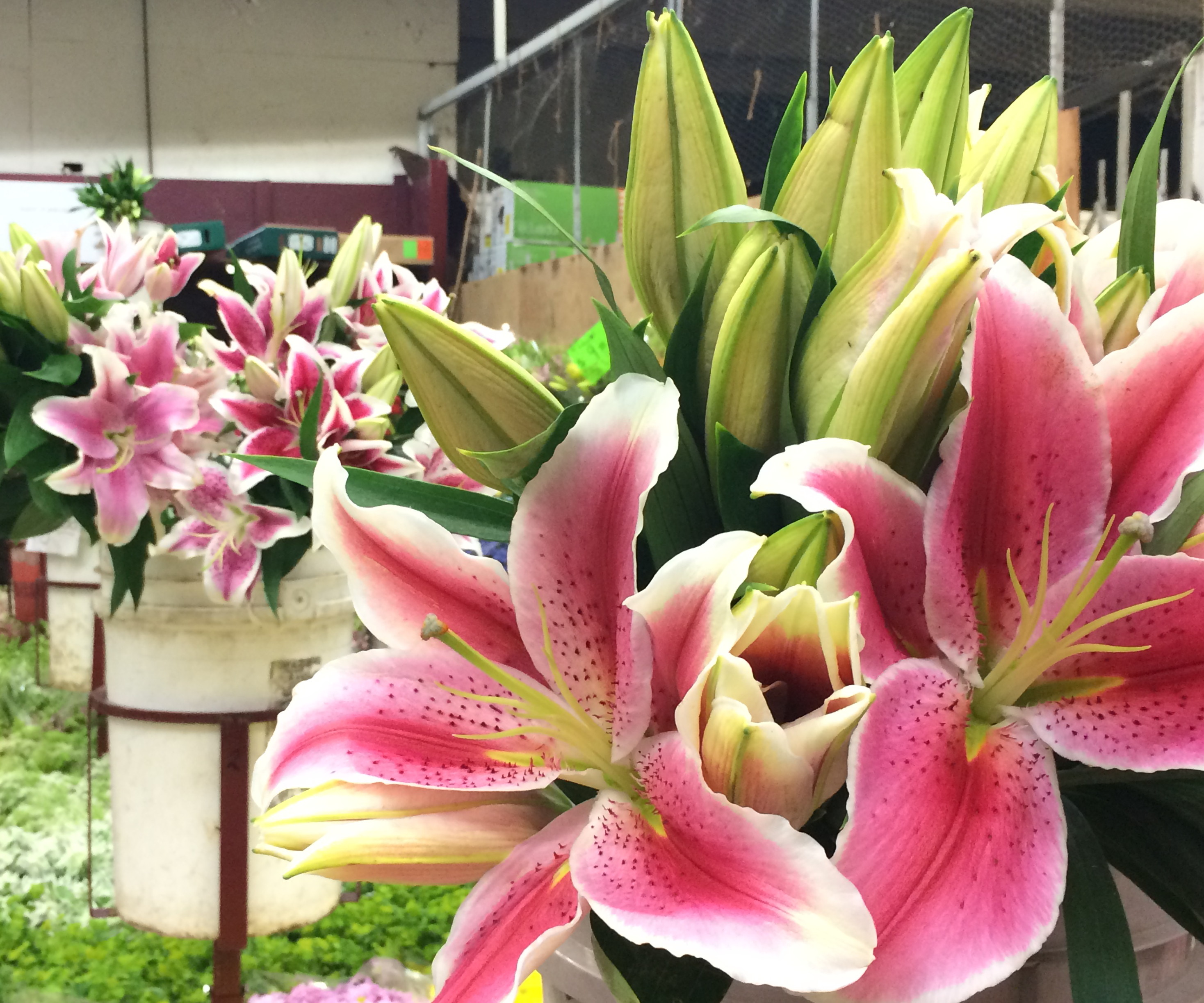
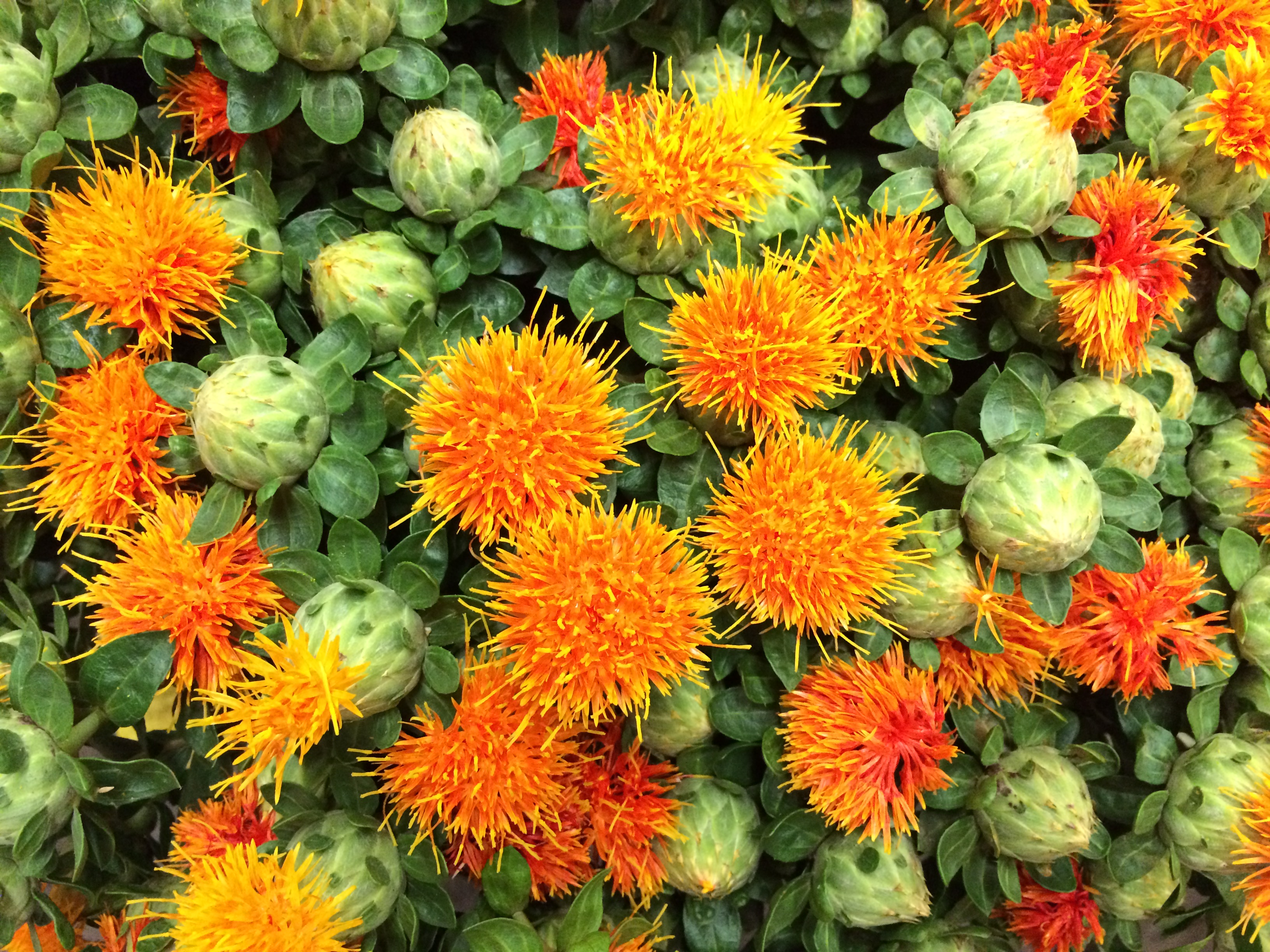
We could while away the hours, conversing with the flowers…


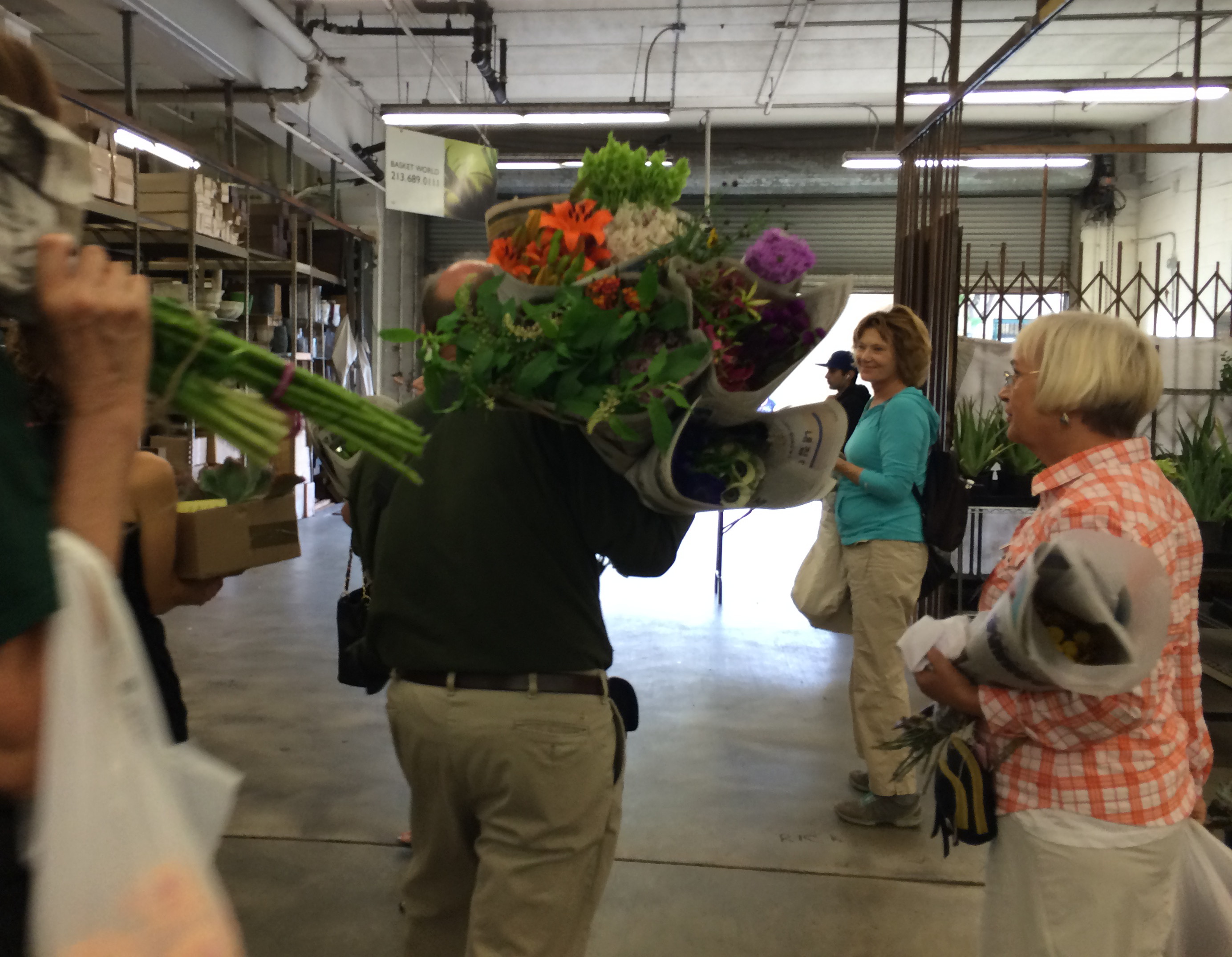
and it’s back to The Huntington with The Wizard!
by Beth Stone
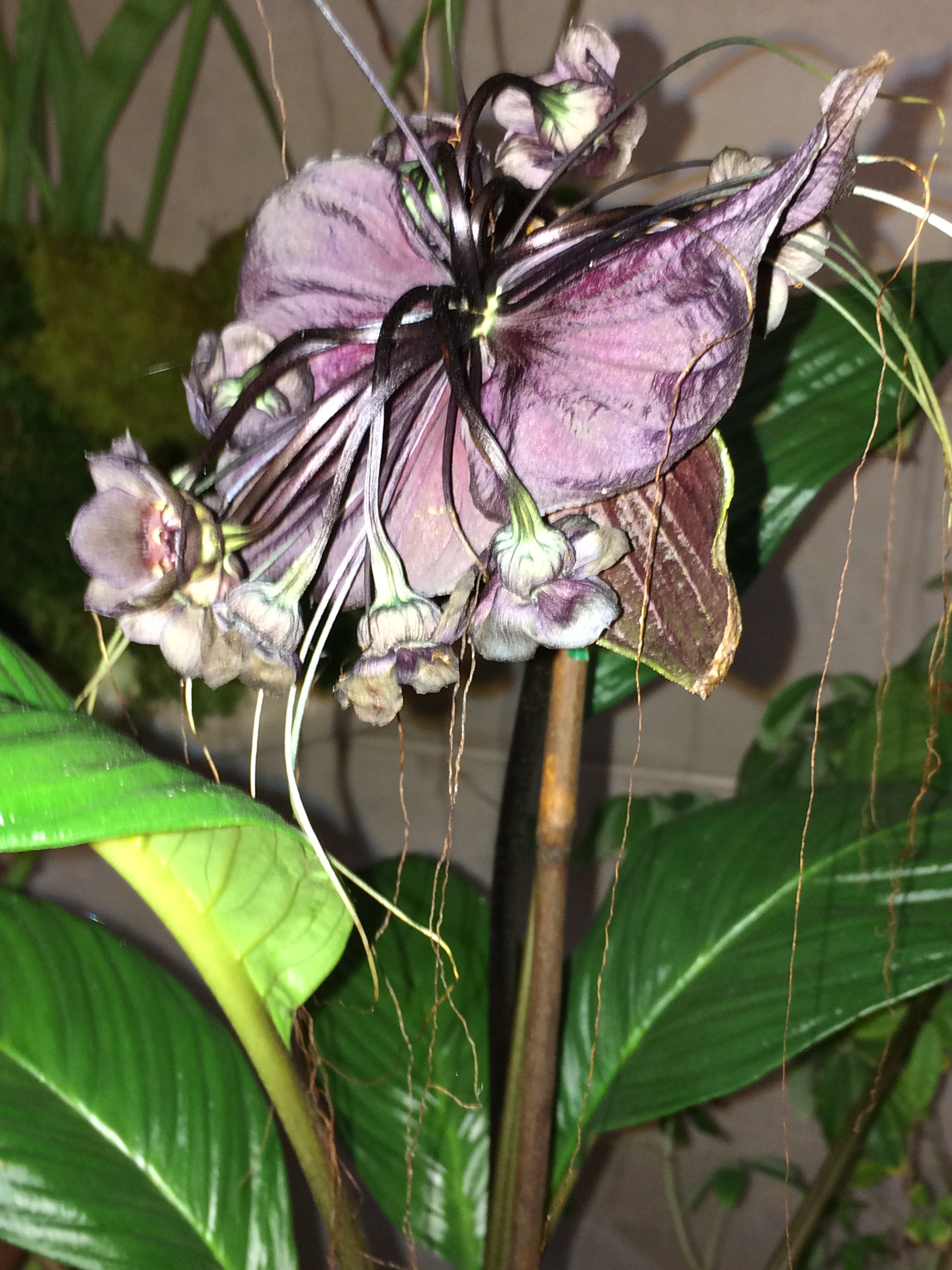
There are two georgeous Bat Flower (Tacca chantrieri) paintings featured in the Weird, Wild & Wonderful exhibition currently on display at The Huntington. The hauntingly beautiful flowers can measure up to 12″ across with “whiskers” up to 30″ long. Did I ever expect to see these jungle flowers in Southern California? Certainly not, but I must have forgotten I was in such a magical place! A whole row of plants appeared in The Huntington’s Banta Hall this morning!
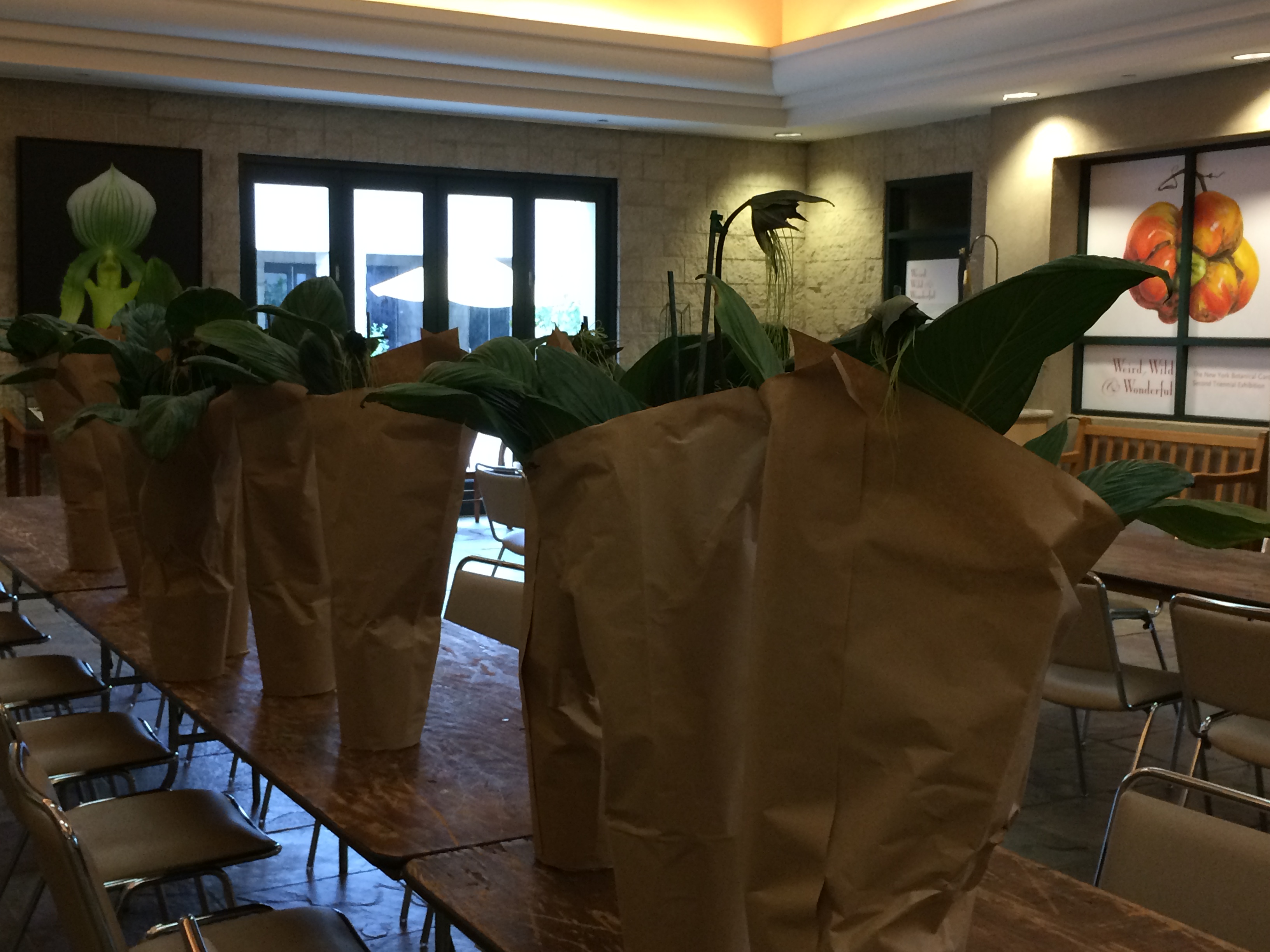
Bring on the dramatic theater lighting and just watch how this villainess poses for the camera!
by Beth Stone
The LA Times dubbed the weather WEIRD, while plant lovers call it WONDERFUL!!
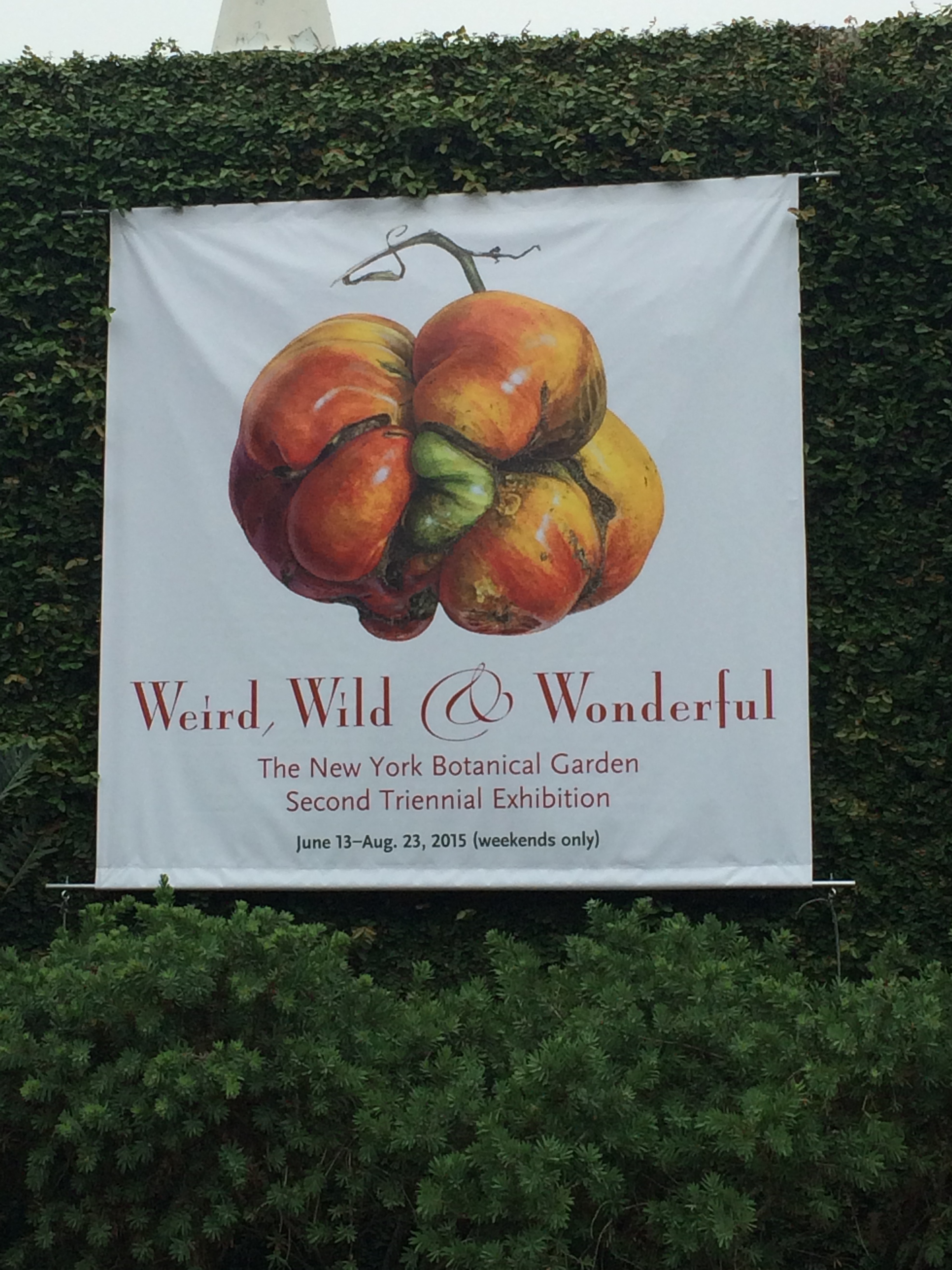
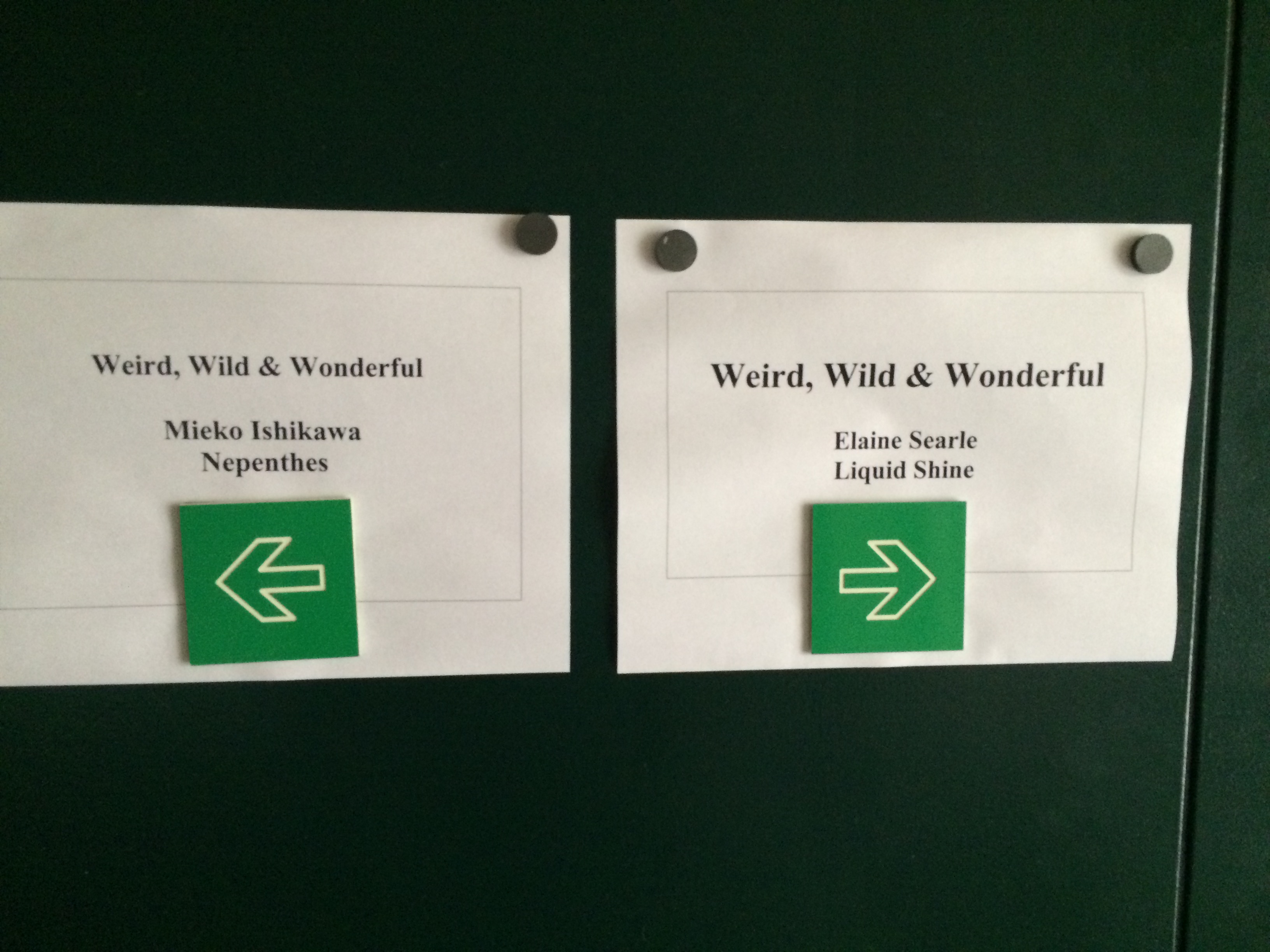
Symposium week is finally here! There are two great workshops underway — Mieko Ishikawa and Elaine Searle, and attendees are getting a preview as the Banta Hall displays are being assembled.



By Akiko Enokido and Deb Shaw
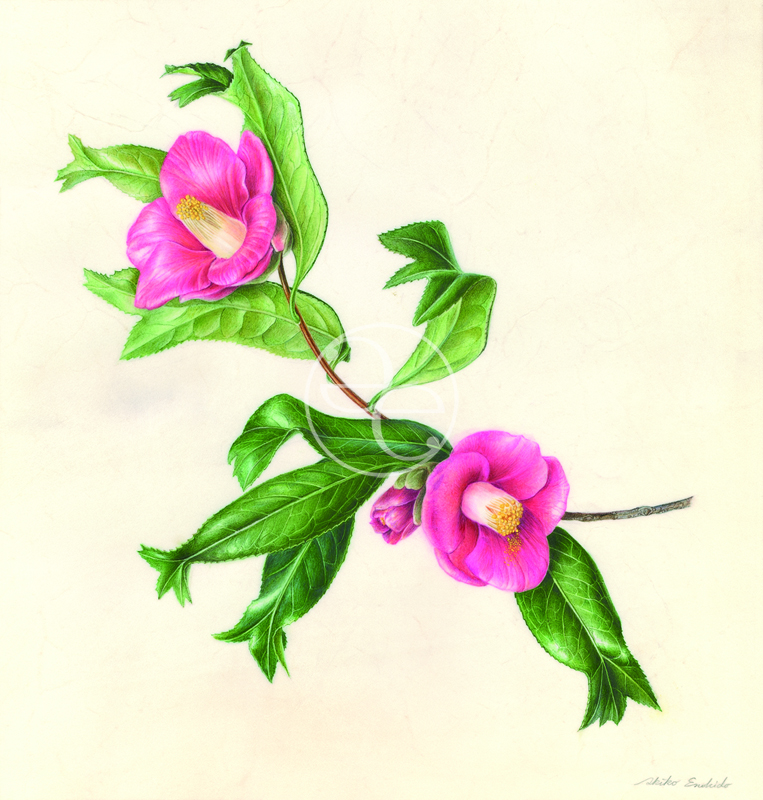
Akiko Enokido, Camellia japonica ‘Kingyoba tsubaki’, common name, Goldfish Camellia. Watercolor on vellum, © 2014, all rights reserved.
In addition to previous postings about BAGSC members’ acceptances, BAGSC member Akiko Enokido was also accepted into the 18th Annual International Show of the American Society of Botanical Artists (ASBA) at The Horticultural Society of New York.
Akiko sent this information about her painting:
The camellia cultivation started in 17th century in Japan. Goldfish Camellia is one of the old species. Most of the flowers are single layer, pink or white. But the foliage is appropriate to its name, and you can see the tip of the foliage split into three to five segments, which looks like a fishtail.
The leaves are unusually shaped and each leaf is different, showing different expressions and movement. These are really odd but lovely, even when they’re not in bloom. I picked one of the enchanting branch with leaves that looked like many fishes swimming and jumping.
Congratulations to Akiko and to all BAGSC members in the exhibition!
by Deb Shaw
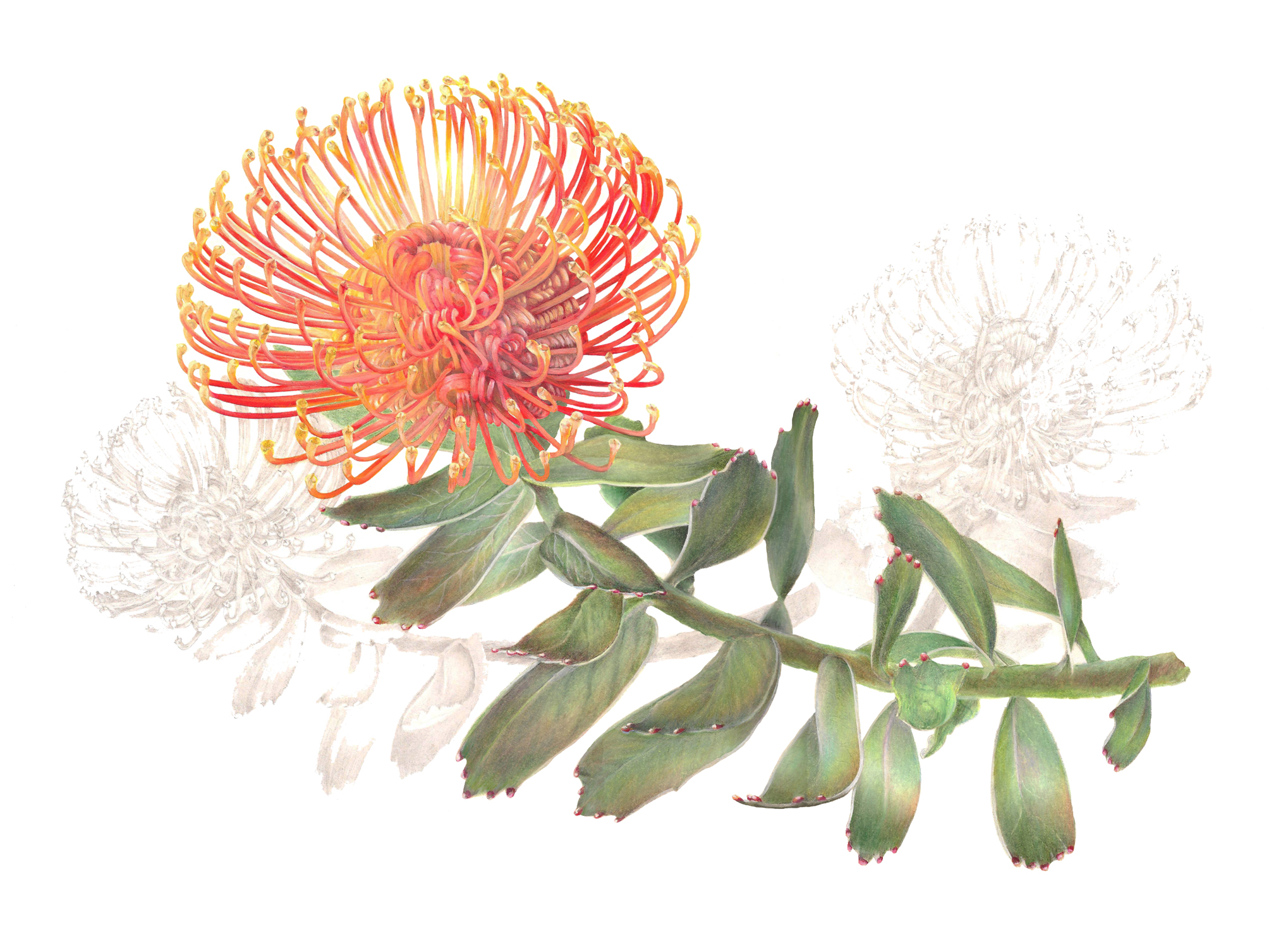
Leucospermum cordifolium, Pincushion protea, colored pencil by Estelle DeRidder, © 2015, all rights reserved.
BAGSC member Estelle DeRidder has been accepted into the 18th Annual International Show of the American Society of Botanical Artists (ASBA) at The Horticultural Society of New York too. Her work, Leucospermum cordifolium, Pincushion Protea, was done in colored pencil.
Congratulations Estelle!
 BAGSC News