You are currently browsing the category archive for the ‘Learning Opportunities’ category.
by Olga Eysymont and Beth Stone, posted by Deb Shaw
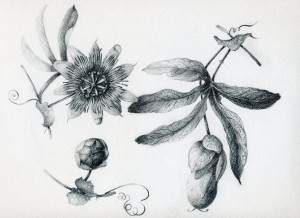
Passion Flower study, Olga Eysymontt, © 2008, all rights reserved.
BAGSC Founder and Member Olga Eysymont will begin her next six-week graphite pencil workshop this coming Sunday, June 12, 2016 at the Los Angeles County Arboretum and Botanic Garden. Entitled “Botanical Illustration: Plant Studies,” this workshop will explore the subject of plant families, with the goal of demonstrating both correct representation of the specimen, as well as a good compositional design. An emphasis on correct placement of light on form will be emphasized, in order to produce an authentic and realistic illustration.
The fundamental necessary skills to accomplish this begins with a 3-step process:
- contour drawing on tracing paper,
- compositional layout and value studies of the specimens on tracing paper, and, finally,
- a transfer of the tracing onto drawing paper for a final rendering.
Students will be expected to bring all of their own plant material after the first class.
“Botanical Illustration: Plant Studies,” in graphite, will meet for six Sundays, from 9:30 am – 3:30 pm, beginning Sunday, June 12, 2016. Sundays: 6/12, 6/19, 6/26, 7/10, 7/24, and 8/7.
Registration
Register online through Otis College of Art and Design Continuing Education. All classes will be held at the Los Angeles County Arboretum and Botanic Garden. The non-credit course (#25440) is $435 plus fees of $25 registration, $14 insurance and 2.75% on-line convenience, for a total of $487. Certificate and Credit options are also available for additional cost.
The linked page also has an option (see lower left) to register offline (PDF), if preferred. This PDF form includes email, FAX and phone registration information.
The Los Angeles County Arboretum and Botanic Garden is located at: 301 North Baldwin Ave, Arcadia, CA 91007.
Workshop Outline
Session 1: Apples or Pears
Session 2: Nuts or Seeds and Pods
Session 3: Root Vegetables
Session 4: Leafy Greens or Herbs
Session 5: Mushrooms
Session 6: Succulents
Class Materials:
14″ x 17” Strathmore Drawing Pad Series 400, Medium or equivalent. (You may use another brand, but please, no sketch or recycled paper.
14” x 17” Medium Weight Tracing Paper (any brand)
Drafting Pencil with Holder and Sharpener
HB and 2B leads (at least 2 each)
Eraser Stick
Erasing Shield
Drafting Brush
Mars Drafting Dots (masking tape)
Portable Task Light (Ott-Lite)
(Vis a Vis wet erase fine point marker, Clip, 8″ x 10″ Plexi and 8″ x 10″ format supplied by teacher for $10.00)
by Ann Brantingham, posted by Deb Shaw
Join BAGSC memer Ann Brantingham and John Brantingham for week-long classes in poetry, fiction, and/or art in Sequoia and Kings Canyon National Parks. Find artistic inspiration and new ways of seeing the world as you camp, hike, write, draw, paint, make new friends, and have fun in a natural environment.
Choose one or more weeks:
- June 27 – July 1: Fiction and Sketching
- July 11 – July 15: Poetry and Sketching with Guest Environmental Scientist Carly Creley
- July 25 – July 29: Backcountry Poetry and Sketching
(This includes a 2-night hike and camping in Redwood Canyon plus day hikes in Sequoia National Park.) - August 1 – August 5: Poetry and Sketching
- August 15 – August 19: Fiction and Sketching
Camping and Park Entrance are free. You will need to bring your own camping equipment, food, and writing or art supplies. We will be staying Wolverton Service Camp, which is a rustic campground.
Sign up at http://volunteer.gov and search keyword “inspiration.”
Questions? Email Ann Brantingham or John Brantingham.
by Deb Shaw
GNSI 2016 Conference Logo, © 2016 GNSI.
The Guild of Natural Science Illustrators (GNSI) will be holding their 38th annual GNSI Conference at the University of California Santa Cruz, July 3-9, 2016.
Home to the infamous Banana Slug mascot, the three-day core conference will be held July 3-6, 2016 on the beautiful Santa Cruz campus. Conference housing will be provided at Cowell College. Most of the conference events will also be conveniently located at Cowell. Rooms will be available in Cowell residence halls or apartments on a first-come, first-serve basis. Each housing package includes a full meal plan in the dining hall and a parking permit.
During the core conference, there will be seven keynote addresses, 37 breakout sessions, an auction, the ever-popular and always inspiring portfolio sharing session and a techniques showcase where illustrators generously share their knowledge with conference attendees.
Plenary speakers include John Muir Laws, nature journaling evangelist, who will present “Your Brain on Paper” and why it is so important for illustrators to have this observation tool. Terryl Whitlatch, artist for Star Wars Episode 1: The Phantom Menace, will share her tips and tricks in novel creature design. David Goodsell, a microbiologist from Scripps Institute of Oceanography, will reveal the world of cells in nanoscale through his watercolor paintings, which are both practical and beautiful.
Wendy Hiller Gee will highlight the importance of science and health literacy through her medical illustration practice. Breck Tyler, a seabird biologist, will share his experiences from 25 years at Midway Atoll observing albatross colonies. Jane Kim, founder of Ink Dwell studio, will share her extraordinary efforts to foster a love and respect for the earth through her Wall of Birds mural, depicting the 375-million-year evolution of birds. More than 260 species of birds are represented, all painted to scale. And Marc Paisin, our favorite art lawyer, will give us the rundown on how to copyright our own work (and how to stay out of trouble).
Presentations, Panels and Mini-Workshops
Following the plenary speakers in the mornings, there will be three afternoons packed with 50-minute presentations and 2-hour mini workshops by more than 45 experts in art, technical and scientific concepts. The presentations will cover a wide variety of topics, ranging from traditional media techniques (waxy pencil, gouache, and watercolor) to digital media (Photoshop and animation). BAGSC’s Tania Marien will be part of the panel for a presentation entitiled “When Good Careers Stall: Working Through the Slump.”
On Monday evening, all conference attendees can participate in illustrating a collaborative chalk mural of either a Kelp Forest or the California Coast Landscape. Expect a delightful evening of drawing, wine and desserts—working along side talented artists. Come prepared with sketches of your favorites from the species list on the website, or not; reference photos will be available. Want to help but not draw? Participants are needed to write species names in the border areas. After the conference, the two murals will hang on public display for about a month at the Sanctuary Exploration Center (SEC), a block from the Municipal Wharf—the heart of Santa Cruz.
Post-Conference Workshops and Field Trips
On July 7 and 8, following the core conference, there will be half-day and full-day workshops exploring traditional and digital media in depth. A few of the traditional media workshops include: silverpoint/pastels; mushrooms in watercolor; field sketching; graphite and pastel dust; and, textures in gouache.
A few of the exciting slate of field trips include: a whale-watching trip; sketching the jewel-like tide pools at Natural Bridges State Park; a behind-the-scenes tour of marine mammal facilities at Long Marine Lab; a day trip to Monterey Bay Aquarium and Cannery Row; and a kayaking trip in Elkhorn Slough. And, of course, what conference in Northern California would be complete without a wine-tasting tour.
Many ASBA and BASGC members also below to GNSI — you will recognize a lot of familiar faces! There is much to see, learn and do. Registrants who sign up before June 5 receive a $50 early bird discount! Hope to see you there!
by Lesley Randall, posted by Deb Shaw

Nepenthes, mixed media by Lesley Randall, © 2016, all rights reserved.
BAGSC member Lesley Randall will be teaching a mixed media class at San Diego Botanic Garden this July, 2016. The class will focus on the bold nature of pen and ink. Using ink, students will use strong lines to enhance shape and create movement. By adding watercolor, colored pencil or both, students will develop a striking design reminiscent of a woodcut. No experience is necessary for this class.
Mixed Media Botanical Art
Instructor: Lesley Randall
Saturday July 30th 9 am-4 pm
Cost: $75.00 for SDBG members; $90.00 for non-members
Register Online at www.sdbgarden.org
The San Diego Botanic Garden is located at: 230 Quail Gardens Drive, Encinitas CA 92024, 760/ 436-3036.
by Veronica Raymond, posted by Deb Shaw
Although not a BAGSC or ASBA workshop, the following may be interesting to all of us who are working on trees for the ASBA exhibition “Out of the Woods”.Dr. Matt Ritter, professor at Cal Poly San Luis Obispo, will be teaching a workshop entitled, “Tough Trees Made Easy: Pines, Oaks, Eucalypts, and Figs.”
Here is the workshop description and information, by Dr. Ritter and Dr. Yost:
Learn to ID species in the most difficult groups of trees! Help support student research travel. At this workshop we will teach you the biology and important identifying characters of pines, oaks, eucalypts, and figs. This all-day workshop will include lecture and lots of hands-on lab time for you to test your knowledge and practice difficult tree identification. You will walk away with the skills and working knowledge needed to identify species in the largest and most confusing groups of trees in California. We’ll also send you away with all the reference materials you’ll need for future work with these ubiquitous trees.
Three workshop locations to choose from:
- Palomar College, San Marcos on Tuesday June 28th, 2016
- The Los Angeles County Arboretum, Arcadia on Thursday June 30th, 2016
- San Jose State University, San Jose on Thursday July 7th, 2016
The workshop costs $120 and includes:
- A workshop packet and illustrated materials for identification
- Post workshop online identification and reference tools
- Catered breakfast and lunch, coffee, tea, and refreshments
- ISA Continuing Education Units (7 units)
100% of the workshop proceeds go to support student research travel to Australia. Learn new information while helping a Cal Poly student realize their dream!
Space is limited, register online or email Matt Ritter.
Workshop Instructors:
Dr. Matt Ritter: Winner of the WCISA R. W. Harris Award for Excellence in Education and author of California’s funniest book on trees.
Dr. Jenn Yost: Inspiring Professor of Botany at Cal Poly, where she teaches plant identification, ecology, and evolution.
by Deb Shaw

Aristolochia californica, California Pipevine, watercolor by Lee McCaffree, © 2016, all rights reserved. This painting by Lee was part of the “Weird, Wild & Wonderful” exhibition.
The schedule for Lee McCaffree’s workshops, A Painting! What do you See? and Completing a Painting have been changed: both workshops have been rolled into one day, one workshop, on Saturday, March 19. The workshop will still be held at the Los Angeles Arboretum, from 9:30 am to 3:30 pm.
There are still a few seats available. If you would like to take the workshop, but have not yet registered, please email BAGSC Treasurer Janice Sharp to let her know and make arrangements to send a check and/or bring it to the workshop on Saturday.
Cost: BAGSC members, $100.00/non-members, $120.00
Maximum number of participants (in each class): 15
You can see the original BAGSC News blog posting about the class here, including materials list and Lee McAffree’s bio. Don’t miss this great opportunity to take this rare workshop.
by Ted Tegart, posted by Deb Shaw
The Arboretum is bringing back botany Professor Matt Ritter for a lecture and walk, discussing and celebrating the Arboretum’s Australian trees, “Australian Trees for a Drought-Stressed Southern California”.
Saturday, March 19, 2016, 10:00 am – 12:00 pm
Los Angeles Arboretum
301 N. Baldwin Ave, Arcadia, CA 91007
10 am – 12 noon / Bamboo Room
Matt Ritter, Instructor
$30 members; $40 per non-member (includes Arboretum admission)
Reservations are preferred: Please call 626.821.4623 or pay at the door
Whether it’s an El Niño year or not, it’s dry in California and likely to get dryer. Trees from Australia can be part of the solution toward creating beautiful, diverse, and resilient urban forests that use less water.
We’ll explore drought-tolerant, appropriate Australian species for planting in our Southern California environment. This event will be partial classroom lecture and discussion, and part tree walk in the Arboretum’s world class collection of Australian trees. Come learn about Acacias, Eucalypts, Callistemons, Melaleucas, and Brachychitons, and so many more great Australian trees.
Matt Ritter is a professor in the Biology Department at Cal Poly, San Luis Obispo. He has authored numerous scientific papers and botanical treatments, including the second edition of the Jepson Manual, the Flora of North America Project, and a natural history guide to San Luis Obispo’s native plants. He is also the author of A Californian’s Guide to the Trees Among Us, the state’s most popular natural history guide to the urban forest.
He is the California Coordinator of the American Forests Big Tree Registry, holds a Kenan Fellowship at the National Tropical Botanical Gardens, is the chair of the City of San Luis Obispo Tree Committee, and editor-in-chief of Madroño, the journal of the California Botanical Society. He is an avid woodworker and gardener.
by Cynthia Jackson and Clara Josephs, posted by Deb Shaw

Olga Eysymontt’s demonstration of carbon dust, graphite dust and pencil techniques. Photo by Cynthia Jackson, © 2016, all rights reserved.
In each of Olga’s classes, we show our progress on what we had started the class before. Recently, that meant we shared our composition of the seedpods, cotton plant, bottlebrush branch, pussy willow, or whatever each of us had chosen. After the critique we continued to finish the drawing we had started.
One session ago we had a demonstration of carbon dust technique by Olga. She had done a pepper using graphite dust, carbon dust, and a combination of both, including the pencils that she had listed on the list of supplies we got for the class. She uses old makeup brushes for some of the application of the dust. The shorter handles are easier to work with when applying the carbon dust or graphic dust. Olga suggested we start with an outline of a simple object—nothing complicated. It turns out this technique is a very fast way, comparatively, to do a drawing. One classmate had drawing almost completed before the end of the class, beautifully done. And it’s fun!
We were asked to try to continue practicing with the carbon dust and other work we had started. We are learning a lot!
by Leslie Walker, posted by Deb Shaw
In a wonderful surprise, I found Margaret Best’s botanical art trip in October, 2016 announced in the Sunday LA Times, March 6, 2016, Travel Section. Entitled, [click the title to read] “Capture this on canvas: Painting workshop in Italy beckons artists,” by LA Times contact reporter Anne Harnagel, the article highlights Quench’s trip and Margaret’s botanical art class.
I can recommend this venue and teacher since I went there last Spring. I am going back this Fall to experience the area in a different season. Margaret is a great botanical artist and teacher and I’m looking forward to sharpening my skills in October.
Read Jan Clouse’s article and see pictures about Margaret’s last trip to Puglia on our BAGSC News blog. Details about the Puglia trip can be found at Quench.
by Patricia A. Mark, posted by Deb Shaw
Aristolochia californica, California Pipevine, watercolor by Lee McCaffree, © 2016, all rights reserved. This painting by Lee was part of the “Weird, Wild & Wonderful” exhibition.
Do not miss out on two classes coming soon to the LA Arboretum, taught by Lee McCaffree: A Painting! What do you See? and Completing a Painting. I had the opportunity to take these classes from Lee at Filoli, and are excited about taking them again.
These classes are both exceptionally informative! “A Painting! What do you See?” will cover a variety of techniques to view paintings (both yours and others) with objective eyes. Every picture tells a story. As individual artists it’s easy to miss issues related to composition, specimen accuracy, painting skills, light source, focal point, and color. Gentle, kind (and fun) guidance will open your critical eye, enabling you to identify issues and improve your work. Class time will be spent on viewing paintings from the botanical art world, and examining our own works. We will have class time to make adjustments on our works in progress.
Completing a Painting is a “must attend”! As an artist I find myself continuously asking,”is this complete”? “Have I overworked an area? What have I missed? Is the form strong, not only on individual leaves or flowers, but on the painting as a whole? Is the perspective accurate? Do areas transition from light to dark smoothly? Are brush strokes visible, the shadows appropriate, my edges clean? How do I sign and label my work for a juried exhibition or for a commissioned sale? And what are those jurors looking for anyway?” So many questions, all focusing on completing a wonderful painting! There will be class time available during this workshop to work individually on any of your present works-in-progress.
Saturday, March 19, 2016
A Painting! What Do You See?
Sunday, March 20, 2016
Completing a Painting
Both classes will be held at the Los Angeles Arboretum, from 9:30 am – 3:30 pm. Each of these important subjects will be conducted in a friendly, Participants can take one class or both!
Cost: One class: BAGSC members, $100.00/non-members, $120.00, Both classes: BAGSC members, $200.00/non-members, $240.00
Maximum number of participants (in each class): 15
To Register: Send checks, made out to BAGSC, in full, to BAGSC Treasurer Janice Sharp. Cancellations up to two weeks before the class date will be charged a $30.00 cancellation fee.
You can see the original BAGSC News blog posting about the class here, including materials list and Lee McAffree’s bio. Don’t miss this great opportunity to take this rare workshop.
by Deb Shaw

Diane Daly demonstrating at last year’s “Day of Art” at Roger’s Gardens. Photo by Deborah Shaw, © 2015, all rights reserved.
Botanical Artists Guild of Southern California (BAGSC) artists will be participating again in Roger’s Gardens 4th Annual Day of Art this coming Saturday, February 27, 2016 from 10 am – 4 pm. The event is free, and open to the public. In case of rain (a lovely thought, but, unfortunately for our water shortage, unlikely!) the event will be rescheduled.
BAGSC artists have participated each year since its inception; 50 botanical and plein air artists paint and draw in the Gardens for the day. Each of the participating artists will have an original painting on display (available for purchase). Judges will present awards and recognition for paintings in the exhibition.
Participating BAGSC artists include: Melanie Campbell-Carter, Clara Josephs, Suzanne Kuuskmae, Patricia Mark, Arillyn Moran-Lawrence, Terri Munroe, Diane Nelson Daly, Alyse Ochniak, Mitsuko Schultz, Deborah Shaw, and Ellie Yun-Hui Tu. BAGSC also will have a table available with information about BAGSC, American Society of Botanical Art (ASBA), and botanical art.
Schedule
Free workshops are open to the public and BAGSC members:
Printmaking Workshop: Printing Posies and Plants, 10 am – 1 pm, in the Amphitheater
Local artists Sheryl Seltzer and Carol Kreider will teach participants how to draw and transfer to a small relief plate, and “pull” their own monoprint. All skill levels and ages welcome.
Awards Ceremony, 12 pm, in the Outdoor Living area
Ten awards of excellence will be presented to artists participating in the exhibition. This year’s Judge is Gil Dellinger, a retired professor of art of the University of the Pacific, Signature Member of The Pastel Society of America, California Art Club, and PAPA, Plein Air Painters of America. [Last year BAGSC members Diane Daly and Deborah Shaw received awards of excellence.]
Drawing Workshop: Journal your Garden through Art / Drawing Leaves and Flowers in the Garden, 2 pm – 3:30 pm, in the Amphitheater
Learn to draw leaves and flowers and create a garden journal from BAGSC members Deborah Shaw, Clara Josephs, and Diane Daly. This is a great workshop for the whole family, as no art experience is required.
Hope to see you there!
by Lee McCaffree and Lesley Randall, posted by Deb Shaw
Aristolochia californica, California Pipevine, watercolor by Lee McCaffree, © 2016, all rights reserved. This painting by Lee was part of the “Weird, Wild & Wonderful” exhibition.
BAGSC member Lee McCaffree will be teaching two botanical art classes in March: one about how to finish a painting; the other about how to critique a work of art (and self-critique your own).
Both classes will be held at the Los Angeles Arboretum, from 9:30 am – 3:30 pm. Each of these important subjects will be conducted in a friendly, supportive, congenial atmosphere. Participants can take one class or both!
Cost:
One class: BAGSC members, $100.00/non-members, $120.00Both classes: BAGSC members, $200.00/non-members, $240.00
Maximum number of participants (in each class): 15
Saturday, March 19, 2016
A Painting! What Do You See?
We will investigate ways to critique a work of art. Personal experience shapes what we see. By using different techniques to view paintings the observer will have more ways to analyze with objective eyes. We will use many published works as well as class members’ works to practice these methods. Topics will include subject matter, botanical accuracy, painting skills, light source, color, form and compositional structure, balance and space. We will work cooperatively by sharing ideas to make this a positive experience for each artist to learn about their own work. Class time will include individual opportunities for making improvements on work in progress.
Materials list:
- Copies of 2 paintings (not yours) that you like
- 2 paintings (of yours), unfinished or finished, to share in critiques
- Tracing paper
- Your usual art supplies for your paintings, any media
Sunday, March 20, 2016
Completing a Painting
How do you know your art work is finished? Sometimes it is just a feeling that the painting is finished or something isn’t quite right. Good observation helps one see if a painting needs improvement, whether it is nearly finished or in progress. It is important to keep a freshness and avoid overworking. The artist needs to be objective in looking at their images. We will work with each other to see our work through another’s eye. Questions to consider will include: Where is my focal point? Do I have enough value change? Do the plant parts have volume and perspective? Are they botanically correct? Where has the paint or pencil gone astray either on my plant edges or in the negative space?
Class members will apply these observations to their paintings along with techniques in completing details such as dry brush, washes or corrections. This will include ways to change or clean up places to make your painting details more realistic. After identifying ways to finish your painting(s), there will be time in class to work on these details.
We will complete the process by discussing labeling. We will look at ways to present your piece with mats and frames depending on your intended goal for display.
Please bring the following materials:
- 1 or 2 paintings that you want to finish
- Usual art supplies in your media choice, including a magnifier
- Tracing paper
To Register:
Send checks, made out to BAGSC, in full, to BAGSC Treasurer Janice Sharp. Cancellations up to two weeks before the class date will be charged a $30.00 cancellation fee.
Bring your lunch, or purchase lunch at the Peacock Café, on the Arboretum grounds.
The Los Angeles County Arboretum and Botanic Garden is located at: 301 North Baldwin Ave, Arcadia, CA 91007.
About the instructor:
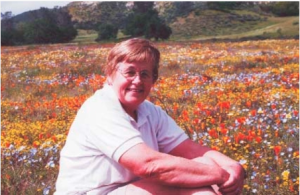
Lee McCaffree
Lee McCaffree is a botanical illustrator in watercolor. She shares the coordination and implementation of the Filoli Botanical Art Certificate Program and is a primary instructor. She served on the Board of Directors of The American Society of Botanical Artists. She gives regular private classes in the Bay area and instructed at the ASBA Annual meetings and the UC Berkeley Botanical Garden. She supports botanical artists by participating in coordinating teams for art exhibits and jurying.
She began her career in London, England studying under Christabel King of Kew Gardens. She received Medals for showing her “Pinus” series and “Plants in Peril” series at the Royal Horticultural Society exhibitions in London. Her works are in the permanent collections of the Royal Botanic Gardens at Kew Collection, London, the Filoli Florilegium and Hunt Institute of Botanical Documentation; Lee won Best of Show at the Northwest ASBA Exhibition in Portland, OR. Her showings include juried exhibitions at Contemporary Art Center, MOMA-New York; Longwood Gardens; Hunt Institute, Pittsburgh; Seattle Science Center; Flinn Gallery Greenwich, CT; Horticultural Society of New York; Missouri, Chicago, Denver and UC Berkeley Botanical Gardens; Strybing Arboretum, CA; Arizona Desert Museum, New York State Museum; Johnson & Johnson Headquarters; Oakland Museum; Loveland Museum (Colorado); Filoli exhibits and Florilegium; Northern California Society of Botanical Artist’s Alcatraz Florilegium and other venues. She created the poster for the California Native Plant Sale for the East Bay for ten years. Her work is published in Curtis’s Botanical Magazine, England and Today’s Botanical Artist. Her work was included in “Losing Paradise”, an exhibit of endangered species illustrations which traveled throughout the U.S and to the Shirley Sherwood Gallery at Kew Gardens, London. Currently, she is exhibiting in the Weird, Wild and Wonderful Traveling Exhibit from the New York Botanical Gardens.
Lee’s work concentrates on native plants which she hopes will increase their visibility and use in public and private landscaping. Her skill as a botanical artist allows her to focus her creativity on the finest details of each plant she paints. Her enthusiasm inspires her students to develop their own skills and enjoy the creative process.
by Suzanne Kuuskmae, posted by Deb Shaw

Albrecht Dürer, Two seated lions, 1521, silverpoint on paper prepared with a light tone, located in Kupferstichkabinett Berlin. Downloaded from Wikimedia Commons: this work is in the public domain in the United States and in its country of origin and other countries and areas where the copyright term is the author’s life plus 100 years or less.
Silverpoint has been used by artists to draw since the late Gothic/early Renaissance; a silverpoint drawing is made by drawing with a sharpened silver (or copper or gold!) stylus (thick wire) across a prepared surface. Some well-known artists who worked in silverpoint include Jan van Eyck, Leonardo da Vinci, and Albrecht Dürer.
Destination: Art in Torrance will hold a silverpoint workshop taught by Morgan Kari on Saturday, March 5, from 10 am – 3:00 pm, NEW REVISED DATE: Saturday, April 23, 9:30 – 3:00. Tuition is $60 with a supplies charge of $35. Morgan will bring supplies and know-how!; you will supply the drawing and watercolor paper.
The supplies from the workshop should last a long time after the workshop while you enjoy painting in silverpoint. In addition to showing silverpoint technique, Morgan also will demonstrate the use of black paper to enhance the silver etching and create a different look. It is a fit for botanical artists: all you need is the outline of your drawing, which can be a plant or flower you have already done, or a new one. The drawing outline is traced in dark pen, placed under the prepared paper on a light box, and drawn using the same silverpoint strokes that will be covered during the workshop. Using a light box is a big help! If you have a portable lightbox, please bring it to the workshop. We also will have two at the studio to use.
Questions, or to register, email Suzanne Kuuskmae or call her as listed in the BAGSC roster.
Destination: Art is located at 1815 W. 213th Street, #135, Torrance, CA 90501, (310) 742-3192, right next to the Bubble Bath Car Wash.
by Anita Walsmit Sachs and Deb Shaw

Tulip Parade, watercolor by Anita Walsmit Sachs, © 2016, all rights reserved.
Back by popular demand, Anita Walsmit Sachs will be offering a 5-day botanical drawing and painting workshop, “Hortus atelier” in cooperation with The Hortus botanicus, Leiden, in 2016.
The Hortus atelier program
The purpose of a botanical illustration is primarily a scientifically accurate drawing. The artistic input is reflected in the sensitivity in which the subject is displayed and in the composition.
PROGRAM: from April 11 to April 15, 2015, Course number 3 E C.2016.02 E
First day, the class starts at 10, with coffee and presentation, who is who and info, followed by a guided walk through the garden.
Lunch 12.00 – 12.30
Afternoon 12.30 – 15.45 Instruction about the subject to draw. Pencil drawing, including light and dark values.
Second day, instruction about material, paper, paint and colour mixing and composition.
Third day, transferring the drawing to the watercolour paper and painting.
Fourth and fifth days, continuing the process. Every day there will be a discussion about the progress of the drawing. The education is individually focused to gain an optimal result.
Costs
The fee will be € 395,00 including morning coffee, brasserie lunch and afternoon drinks. Information about payment will follow after subscription as well as information about lodging possibilities. A small optional assignment will be given before the course starts. Sign ups for the class are through Anita directly via email.
About the Hortus

The Hortus botanicus Leiden is a green oasis in the center of Leiden.
The Hortus botanicus Leiden is the oldest botanical garden in the Netherlands and one of the oldest in the world. It is located in the historical center of Leiden. Sitting behind the academy building of the Leiden University, the garden is a green oasis with a large collection of plants native to Southeast and East Asia, Southern Europe and South Africa. The Hortus is a haven within the city center, a historical monument and a meeting place full of character.
People go to the Hortus to relax, enjoy the seasons or to learn more about the diversity of the plant kingdom.
In 1590 the Hortus was founded by the University of Leiden. In 1594 Carolus Clusius (1526-1609) turned it into a medicinal herb garden. But Clusius introduced the tulip and many other plants like tobacco and potato to the Hortus. These flowers and plants became known throughout Western Europe.
Many famous international scientists such as Clusius, Boerhaave, Linnaeus and Einstein were connected to the Hortus botanicus in Leiden.

The Hortus botanicus Leiden is the oldest botanical garden in the Netherlands, and one of the oldest in the world.
In the 19th century, the German physician Philipp Franz von Siebold (1796-1866) brought hundreds of plant species with him from Japan to the Netherlands and 15 of these original introductions can still be found in the Hortus today.
About the Artist

Anita Walsmit Sachs in her studio.
Anita initially trained in fashion design at the Royal Academy of fine Arts in The Hague. Fifteen years ago she became a scientific illustator at the National Herbarium of Leiden University, now Museum Naturalis. She has won two RHS Gold medals and a second prize medal at the RBG show in Sydney, Australia. Anita has participated in the Highgrove Florilegium of HRH Prince Charles, the Transylvanian Florilegium of HRH Prince Charles, and the Sydney Florilegium. She is passionate about painting and teaching.
by Ted Tegart and Deb Shaw
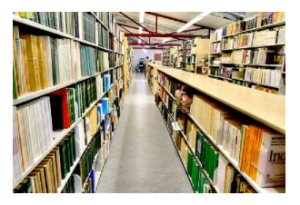
A view down a row of the remodeled Los Angeles Arboretum Library. Photo courtesy of LA Arboretum website, © 2016.
UPDATE TO ORIGINAL POST (by Deb Shaw):
I posted the article below at the beginning of the day (18 February), but then received an email this evening with an invitation to the Library Grand Re-opening on Saturday, February 27, from 1 – 3 pm. Steve Rushingwind will be performing Native American flute music and children can make a toy kaleidoscope. Karen Hochman Brown will be discussing her exhibit, Reflections in the Garden, which is on display in the Library. Free with admission; members free. Please contact Susan Eubank with questions, at 626.821.3213 or susan.eubank@arboretum.org.
The March 3 walk and talk may still be on the schedule; please double check with Susan.
Original Post:
Join Los Angeles Arboretum Librarian Susan Eubank for a walk and talk through and about the Arboretum Library on Thursday, March 3, 2016. After 50 years, the collections have emerged from the dark into a spacious, welcoming reinterpretation of a mid-century modern building, including a new children’s library. The extensive collections date from 1578 to 2016 in all formats and technologies. The Arboretum Library contains a comprehensive collection of resources on gardening, botany, California native plant life, environmental issues, and some agriculture as these subjects relate to the plants native to and planted in Southern California. This includes books, magazines, old seed and plant catalogs, government documents, pamphlets, and audio-visual materials.
The Library is open to everyone, free of charge. Any member of the general public may use library materials on-site. Arboretum Foundation Members may check out books.
NEW to the Arboretum is the capability to access articles online through the new digital archive, covering the development of the gardens, botanical descriptions of plants, background on local history, arboretum staff, exhibitions, lectures, concerts and more! Browse 65 years of Arboretum publications online and view online exhibitions (including botanical art)!
Arboretum Librarian Susan Eubank is a consummate botanical garden librarian who’s passionate about plants, gardens, libraries and helping customers with their quests.
The Arboretum is located at: 301 North Baldwin Ave, Arcadia, CA 91007. For more information about the tour, and for times, call 626.821.3222. The Arboretum Library is located within The Arboretum. To visit the Arboretum Library, go to the entrance rotunda and tell the cashiers you are there to use the library. Go straight through the double doors on the left (east) of the entrance rotunda. Library hours are:
- Tuesday-Friday, 8:30 am to 5:30 pm
- Saturday, 8:30 am to 5:00 pm
- Sunday, 12:00 pm to 4:00 pm
 BAGSC News