You are currently browsing the category archive for the ‘Learning Opportunities’ category.
by Tania Marien, Clara Josephs and Deb Shaw
The first Guild meeting of the new year will be held at the UC Riverside Botanic Gardens, a 40-acre garden and nature preserve in the Inland Empire. The program and tour has been expanded, and the RSVP deadline has been extended.
These lush 40 acres on the campus of UC Riverside were established as a teaching garden and were originally called the “Life Sciences Experimental Area”. Today the 52-year old garden is open to the public everyday except holidays.
The Guild’s meeting on Sunday, March 6, 2016 includes a tour of the Garden and an opportunity to learn more about trees in preparation for Out of the Woods: Celebrating Trees in Public Gardens, The Third New York Botanical Garden Triennial.
Tour (Part I) and Quarterly Meeting
The first BAGSC garden tour will occur before the meeting, and will cover the history of the garden and explore the formal parts of this little known gem.
Guild members should gather at the Garden’s entrance at 9:45 a.m. The garden tour will begin promptly at 10 a.m. Guild members should wear comfortable walking shoes and bring a hat, water and sunscreen. Cost is $8.00/person, payable at the meeting. Parking is additional (see below) and carpooling is encouraged (see below for that information too!). Guests, family and friends are welcome!
The business portion of the meeting will be held in the conference room from 11 a.m. – 1 p.m. Lunch will be eaten during the meeting. Please bring a sack lunch.
Tour (Part II)
After the BAGSC meeting and lunch, enjoy an optional, additional tour of the Garden from 1pm – 2pm. While you may be accustomed to visiting other botanical gardens, be prepared to explore the botanic gardens at UCR in the “Part II” tour. Hilly terrain and footpaths promise to turn your visit into an expedition. See additional tree specimens and parts of the garden that the casual visitor will miss. Don’t feel like going on an expedition? Bring your sketchbook and camera and spend the afternoon recording your finds.
What can you do at UCRBG?
Here are some suggestions… [click a photo to see a larger image and captions]

Meet at the entrance at 9:45 am. UC Riverside Botanic Garden. Photo: Garden entrance, Tania Marien, © 2016.

Enjoy a stroll through Alder Canyon. UC Riverside Botanic Garden. Photo: Alder Canyon lawn, Tania Marien, © 2016.

Explore the South African Garden. UC Riverside Botanic Garden. Photo: Aloe, Tania Marien, © 2016.

Visit the butterfly garden. UC Riverside Botanic Garden. Photo: Asclepias sp., Tania Marien, © 2016.

Visit the geodesic dome. UC Riverside Botanic Garden. Photo: Geodesic dome entrance, Tania Marien, © 2016.

Find a staircase when you least expect it. UC Riverside Botanic Garden. Photo: View from top of stairs, looking down at conference room, Tania Marien, © 2016.

Explore the Ficus grove. UC Riverside Botanic Garden. Photo: Ficus Trees, Tania Marien, © 2016.

Marvel at Riverside’s natural landscape. UC Riverside Botanic Garden. Photo: Box Springs Mountain, Tania Marien, © 2016.

Enjoy expansive views of UCR. UC Riverside Botanic Garden. Photo: Hilltop view of UCR, Tania Marien, © 2016.

Explore parts of a 40-acre oasis. UC Riverside Botanic Garden. Photo: Footpath, Tania Marien, © 2016.
Directions, reservations, and other nitty-gritty information
RSVP: To reserve a spot on the Garden tour and to RSVP for the Guild meeting, please contact Tania Marien by February 19, 2016. Won’t be able to commit until the last minute? Never fear! We will be reserving a few additional spots for those who discover they can come at the last minute. Please let Tania Marien know, however, as soon as possible.
Directions and parking: To help you navigate your way through campus, here are written directions:
- From L.A. or Orange County:
- Take the 60 Freeway east.
- Exit at Martin Luther King Blvd.
- Turn right at the end of the off-ramp.
- Turn right at first stoplight (Canyon Crest Drive).
- Enter campus and continue to West Campus Drive.
- Turn right on West Campus Drive.
- Follow West Campus Drive past Entomology, the Herbarium and the greenhouses. The road descends as it passes the greenhouses. The bottom of the hill is Botanic Garden Drive. Turn right at the stop sign onto Botanic Garden Drive.
- You will see Lot 10 on your right. Parking here is limited to 2 hours ($1.25/hr on weekends). You do not want to park here if you will be at the Garden all day.
- To park in the UCRBG parking lot, look beyond Lot 10 and you will see Botanic Garden Drive continue up a gradual hill to your right. Follow this road to the Garden. If space is available, park in the Garden’s lot. Purchase a permit at the permit dispenser located just inside the main gate. Parking in this lot costs .25¢ per hour.
If parking in the Garden’s lot is full, do this:
- Drive down Botanic Garden Drive. At the bottom of this short road, turn right.
- Park in Lot 13. Look for Tania’s white Suburban.
- It will have on it a large magnetic sign from the WWW Symposium. Once again, look for Asuka’s tomato. This way you will know you are in the correct parking lot.
- Purchase a permit at the permit dispenser. Parking in Lot 13 is $5.50/day on weekends.
- Walk back to the Garden.
- For more information about visitor parking and permit dispensers, please go to http://parking.ucr.edu/visitor.
Download a color-coded map, supporting the written directions above.
To learn more about the Garden, please see http://gardens.ucr.edu.
Attached to this message is a map_UCR_campus supporting the written directions above. If you have any questions, do not hesitate to contact Tania Marien.
Carpooling: We are coordinating carpooling locations to make the drive fun and parking easier.
Pasadena area: There is limited parking available at the LA Arboretum. They are expecting a large crowd later that morning for a rock (not music) show. We can park at the outer edges of the LA Arboretum parking lot, OR we can arrange to meet just south of the Arboretum, in the Westfield mall parking lot.
San Dimas meeting place: Meet at the juncture of the 210 and 57 in the Costco parking lot in San Dimas at 520 N. Lone Hill Ave. An easy meeting spot is near to the Costco gas station.
Orange County meeting area: members should arrive at Clara Josephs’ house in North Tustin in time to depart by 8 am.
Want to set up a carpool location in your area? Join a carpool at one of the locations above? Contact Clara Josephs. If you have room in your car, and will take another member, let Clara know so she can help someone who needs a ride.
We look forward to welcoming you to the UC Riverside Botanic Gardens (UCRBG) on Sunday, March 6, 2016.
Posted by Deb Shaw
Denver Botanic Gardens
The Denver Botanic Gardens has announced that applications are open for their 2016 artist in residency program. The Summer2016 residency provides an opportunity for the selected illustrator/artist to get involved in a variety of activities at the Denver Botanic Gardens, including open studios, demonstrations and educational projects in the classroom or the Science Pyramid, to online documentation and educational outreach. Last year’s artist in residence was Ikumi Kayama, who you might have met at the “Weird, Wild & Wonderful” Symposium at The Huntington last summer.
There are two residency opportunities, each for a period of six weeks:
June 13 – July 22 OR
August 8 – September 22
Read more about the application process, deliverables, copyright ownership, and funding on the Denver Botanic Garden’s website.
The closing date for submissions for the Denver Botanic Gardens artist in residency program is February 29, 2016. The selection process will be completed by March 4, 2016.
The Denver Botanic Gardens are located at: 1007 York Street, Denver, CA 80206.
Artist-at-Sea Program
It’s not botanical art, but if you’re dreaming of getting away from it all, the Schmidt Ocean Institute is looking for artists of broad disciplines to work with scientists and the ship’s crew aboard the Falkor. In February, the Falkor will sail out of Tahiti to study the underexplored submarine vents off the Society Islands in the South Pacific Ocean.
View all the details on the Schmidt Ocean website. Bookmark the website to view other opportunities as they arise.
The application deadline is January 10, 2016.
by Estelle DeRidder, Clara Josephs and Deb Shaw

Estelle DeRidder with her artwork in the exhibition. Photo by Clara Josephs, © 2015, all rights reserved.
As previously posted here in the BAGSC Blog, Estelle DeRidder held an exhibition of twelve more paintings of California Native species, as an extension of her ‘Flashcard Project’, started through a grant from the ASBA to illustrate the plants of the Madrona Marsh in Torrance, California.
The exhibit was open to the public until December 3, 2015.

A selection of Estelle DeRidder’s cards at the exhibition. Photo by Clara Joseph, © 2015 all rights reserved.
Estelle also conducted an ornament-making session at Madrona Marsh in December, with botanical art and pollinators as the theme. There were 45 participants, who industriously produced 120 ornaments in three hours! Birds and creepy-crawlies were the pollinator species of choice this time around.

Participants busy making holiday ornaments. Photo by Estelle DeRidder, © 2015, all rights reserved.
Estelle will teach a Spring ornament-making workshop too. Spring will include flowers, trees and shrubs, butterflies and bees, and probably some birds as well (they’re popular). Interested? Email Estelle.
by Cristina Baltayian, posted by Deb Shaw
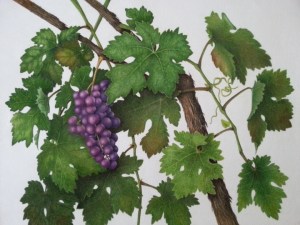
Grapes and vine, Cristina Baltayian, © 2015, all rights reserved.
Cristina Baltayian will be resuming her popular series of Botanical Art and Illustration classes at the LA County Arboretum and Botanic Gardens on January 5, 2016.
The classes are held on the first four Tuesdays of each month, 10 am – 2 pm, in the Oak Room. Cristina’s first six-week unit will be Aerial (atmospheric) Perspective. Create “flat-free” paintings! Students will explore depth of composition, showing distinct foreground, middle ground, and background with a variety of techniques.
Enrollment is open to the public through the Education Department at the Arboretum, 301 N Baldwin Ave, Arcadia CA 91007. Tuition is discounted for Arboretum members. Call the Arboretum at 626-821-3222 or email Cristina for more information.
P.S. from Deb Shaw: Apologies to all for the late posting on this. It was emailed to me while I was on the road, and I wasn’t able to post it on short notice. If you are interested in Cristina’s classes, please contact the LA Arboretum with the information above, or click on Cristina’s name to email her.
by Gilly Shaeffer, posted by Deb Shaw

Gilly Shaeffer, “Camellia,” watercolor on paper, 2015, all rights reserved.
Gilly Shaeffer, long time member of BAGSC, will be holding four Wednesday morning classes in January, 2016 at her home studio in “Botanical Drawing and Watercolor Basics.” This is a great opportunity for beginners and intermediates to perfect their drawing skills and also a preparation for doing botanical watercolor painting. It is perfect for those who like a small group experience with a lot of individualized attention. It will consist of a cumulative series of exercises to improve observational and drawing skills, as well as, preparing students to create three dimensional form through light to dark shading. Those who complete the drawing exercises with Gilly will move on to the study of botanical watercolor painting. The understanding and skills gained through these classes can be applied when doing all types of drawing and painting.
Visit Gilly Shaeffer’s website to see samples of her work and read her “Bio” to learn about her educational background, teaching experiences and accomplishments in botanical art.
Four Wednesdays in January, 2016: January 6, 13, 20, 27
10:00 a.m. to 1:00 p.m.
Fee:$160
Locations: Gilly’s Home Studio
For address, directions, and answers to any questions, please Gilly’s email address.
by Diane Daly and Deb Shaw
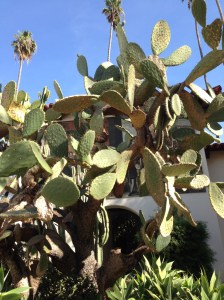
The Opuntia cactus in the courtyard at the entrance to Bowers Museum. Another beautiful Fall day in Southern California. Photo © Deborah Shaw, 2015.
BAGSC members Diane Daly, Deb Shaw, and new BAGSC member Linda Carpenter spent a gorgeous Fall day at the Bowers Museum on November 22, demonstrating botanical art and talking with visitors to the Museum. BAGSC members are demonstrating in conjunction with the Bowers exhibition “The Red that Colored the World,” on display through February 21, 2016.
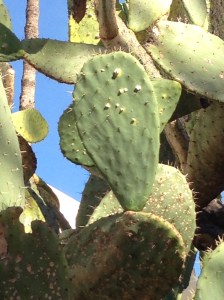
Cochineal (Dactylopius coccus) is a scale insect that lives on Opuntia cacti. The insect produces carminic acid, from which carmine dye is derived. The females and their nymphs secrete a waxy, white web to protect them from the sun and predators. Photo © Deborah Shaw, 2015.
There is a huge Optuntia (Prickly Pear) growing in the courtyard at the entrance to the Bowers, serendipitously covered with Cochineal. We were lucky to have a large pad that had fallen to the ground, and, in addition to botanical art, we were able to show visitors the Cochineal scale insect, the color, and even some Mealybug Ladybird (ladybug) larvae who were feasting on the Cochineal. It was a whole world on one cactus pad. Visitors to the museum were fascinated (as were we!).
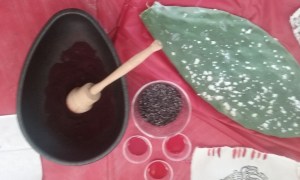
Live Cochineal (under the white on the Opuntia cactus paddle); dried Cochineal; and paint from the crushed insects. Photo by Diane Daly, © 2015, all rights reserved.
Diane Daly teaches at the Bowers Museum Treasures Program, which reaches out to senior centers, community centers, libraries, social service agencies and residential communities, engaging older adults who may be feeling isolated through art. The Thursday program focused on Cochineal as well, complete with demonstrations of crushing the bugs and using them to make paint. The seniors then painted an Aztec design using the paint. They could add lemon juice to some of the paint, which made it a lighter, warmer red.
Deborah Shaw will be teaching a a two-day color mixing class, “What’s Cool (and Warm) about Red” (with paint from the art supply store) on Saturday, December 12 and Sunday, December 13 at Bowers. Registration is through the Bowers website.
Additional BAGSC demonstration days in conjunction with the exhibition will be held in January and February. Come join us and learn about a color that changed the history of the world, that’s still in use today. (You’ll be amazed at how much Cochineal is still used in food, make-up and clothing dyes.) Email Deb to sign up!
by Clara Josephs, posted by Deb Shaw

University of California, Riverside, Botanic Garden. Photo by Tania Marien, © 2015, all rights reserved.
Mark your calendars: the first BAGSC Quarterly meeting of 2016 will be Sunday, March 6, 2016, at 9:30 am at the University of California, Riverside Botanic Gardens.
A guided tour of the Gardens begins promptly at 9:45 am.
Sack lunch and quarterly meeting immediately following at 11 in the conference room.
Cost: $8 for tour (payable at the meeting) plus parking fee.
Tania Marien has arranged a guided tour just for BAGSC members of the spectacular botanic garden at UC Riverside. This world renowned garden and research facility has a unique collection of plants and trees from all over the world, including rare and bizarre plants from Baja, California and unique specimens from the Sierra Foothills. Ongoing research projects include the development of dwarf, low winter-chill lilacs and a breeding project focused on developing heat resistance in Cantua (Magic Flower of the Incas).
The tour will last approximately 1-1/4 hours. There is bench seating along the route. Please bring $8 to cover the cost of the guided tour, money for parking, a sack lunch and drink. Our quarterly meeting and lunch will begin at 11. You will want to bring your camera or sketchbook! Plan to arrive in the parking lot by 9:30. Restroom facilities are at the entry to the garden. We plan to begin the tour promptly at 9:45 am.
Carpool meeting locations will be established in various Southern California locations to make travel to Riverside easier. More to come later on carpooling. Please note that parking in lots other than the small lot at the botanic garden is subject to University parking fees. Carpooling is encouraged.
Visit the UCR Botanic Gardens online. You’ll be impressed by what you see!
BAGSC Meeting Dates for 2016
- March 6
- June 4
- September 11
- December 3
Parking Information for UC Riverside Botanic Gardens
Weekend parking at the botanic gardens is .25¢/hour. Parking is limited. Weekend parking in UCR Lot 10 is $1.25/hour, 2-hour maximum.
by Alyse Ochniak, posted by Deb Shaw
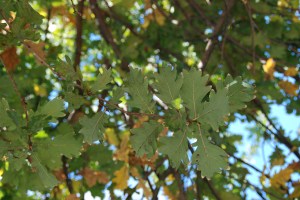
Leaves of the Quercus ruber (English Oak) outside the Botanical Ed Center. Photo credit: © 2015 Alyse Ochniak, all rights reserved.
On October 24, 2015, BAGSC members enjoyed an informative class taught by Dr. Jim Folsom, Telleen/Jorgensen Director of the Botanical Gardens at The Huntington Library, Art Collections and Botanical Gardens.
The class focused on the growth and structure of trees. Students looked at branches from the Quercus ruber (English Oak), from outside the Botanical Ed Center, studying leaves and growth buds. Dissection and compound microscopes were used to bring tiny cell structures of oak leaves and bark into focus.
After studying the different cells and structures students enjoyed a walk with Jim looking at different growth habits, bark, leaves and acorns of different oak trees in the gardens.
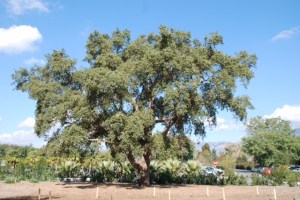
Quercus suber, Cork oak tree, from looking at trees with Jim Folsom. Photo credit: © 2015, Alyse Ochniak, all rights reserved.
The class ended with refreshments and discussion of the next workshop on January 17, 2016.
Hurry space is limited, if you want to sign up for the next workshop! The January 17, 2016 workshop is limited to 20 students, and will be held in the Engemann Applied Tech Lab, from 8:30 am – 12:00 pm. Cost is $10.00, payable at the workshop. Reservations are required, however; please RSVP to Alyse Ochniak. Reservations are first come, first served.
For more information about the New York Botanical Garden Triennial “Out of the Woods, Celebrating Trees in Public Places” visit the ASBA website.

Quercus suber, Cork oak tree, close up of bark. Photo credit: © 2015, Alyse Ochniak, all rights reserved.
The Huntington is located at: 1151 Oxford Road, San Marino, California, 91108.
About the instructor:
Jim Folsom, PhD., rides the demographic peak of baby boomers, having been born in southeastern Alabama in 1950. His lifelong love of plants is reflected in a BS in Botany from Auburn University, an MA in Biology from Vanderbilt University, and a PhD in research botany from The University of Texas at Austin. Though his research has centered on the orchid family, with much of the research time spent in Tropical America (including a year in Colombia on a Fulbright Pre-Doctoral Fellowship), Jim’s botanical interests are wide-ranging. As Curator of the Botanical Gardens at The Huntington in San Marino, CA, he dedicates much of his effort to educational programs that increase public interest and understanding of the science, culture, and history of plants and gardens. He lives at The Huntington with his wife, Debra (also a botanist) and children Molly and Jimmy. Jim was recognized as a Friend of the Cactus and Succulent Society of America in 1996, a Member-at-Large of the Garden Club of America in 1998, and presented a Professional Citation by the American Association of Botanical Gardens and Arboreta in 1999. The Garden Club of America awarded him their Medal of Honor in 2007.
by Deb Shaw
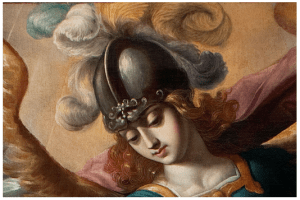
Image Credit: Detail, Sebastian Lopez de Arteaga, St. Michael and the Bull, c. 1650. Denver Art Museum Collection: Collection of Frederick and Jan Mayer, 1994.27.
BAGSC member Deborah Shaw will be teaching a two-part introductory workshop at Bowers Museum in Santa Ana, California, Saturday, December 12 and Sunday, December 13, 2015, 11:30 am – 1:30 pm, “What’s Cool (and Warm) about Red: Color Mixing in Watercolor.”
Taught in conjunction with the exhibition “The Red that Colored the World,” this consecutive two-day workshop will use the flowers and fruits of the season as the basis for learning to mix a full spectrum of reds, both warm and cool. Delve into warm, fiery reds the first day, and cool, velvety reds the next. Explore transparency, undercolor painting and palette mixing. Suitable for beginners to advanced artists.
Location: John M. Lee Court in Bowers Museum
Price: Member $24 | General $30 | Students $20 with valid I.D.
Materials provided with a $15.00 materials fee payable to the instructor the day of class, and/or feel free to bring your own favorite materials.
Proceeds benefit Bowers Museum Education Programs. Tickets are non-refundable, may be purchased online or onsite. Questions? Contact Bowers by email or by calling 714.567.3677.
The exhibition, “The Red that Colored the World,” traces the history of cochineal and the seductive visual nature of red. It explores the quest for the perfect, vibrant red, which culminated in the Aztec marketplace of 16th-century Mexico, where Spanish explorers first encountered the American cochineal bug. More than 100 objects, which have all been tested to ensure they contain cochineal, come from all over the globe, and include textiles, sculpture, paintings, manuscripts, decorative arts, clothing and more. The exhibition was organized by the Museum of International Folk Art, Santa Fe, New Mexico, USA, and made possible by the generous support of the National Endowment for the Humanities and circulating through GuestCurator Traveling Exhibitions. Articles about the exhibition can be found on the Bowers Museum site, including coverage by the PBS NewsHour.
Bowers Museum is located at: 2002 North Main Street, Santa Ana, California 92706, 714.567.3600.
http://www.bowers.org
Deborah Shaw has a degree in fine art from Pomona College, The Claremont Colleges, where she also studied botany and native California flora. Ms. Shaw is an active member of the American Society of Botanical Artists, the Botanical Artists Guild of Southern California, and the Guild of Natural Science Illustrators, and has taught art and botanical art at numerous venues, including The Getty, Virginia Robinson Gardens and Bowers Museum.
Deborah’s work has been displayed in juried and non-juried exhibitions, and is in private collections. Her work is in the permanent collection at the Hunt Institute for Botanical Documentation at Carnegie Mellon University and other institutions. She has received numerous awards for art, illustration, design, product design and advertising. Her preferred media include graphite, watercolor, colored pencil, scratchboard, Illustrator and Photoshop.
by Ted Tegart, LA Arboretum, posted by Deb Shaw
If you love plants and like to draw, this workshop on botanical drawing is custom-made for you! Join instructor Cristina Baltayian for a three day workshop on drawing autumn leaves in colored pencil on wood.
Drawing is a fundamental skill in botanical art and its importance should never be underestimated. In these three days, you will:
- Hone your observation skills
- Be guided through sketching and line drawing exercises
- Discover how to arrange shapes on a page and make a pleasing composition
- Translate a 3-dimensional subject onto a 2-dimensional surface
This exploration in colored pencil on wood will show you how to start and finish a botanical portrait of a leaf. If your curiosity is piqued and you wish to investigate further, please join the on-going Tuesday Botanical Art classes from 10am-2pm.
Three Day Workshop:
Thursday November 12, Friday November 13, Saturday November 14
10am-3pm (includes lunch break)
$255 Arboretum members for workshop
$275 non-members for workshop (Includes Arboretum Admission)
You may bring your lunch or purchase it at the Peacock Café
ALL LEVELS WELCOME. SUPPLIES WILL BE PROVIDED AT THE START OF THE CLASS, although students may bring their own colored pencils if desired.
Pre-registration required: please call 626.821.4623.
Cristina Baltayian holds a Botanical Illustration Certificate from Cornell University. She has a background in drawing (graphite, charcoal, pen and ink), two-dimensional design, watercolor, and colored pencils. Her work is in public and private venues, and has been shown at Filoli, Los Angeles County Arboretum and Botanic Garden, Chapman University, Virginia Robinson Garden and in an adjunct Botanical Artists Guild of Southern California group exhibition presented by the botanical gardens at The Huntington Library, Art Collections and Gardens. She is a member of the American Society of Botanical Artists, and The Botanical Artists Guild of Southern California.
by Beth Stone
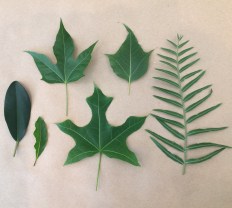 A wonderful series of weekly classes has just concluded at the LA Arboretum and Botanic Garden. This Otis College course was taught by Olga Eysymontt. Each class in the series built upon the preceding progressing from contour drawing to shading exercises then on to visualizing basic forms as they apply to increasingly complex botanical subjects. Artistic composition was also a theme throughout.
 For some students the material was brand new, for others it was review, for myself it certainly filled in some gaps. Without question, all the subject matter and techniques which Olga covered are foundational to botanical art.
Olga makes great use of a combination of demonstration, class discussion and one-on-one guidance. Each class included at least one opportunity to share our progress with and learn from one another. Each session concluded with a homework assignment. I found this particularly valuable and just the right level of effort to keep me engaged between classes. Practicing the concepts on my own really helped to reinforce each lesson.


By the end, each of us had several completed works…and one more work in progress to keep that momentum going.
Watch for Olga’s next series coming up in January 2016. I highly recommend it!
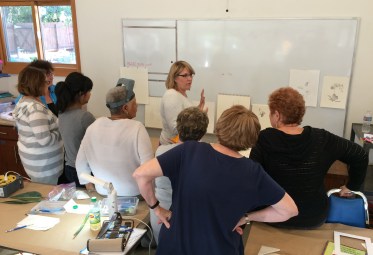
by Deb Shaw
Icon for the “Weird, Wild & Wonderful” Symposium keynotes, available for free from iTunes U > The Huntington.
The keynote lectures from the “Weird, Wild & Wonderful” Symposium have been made available in audio format by The Huntington Library, Art Collections and Botanical Gardens for free, via iTunes U > The Huntington. To listen, go to: https://itunes.apple.com/us/institution/the-huntington/id416672109. This link will take you to the iTunes U where you can hear all of the keynote talks from the symposium unedited, including:
- Jim Folsom’s opening remarks
- Dr. Jodie Holt, “Do you ‘see’ plants? Using Art and Technology to Teach Science”
- Mieko Ishikawa, “Painting the Wonder Plants of Borneo”
- Dr. Phillip Cribb, “The Art of Orchids”
- Dr. Alain Touwaide, “Plants, Artists, Languages: A Sense of Time and Places”
If you are having trouble connecting with the link above, go to The Huntington’s website, scroll down to the bottom of the page to the social media icons on the lower right side, and click on the iTunes U icon (the music notes). While there, take a look around at all of the free lectures offered by The Huntington.
The “Weird, Wild & Wonderful” Symposium was held this summer in conjunction with the southern California showing of Weird, Wild & Wonderful: The New York Botanical Garden Second Triennial Exhibition, Botanical Illustrations of Remarkable Plants, a traveling exhibition curated by the American Society of Botanical Artists.
by Clara Josephs, posted by Deb Shaw

Jim Henrich, Curator of Living Collections, Los Angeles Arboretum, lectures about their tree collection. Photo by Clara Josephs, © 2015, all rights reserved.
On Saturday October 11, 14 BAGSC members were treated to an hour and a half walking tour of a portion of the exquisite tree collection of the Los Angeles County Arboretum and Botanic Garden. Our gracious guide, Jim Henrich, Curator of Living Collections, enthralled attendees with detailed descriptions of the life cycle and history of about 30 unique or rare trees in the Arboretum’s extensive collection.
The tree collection was begun in the 1950s, and includes some specimens that are grown outdoors in the US only at the Arboretum. BAGSC members used Jim’s handout of significant trees to take detailed notes and reminders about tree locations. After a great morning, the group enjoyed lunch on the patio of the Peacock Café.
Other Tree Walks are planned to help members prepare paintings for submission to the New York Botanic Garden’s Triennial, “Out of the Woods.” Read the call for entries on ASBA’s website.
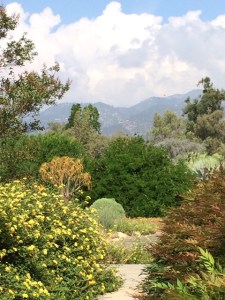
A beautiful day at the Arboretum. Photo by Beth Stone, © 2015, all rights reserved.
by Alyse Ochniak, posted by Deb Shaw
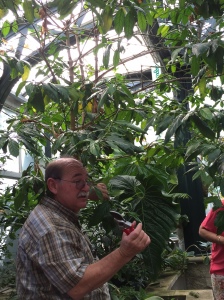
Jim Folsom lecturing during the “Weird, Wild & Wonderful Symposium.” Photo by Clara Josephs, © 2015, all rights reserved.
More looking forward to the next New York Botanical Garden Triennial, “Out of the Woods”:
Jim Folsom, Marge and Sherm Telleen Director of the Botanical Gardens, will be teaching two workshops about the structure of trees at The Huntington Library, Art Collections, and Botanical Gardens, on:
October 24, 2015 (limit 30 students) in the Brody Teaching Lab, from 8:30 am – 12:00 pm, and
January 17, 2016 (limit 20 students) in the Engemann Applied Tech Lab, from 8:30 am – 12:00 pm
Cost is $10.00 each session, payable at the workshop. Reservations are required, however; please RSVP to Alyse Ochniak. Reservations are first come, first served.
Come to one or both! Each session will be a 3-hour demonstration/workshop. Students will use dissection and compound microscopes to examine tree architecture, growth patterns, and structural characteristics using fresh and prepared material (provided by the Gardens). Discussion will include characteristics and terminology used to describe trees, and most useful in identification. Instruction will give particular attention to natural growth patterns and specific details of tree morphology and anatomy that would impact veracity of depiction.
Workshops only require pencil/pen and sketchbooks for taking notes, although artists are welcome to bring whatever materials they would like to use. Attendees are welcome to stay and draw in the Gardens after the class.
For more information about the New York Botanical Garden Triennial “Out of the Woods, Celebrating Trees in Public Places” visit the ASBA website.
The Huntington is located at: 1151 Oxford Road, San Marino, California, 91108.
About the instructor:
Jim Folsom, PhD., rides the demographic peak of baby boomers, having been born in southeastern Alabama in 1950. His lifelong love of plants is reflected in a BS in Botany from Auburn University, an MA in Biology from Vanderbilt University, and a PhD in research botany from The University of Texas at Austin. Though his research has centered on the orchid family, with much of the research time spent in Tropical America (including a year in Colombia on a Fulbright Pre-Doctoral Fellowship), Jim’s botanical interests are wide-ranging. As Curator of the Botanical Gardens at The Huntington in San Marino, CA, he dedicates much of his effort to educational programs that increase public interest and understanding of the science, culture, and history of plants and gardens. He lives at The Huntington with his wife, Debra (also a botanist) and children Molly and Jimmy. Jim was recognized as a Friend of the Cactus and Succulent Society of America in 1996, a Member-at-Large of the Garden Club of America in 1998, and presented a Professional Citation by the American Association of Botanical Gardens and Arboreta in 1999. The Garden Club of America awarded him their Medal of Honor in 2007.
by Gilly Shaeffer, posted by Deb Shaw
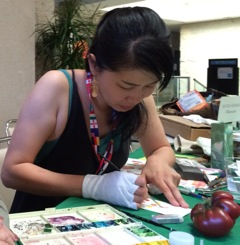
Asuka Hishiki demonstrating during the “Weird, Wild & Wonderful” Symposium at The Huntington, July 2015. Photo by Gilly Shaeffer, © 2015.
During the recent “Weird, Wild & Wonderful” Symposium at The Huntington, I watched Asuka Hishiki as she demonstrated how she would paint a segment of an heirloom tomato skin. Here are my impressions of the way she went about developing this small sample of the tomato skin with paint.
- Asuka says every time she approaches her subject it is new for her.
- Asuka starts sketches on tracing paper.
- She uses a wood pencil in a pencil holder which she sharpens with a box cutter.
- She goes over her pencil lines with a lighter color paint or yellow ochre. So she will have thin lines in watercolor for her drawing.
- At this point she erases any pencil lines.
- She covers the entire form with a Chinese white wash. (The Chinese white that she likes is the Holbein brand.) She says one should stay very light when applying the first layer of this white paint. This Chinese white wash acts as a protection for the paper. Much of it gets taken off during the removal of the masking fluid (to be mentioned later).
- Asuka will add more Chinese white paint on the places where she wants the paint to bleed to create soft color transitions. She also mentions the importance of keeping harmony in the colors used as the form develops.

Asuka Hishiki masking fluid technique. Photo by Gilly Shaeffer, © 2015.
- She mixes three colors together in a small amount to be used to develop the form using the dry brush technique. She uses Interlon brand brush #3/0 for her dry brush work.
- In preparing to use masking fluid to prevent certain areas of the paper from getting painted, she would prime the brush to be used with liquid soap. The soap helps to keep the masking fluid brush in good shape for future use. This brush is used exclusively for masking fluid.
- She will use the masking fluid to hold the places that she does not want to get painted—in this case the place where a leaf would be (which looks like a skinny wiggly line in the photos), where the highlights would be and where imperfections would be found on the tomato skin.

Asuka Hishiki masking fluid technique. Photo by Gilly Shaeffer, © 2015.
- Asuka stipples on the masking fluid with a very skinny brush on the section that she has begun to paint.
- She uses tissue to blot any extra paint from her paper.
- Then she adds a second layer of masking fluid. So, this layer of masking fluid dots will have more tone than the first layer of dots that she applied that prevent any paint from getting through to the paper.
- She always makes sure that the paint and the masking fluid that she has applied are absolutely dry before proceeding.
- She says that you can lift paint more easily when you have first applied a Chinese white wash to the paper.
- She applies a layer of Yellow Ochre wash.
- She continues to develop the form through her dry brush technique. At this point the masking fluid remains on the painted area.

Asuka Hishiki masking fluid technique. Photo by Gilly Shaeffer, © 2015.
- Asuka uses Winsor Newton Series 7 brushes, #5 and #3 for the colored washes.
- She adds a third layer of masking fluid dots.
- With WN Series 7 #5 brush, she puts a colored wash on the section that she had previously dry brushed. This makes any lines from dry brushing disappear.
- Now she lifts the masking fluid dots. When she does this she is also lifting the Chinese white paint that was applied to the paper at the very start. The white of the paper now shows through in the places that had masking fluid on them.
- She decides that she wants to apply another layer (this would be the fourth layer) of masking fluid dots. This will make the dots appear lighter and less visible than the layers applied earlier.
- Next more dry brushing with a deeper color paint. Some stippling is used. Then some more wet strokes (colored washes) to further the development of the form.
- When she removes the fourth layer of masking fluid, it is easy to see the section of the heirloom tomato skin developing on the paper with its highlights, its shiny smooth skin, its roundness, its imperfections and its rich colors of orange, red, and purple.
 BAGSC News