You are currently browsing the category archive for the ‘News Updates’ category.
by Deb Shaw

Exhibition catalog cover, “Following in the Bartrams’ Footsteps”
ASBA’s traveling exhibition, Following in the Bartrams’ Footsteps has arrived at its final venue in Northern California, in the beautifully restored Julia Morgan-designed Girton Hall at the University of California Botanical Garden at Berkeley. The exhibition will be on display from December 15, 2014 – February 15, 2015. Consisting of 44 original works shows the native plant discoveries made by father and son, John and William Bartram throughout the Eastern United States from the 1730s through the 1790s. This exhibition at UC Botanical Garden at Berkeley is the only West Coast showing.
View the artwork on the website and see a list of the artists and artwork in the exhibition. The Garden is also offering three notecards from the exhibition in mixed packages of six or individually, sold in their Garden Shop. All proceeds benefit the Garden.
Three lectures are being offered as part of the outreach around the exhibition: Carol Woodin, ASBA Exhibitions Director, is giving a lecture today, December 19 about The Legacy of the Bartrams. Dr. Peggy Fiedler will present Fathers & Sons: A Journey with the Bartrams, Hookers and other Famous Families in Western Botanical Science, Art and Exploration on Saturday, January 31, 2015 from 1 pm – 3pm. The third lecture, titled Maria Sybilla Merian: A Passion for Plants & Insects will be given on Thursday, February 5, 2015. To register, and for more information, visit Bartrams events page on the garden website. Additionally, Catherine Watters will teach An Introduction to Botanical Art with graphite, colored pencil and watercolor on Thursday, January 22 and Friday, January 23 from 10 am – 4 pm each day. All levels are welcome. Registration for this workshop is also located on the Bartrams events page.
Catherine Watters, ASBA Director, developed a fundraising campaign that enabled the exhibition to come to California. A catalog of the exhibition may be purchased from ASBA’s website through ArtPlantae.
Exhibition hours for Following in the Bartrams’ Footsteps are 10 am – 4pm daily during days when the garden is open. Driving directions, admissions information and other information are available on the garden’s website. The University of California Botanical Garden at Berkeley is located at 200 Centennial Drive, Berkeley, CA 94720-5045. Phone: 510-643-2755.
While you’re visiting the Bartrams’ exhibition, be sure to stop in and see Plants Illustrated: Following the Garden’s Path, the 6th Annual exhibition of botanical art, featuring work by the Northern California Society of Botanical Artists. This year’s exhibition focuses specifically on plants in the Garden’s collection. The exhibition will be on display January 7 – February 15, from 10 am – 4 pm. There is an opening reception on Saturday, January 24 from 4:30 pm – 6:30 pm where you can sip wine, meet the artists, and see the show. Registration is required, and can also be found on the Bartrams events page on the garden website.
by Deb Shaw
We’re pleased to confirm the locations for Eileen Sorg’s BAGSC-sponsored workshop, “COLORED PENCIL STEW.”
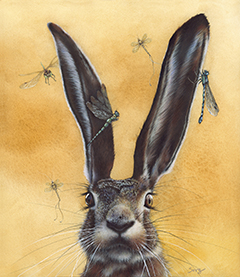
“A Bug In Your Ear,” mixed media by Eileen Sorg, © 2014, all rights reserved.
The workshop on Monday, March 9–Tuesday, March 10, 2015 will be held at the Los Angeles Arboretum.
The workshop on Thursday, March 12–Friday, March 13, 2015 will be held at the Santiago Nature Center, in the Santiago Park Nature Reserve, freeway-close off of Memory Lane in Santa Ana, Orange County (near the Main Place mall).
Leslie Walker reports a good number of deposits have already come in, so for those of you who were waiting to see which location matched which dates, it’s time to send in your deposit. Maps, times and materials lists will be emailed once full payment has been received.
For convenience, here’s the “save-your-place” deposit information:
Costs will be $250.00 for a two-day workshop for BAGSC and Colored Pencil Society members, $275.00 for non-members. Please send a $50.00 non-refundable deposit, made out to BAGSC, to Leslie Walker and be sure to indicate whether you would prefer the March 9 − 10 dates at the Los Angeles Arboretum, OR the March 12 − 13 dates in Orange County at the Santiago Nature Center.
Want to take both workshops? Please send a $100.00 non-refundable deposit and let Leslie know that as well.
by Diane Daly, Dr. Jennifer Funk, and Deb Shaw

Caesalpinia pulcherrima, Red Bird of Paradise, or Mexican Bird of Paradise, watercolor by Diane Daly, © 2013, all rights reserved.
If you’re looking for additional “legume” inspiration during the holidays, we have two lists for you. The first was developed for us by Dr. Jennifer Funk, Associate Professor in the Schmid College of Science and Technology, Chapman University. This is a brief list of just a few representative legumes, showing the wide variety of plants in this fascinating family:
Agricultural legumes
- Glycine max (soybean)
- Medicago sativa (alfalfa)
- Phaseolus vulgaris (common bean)
- Pisum sativum (pea)
Legumes in desert and semi-arid ecosystems
- Acmispon – dozens of species including Acmispon glaber (deerweed) which is an early colonizer following fire, and the very beautiful Acmispon wrangelianus, which can tolerate harsh serpentine soils
- Astragalus – dozens of beautiful milkvetch species, including rare natives like Astragalus claranus, Astragalus clevelandii, and Astragalus funereus
- Caesalpinia pulcherrima
- Calliandra eriophylla
- Dalea mollissima
- Hosackia – many species with spectacular flowers including Hosackia stipularis
- Lathyrus – many species including the lovely beach-goer Lathyrus littoralis
- Lupinus – many species with yellow or purple flowers, and slender herbs to large shrubs
- Pediomelum californicum
- Pickeringia montana (chaparral pea)
- Psorothamnus – several species with spectacular flowering stalks
- Trifolium – a diverse genus of clovers including my favorite Trifolium depauperatum (cowbag clover)
Weedy and invasive legumes
- Acacia dealbata
- Genista monspessulana (French broom)
- Medicago polymorpha (burclover)
- Melilotus officinalis
- Spartium junceum (Spanish broom)
- Trifolium hirtum
- Vicia sativa
Leguminous trees
- Acacia dealbata
- Acacia koa, Hawaiian tree used for beautiful reddish wood
- Bauhinia species (can be found at arboretums)
- Cercis occidentalis (western redbud)
- Erythrina – many species can be found at arborteums
- Olneya tesota (ironwood)
- Prosopis glandulosa (mesquite)
- Sophora chrysophylla (mamane), a Hawaiian tree that provides food for the endangered Palila bird
The second list is of “Artist’s Choices,” legume subjects BAGSC members have painted, are painting, or are thinking about painting. Don’t panic if you see something you’ve painted (or are thinking of painting) on the following list. This is only a preliminary list, and it’s always fun to see the same subject painted by different people. If you haven’t sent your subject to Diane Daly, please do so. We will be using our subject lists to develop educational outreach materials with Jennifer’s students.
- Melanie Campbell-Carter: Snail vine (Viga caracalla)
- Diane Daly: Pink trumpet tree (Tabebuia impetiginosa), Mexican Bird of Paradise (Caesalpinia pulcherrima)
- Clara Josephs: Desert false indigo with dogface butterfly, Carob tree
- Joan Keesey: Wisteria, Coral Tree, Lupine
- Suzanne Kuuskmae: Lupine, wisteria
- Pat Mark: Hyacinth bean
- Mitsuko Schultz: Sweet pea (Lathyrus odoratus)
- Deborah Shaw: Castanospermum australe, Papago Bean/seeds, Acacia (wattle bush)
- Patty VanOsterhoudt: Desert Museum x Parkinsidium Parkinsonia x Cercidium (Palo Verde)
- Leslie Walker: Delonix regia
Happy painting!
by Estelle DeRidder, posted by Deb Shaw

Invitation to “The Flora of the Madrona Marsh,” original artwork by Estelle De Ridder.
The reception time for the opening of my show on
December 7, 2015
has changed to 1:00 pm – 3:00 pm
due to Pearl Harbor Day.
Some Madrona Marsh members who are interested in attending the opening had a conflict with the later afternoon times, and we are doing our best to accommodate everyone’s schedule during this busy time of year.
I am at the Madrona Marsh on Saturdays and Sundays, and interest is brisk. Hope to see you there!
[Read our original posting about Estelle’s project and opening at: https://bagscblog.com/2014/09/29/estelle-de-ridder-exhibition-of-the-flora-of-the-madrona-marsh/]
by Suzanne Kuuskmae, posted by Deb Shaw
Botanical colored pencil artist and sought-after teacher, Wendy Hollender will be here for a two-day workshop:
April 1 – 2, 2015
She will be stopping in Torrance at Destination: Art on her way back from her two-week class in Kauai. The cost will be $200 for the two days, and as space is going to be limited so that we can really get her full attention, please send a deposit check of $100 made out to Destination: Art to Suzanne Kuuskmae.
This will hold your spot with the balance due 30 days before the workshop. Her last class here a few years back was a sellout and very popular.
by Deb Shaw
It seems like it should be far away, but next year will be here before we know it!
As announced in the “Save the Date” article on the BAGSC blog, and in the email blast that went out to BAGSC members on November 26, 2014, Eileen Sorg will be teaching a BAGSC-sponsored workshop, “COLORED PENCIL STEW.” We are anticipating a lot of interest from BAGSC and Colored Pencil Society Members, and expect the workshops to fill quickly. We have made arrangements to potentially hold two, two-day workshops (same content for each) if enrollments warrant.
Dates:
Monday, March 9 and Tuesday, March 10, 2015
Thursday, March 12 and Friday, March 13, 2015
A Bug In Your Ear, mixed media by Eileen Sorg, © 2014, all rights reserved.
Costs will be $250.00 for a two-day workshop for BAGSC and Colored Pencil Society members, $275.00 for non-members. Please send a $50.00 non-refundable deposit, made out to BAGSC, to Leslie Walker and be sure to indicate whether you would prefer the March 9 − 10, OR the March 12 − 13 dates. Please understand that we cannot guarantee dates until deposits are made for the minimum numbers for each section.
Want to take both workshops? Please send a $100.00 non-refundable deposit and let Leslie know that as well.
We are finalizing plans for one location in the Orange County area and one in the Pasadena area. Details about locations and final payment due dates will be available and publicized soon.
by Janice Sharp and Deb Shaw

Camellia japonica, taken by
fir0002, flagstaffotos.com.au, from Wikimedia Commons. Licensing/copyright: This image is not in the public domain. Under the CC BY-NC: free to copy, distribute, transmit and adapt this work provided that correct attribution is provided.
As posted in previous BAGSC News blog articles, BAGSC will be holding an exhibition on Camellias at Descanso Gardens, in conjunction with the flower show of the Camellia Societies in Southern California (for more information go to www.socalcamellias.org).
This wonderful opportunity is a two-day event in Van de Kamp Hall, coinciding with the Camellia show and judging, on Friday, January 16, 2015 – Saturday, January 18, 2015. This is not a juried show, however, we have been offered the opportunity to extend the show until October, 2015, in the Boddy House. While the initial show is not juried, the Boddy House will not accommodate all the paintings expected and therefore, a selection process will be used when the show is moved to the Boddy House. All accepted artists will have the choice as to whether they would like to have their artwork exhibited until October in the Boddy House.
All current BAGSC members in good standing (dues paid) are eligible to enter up to three (3) original works of art of botanical specimens of Camellias (no prints). There is no size limitation, and works may have been shown in previous BAGSC, ASBA, Filoli or other exhibitions.
Download the PDF Entry Form by clicking this link: bagscDescansoCamillas15f. Questions? Contact Janice.
by Deb Shaw
Cristina Baltayian will be teaching Botanical Art & Illustration at the Los Angeles County Arboretum:
Tuesdays, November 4, 11, 18, 25, 2014
10am-2pm; Oak Room
$275 members; $295 non-members
These classes will explore color pencil, graphite, pen and ink, and watercolor on various papers, vellum and other surfaces. The emphasis will be on plant observation, drawing, composition, color theory and matching, and medium techniques. All levels of experience are welcome, and participants will find a very high degree of personalized attention. Class participation is limited to a minimum of 5 students and a maximum of 12.
The class fee is for four (4) Tuesdays each month. The next session will be: December 2, 9, 16, 23, 2014. You may bring your lunch or purchase it at the Peacock Café. A Materials List will be provided upon registration.
In addition, an exciting project has begun, in which, in conjunction with the Botanical Artists Guild of Southern California, students will be studying and portraying many of the Arboretum plant introductions from the last 50 years. The goal is to build a collection of paintings that will celebrate and document the invaluable contribution of the Los Angeles Arboretum to the state of California.
Class fees include admission to the LA Arboretum. For more information, visit the class website page. Pre-registration is required; call 626.821.4623. The Los Angeles County Arboretum and Botanic Garden is located at: 301 North Baldwin Ave, Arcadia, CA 91007.
And one more for all you photography buffs out there…
The LA Arboretum will also hold a workshop on “Night Photography in the Garden”
Saturday, November 22; 7-9pm
Instructor: Frank McDonough
$30 members; $35 non-members
Photographers don’t miss this opportunity to photograph the Arboretum when it’s at its most interesting and unusual; at night. Bring your cameras, LED lights, lasers and specialty light sources and go on the hunt for unique, unusual, and beautiful nighttime picture-taking opportunities. Note: Headlamp required; tripod and DSLR recommended. Please call the class register line at 626-821-4623 to register.
by ASBA, posted by Deb Shaw
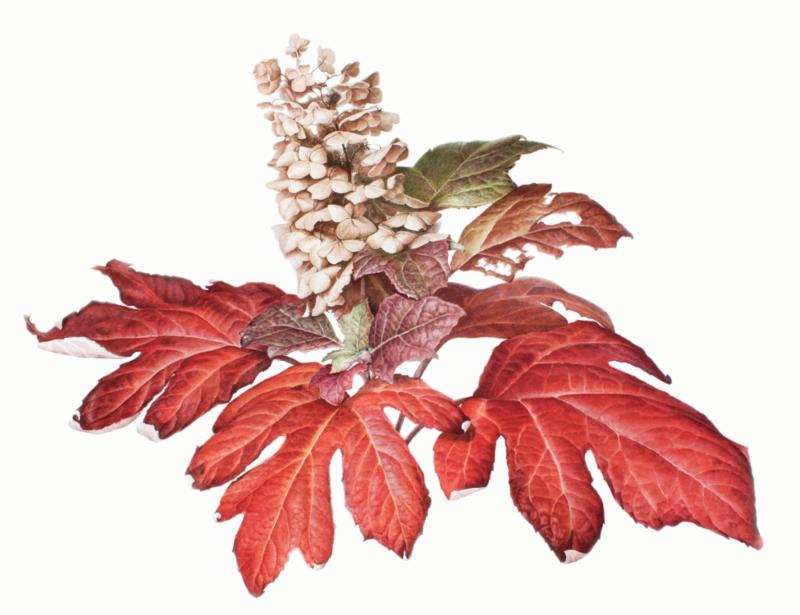
Susan Sapanara, Hydrangea quercifolia, Crimson Collar, watercolor on paper, © 2014, all rights reserved.
The Horticultural Society of New York and the American Society of Botanical Artists will be having a “Last Look Walkthrough” of the 17th Annual International Exhibition, with exhibition artists and juror on:
Wednesday, November 19, 2014
6:00 – 8:00 pm
Free for NY Hort and ASBA members
$5.00 for non-members
Join ASBA and The Hort, meet some of the artists and enjoy a seasonal cocktail during this reception and walkthrough of the annual exhibition. Each year ASBA’s Annual International presents the genre’s most established artists alongside emerging talents from around the world. Chris Murtha, Curator at The Hort calls botanical art “…a genre that is pushing well beyond scientific illustration and coming into its own.”
Artists Carrie Di Costanzo, Ingrid Finnan, and Monika deVries Gohlke will share their personal stories behind their work and offer a unique perspective on the work of their peers. They will be joined by exhibition juror Patricia Jonas, who will provide insight into the artwork selection process.
Registration for the “Last Look Walkthrough” can be found on Eventbrite.
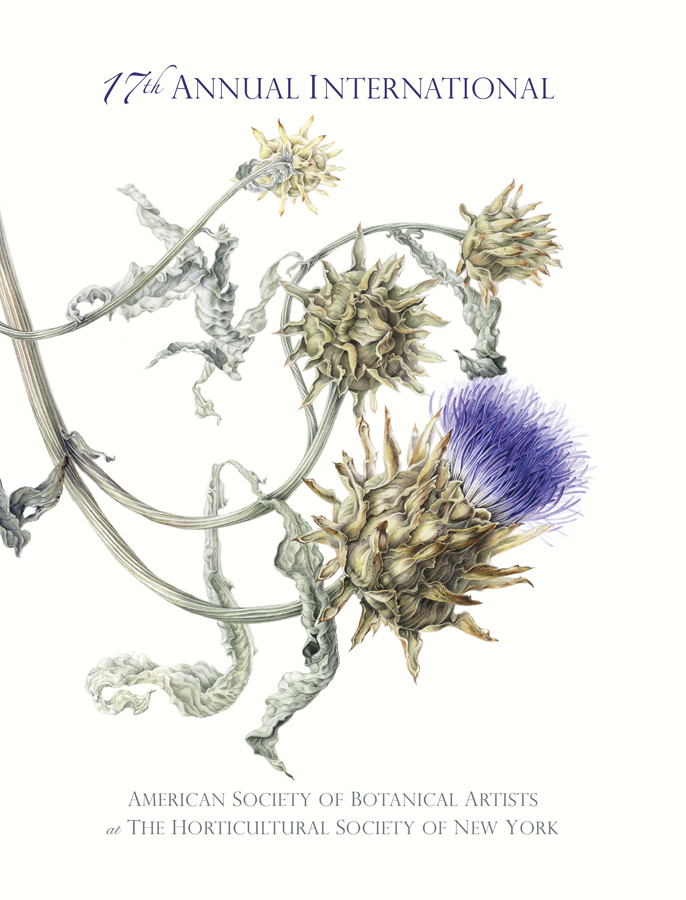
Catalog cover image: Annie Patterson, Cynara cardunculus, Cardoon, watercolor on paper, © 2014, all rights reserved.
Catalogs for the exhibition can be purchased for $20.00 through ArtPlantae.
The New York Horticultural Society is located at 148 West 37th Street, 13th Floor, New York, New York. The 17th Annual International is on display through November 26, 2014.
Jurors Patricia Jonas, Marco Polo Stufano, and Catherine Watters selected 42 artworks out of 215 submissions from around the world. BAGSC members Joan Keesey, Lesley Randall, and Deborah Shaw have artwork in the exhibition, and Lesley Randall won the Brooklyn Botanic Garden Award for Drawing & Prints. The ASBA has posted the artwork and the artists’ stories behind each piece. Click on the links and on the ASBA website to see the artwork and read the artists’ stories.
by Sue Kuuskmae, posted by Deb Shaw
Something New in Old Torrance
Everyone is invited to the Grand Opening of Destination: Art!
Saturday, November 15, 2014
4:00 – 8:00 pm
Celebrate with us the culmination of a year’s effort to establish a venue for studios and gallery for local South Bay artists, a facility from which to share the value of appreciating and creating fine art, to support our goal to be a nurturing, cooperative environment for local artists, art students, and potential art collectors.
- See the studios and gallery
- Enjoy the Fine Art
- Sample appetizers and wine
- Try for a Gift Basket
- Celebrate the Ribbon Cutting with Torrance Mayor and City Council at 6pm
- Support Destination: Art to get classes and workshops started
Please come to show your support and find out more about Destination: Art’s Studios and Gallery, and our future plans. Destination: Art is creating a unique Art facility that will house studios for local Artists, who will flourish in the creative synergy that comes from working with other Artists, as well as demonstrating their craft to the public, thus fulfilling their mission to promote Arts education.
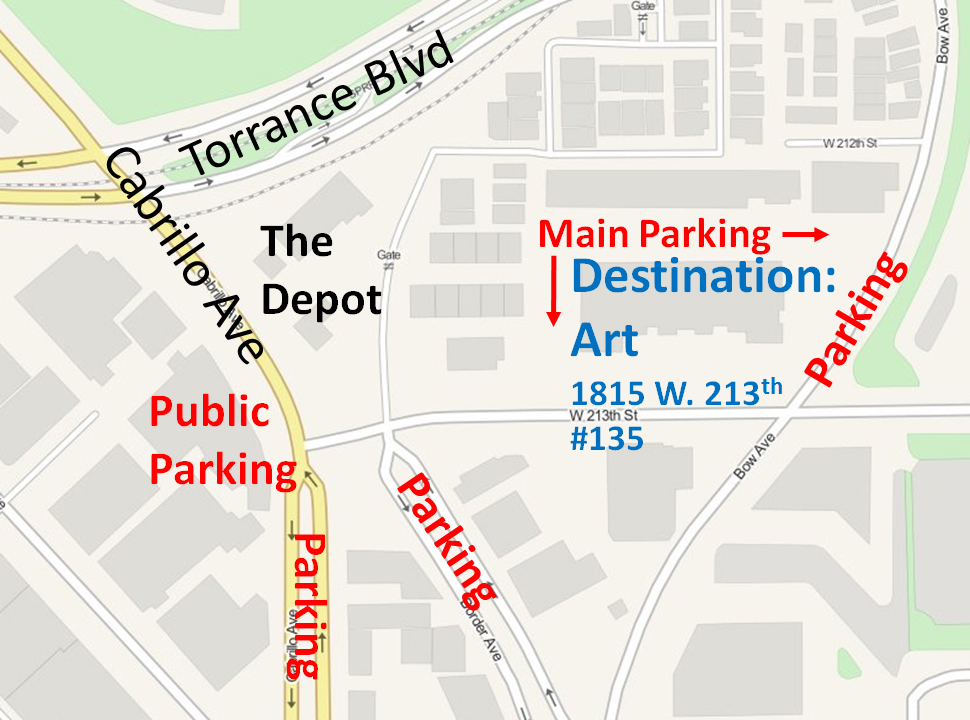
Map to Destination: Art
Destination: Art is located at 1815 West 213th Street, Torrance, California 90501.
Primary sponsors of the Grand Opening are Chef Shafer of the Depot, Buffalo Fire Department, and the gracious participation of other downtown Torrance establishment. If you would like to become a sponsor, or donate online, please go to our website.
by Deb Shaw

Detail of Cucurbita Maxima, watercolor by Deborah Shaw, © 2014, all rights reserved.
The Ultimate Color Mixing Workshop has moved to Wednesday, January, 14 – Thursday, January 15, 2015 at the Virginia Robinson Gardens.
The workshop details are the same, as posted on a previous BAGSC News Blog article. You may find it at: https://bagscblog.com/2014/10/12/deborah-shaw-to-teach-the-ultimate-color-mixing-workshop-at-the-virginia-robinson-gardens/
9:30 am – 3:30 pm
Cost: $225 for Virginia Robinson Gardens members and Botanical Artists Guild of Southern California (BAGSC) members; $275 for non-members.
$50 deposit is non-refundable.
The Virginia Robinson Gardens has just installed online registration! Register for this workshop by going to: http://www.robinsongardens.org/product/ultimate-color-mixing-class/
You also can still make reservations by calling (310) 550-2068; or mail a check, made payable to: FRIENDS OF ROBINSON GARDENS. The Virginia Robinson Gardens are located at 1008 Elden Way, Beverly Hills, California 90210.
By Diane Daly and Deb Shaw
The plans for the BAGSC/Chapman University Leatherby Library Legume Exhibition are coming together! Once again, January 2015 will be a busy month for BAGSC members, with exhibition deadlines and shows all arriving at the same time.
The theme of this Chapman exhibition will focus on botanical specimens of plants in the Legume Family (Leguminosae or Fabaceae). The third largest of all the vascular, flowering plants, legumes have approximately 630 genera and 18,000 species. Legumes are herbs, vines, shrubs and trees—all highly diverse and spread throughout most of the world.
Jennifer Funk‘s research students will be contributing to the educational outreach for this exhibition, writing descriptions of:
- The family characteristics (what makes a legume a legume);
- Their importance to agriculture and soils;
- The legumes of the desert and survival adaptations in dry conditions;
- The legumes that are nasty weeds in our yards;
- The legumes that grow to be trees; and more.
Caesalpinia pulcherrima, Red Bird of Paradise, or Mexican Bird of Paradise, watercolor by Diane Daly, © 2013, all rights reserved.
We are hoping to show the widest variety possible of this fascinating and massive botanical plant family, and are coordinating our paintings with the research and educational outreach. Towards that goal, we would like to hear what plants BAGSC members are painting (or have painted) and are planning to submit. We will publish the list, along with any “gaps” and suggestions for plants that would fill those gaps if members are interested in adding those to their submissions. Please send information about your artwork (or artwork you are thinking about) to Diane Daly.
This exhibition will coincide with the Tenth Anniversary of the Leatherby Libraries. In conjunction with the Leatherby Libraries staff, we are planning invitations, brochure handouts, signage and a reception, as well as other possible educational and botanical art programs. We will need lots of volunteers; please let Diane know if you can help.
Important dates to remember:
Submission deadline: January 16, 2015
Acceptance notification: January 23, 2015
Artwork delivery: On or before February 17, 2015
Exhibition set-up: February 17, 2015
Tentative reception date: February 25, 2015, Leatherby Library, 2nd Floor, 5:30 pm
Exhibition end (and take down): March 26, 2015
Download the Entry Form by clicking this link: bagscChapmanLegume15. Have some ideas for a title? Send those to Diane too! (And yes, you may also send poems and lyrics along the lines of the children’s tune “Beans, beans, the musical fruit…”)
Happy painting!
by Deb Shaw
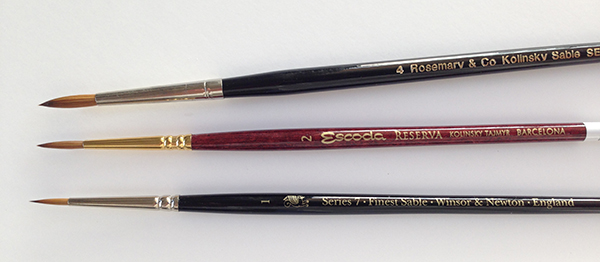
From top to bottom: Rosemary and Company, Series 33 Kolinsky Sable brush, #4; Escoda Reserva Kolinsky Sable Brush, #2; Winsor & Newton, Series 7 Kolinsky Sable Brush, #1. Photo by Deb Shaw.
I’ve been hearing rumors for the last couple of weeks that US Customs has released the Kolinsky brushes that have been locked away during the ban. I now have confirmation (sort of): the brushes that have been held have been released, but the ban is still in effect for future shipments. So, for art stores, it looks like there is a little relief on their long list of back orders, but no significant headway for future shipments.
Here’s what this means for us artists who want to order/buy Kolinsky brushes:
- Check your local and online art supply stores. You may find most standard watercolor brushes are now in stock, but not all brands. For example, Nate, from Dick Blick confirmed that Dick Blick now has the Winsor Newton Series 7 line (except for a couple of sizes, namely #10) in stock, as well as the Winsor Newton Series 7 Miniatures (except for #5). They do not, however, have the Rafael 8404 and 8408 in stock. [NOTE: If you are purchasing anything from Dick Blick, click on the Dick Blick website FROM the ASBA website. The ASBA gets credit and donation support from Dick Blick.]
- You can still purchase Kolinsky brushes online from select vendors in the UK and elsewhere, including Rosemary and Company, L. Cornelissen & Son, and Ken Bromley Art Supplies.
Calling All Brush Reviews
I’ve received a lot of enthusiastic reviews of different brushes that fellow artists have been trying out, including other sables, synthetics, you-name-it. Some have been in direct conflict (“love it” vs. “hate it”) Obviously, how we each use a brush determines how we feel about a particular brand and style.
I’d love to publish a synopsis of all our testing on watercolor brushes (with full credit of course). If you would like to participate, please email me, and be sure to include the following information:
- The name, product number, size(s) and where you purchased the brushes you are reviewing;
- What substrate you paint on: paper (brand name please), vellum, board, etc.;
- How you paint (wet washes, dry brush, etc.);
- Any other helpful information;
- How you want your name listed.
I’ll compile the information and publish the results (provided I get enough information) in early December.
Happy painting!
by Deb Shaw
John Cogley and Kathrine Taylor of Daniel Smith, gave a fascinating presentation on the pigments and processing methods they use to create Daniel Smith paints.

John Cogley, President/CEO and Founder of Daniel Smith, talks over some paint tests with ASBA Conference attendees.
How rocks become pigments
The multiple-step process begins with the Daniel Smith geologist adventuring out all over the world to search for mineral resources. Acquiring material is rife with problems: countries may decide they no longer want to export minerals; borders close; or mines run dry.
Sugilite, rhodonite, serpentine, ryanite, garnet and more—mountains of minerals arrive for processing. Many start out the size of a person’s torso. John explained that they fracture the rock, rather than grind it. His analogy was the difference between table sugar and powdered sugar: fracturing the rock until it is very fine keeps the crystalline structure intact, so it refracts light. Grinding would make the pigments dull and lifeless, like powdered sugar.
The challenge in creating quality pigments is overcoming the electric static of the individual particles, which makes them want to attract and clump together. This natural tendency to agglomerate creates pigment “lumps,” which leave hot and cold spots in the paint application. Multi-stage machine processing enables the pigments to lay in an orderly row, giving maximum refraction and maximum color.
The rocks are squeezed in the first machine until they fracture. Successive machines gently hammer them, and then roll them through balls, until they are the size of grains of rice. From there, they are run through heavy, hardened steel rollers. The hardened steel rollers have a hardness of 7, and some of the rocks have a hardness of 8 or 9; so the massive rollers need to be replaced annually (at least!). Each roller costs upwards of $50,000.00.
Once the pigment is at its final size, the mineral is run through various solutions. Specific gravity separates out the impurities, and the pure pigment is ready to be mixed with gum arabic and packaged.
Daniel Smith only uses medicinal grade gum arabic for binding, as it is consistent in quality.
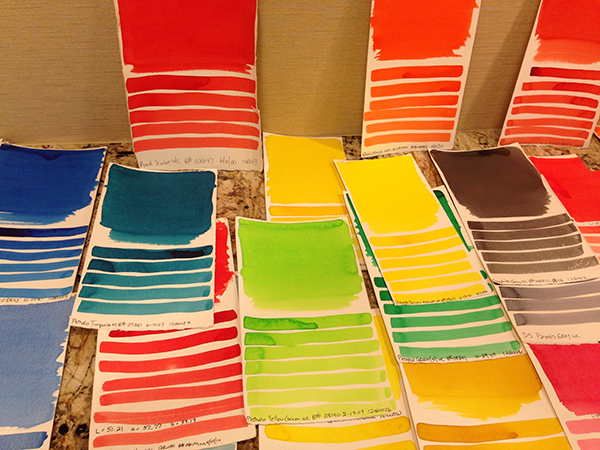
Each batch of color is tested and carefully recorded at Daniel Smith. Photo by Deb Shaw.
It’s all about the size of the particles
Different minerals are reduced to different sizes, depending on the color desired. For example, French Ultramarine has larger pigment particles than Ultramarine. This means that French Ultramarine particles have more surface area and will reflect more “red” back to the viewer than Ultramarine.
The smoother the pigment and the purer the pigment, the less granulation will occur when applying the paint.

Garnets in their matrix, on top of Daniel Smith Garnet Genuine test page. Photo by Deb Shaw.
Granulation, or reticulation occurs when three or more pigments in a color behave differently when applied to the paper. If you look at a greatly enlarged side view of a sheet of paper, it’s apparent that it isn’t smooth and flat, but has hills and valleys. The pigments in a granulating color will separate out and settle out at different points on the paper, based on the specific gravity or density. The lightest pigment (frequently synthetic pigments) will “float” and stay on the top of the hill. The next heaviest pigment might flow downhill a little further, settling in on the “side” of the hill. The very heaviest pigment will sink all the way to the valley and remain there. The purer the pigment and the smoother the paper, the less granulation there will be.
Synthetic colors, such as the Quinacrodones, are very pure, very smooth, and have exceptional lightfastness. They are used by (and dictated by) car and other industries. In the Quinacrodone family, different colors are created by moving the bonds around in the molecule.
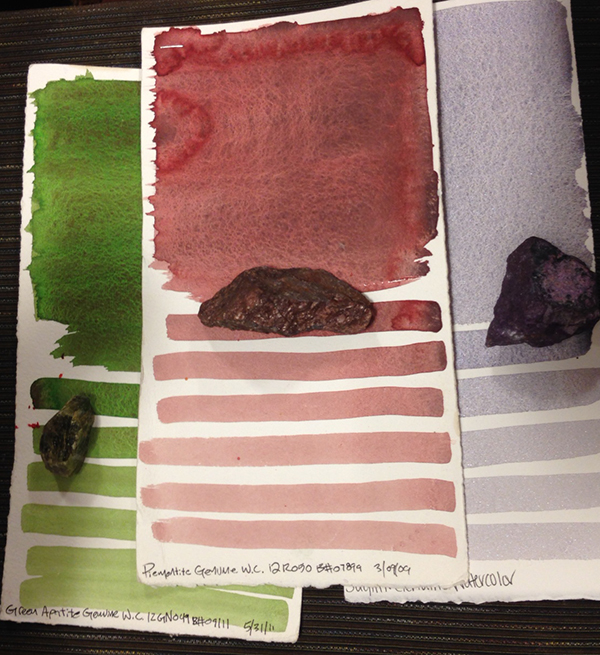
Testing of pigment, showing the original pigment “rock” with the swatch test. Photo by Deb Shaw.
Testing the paint
The Daniel Smith chemist carefully tests each batch of paint. An equal amount of pigment and distilled water (one part pigment to one part distilled water) is mixed and one full brush load is then painted on a sheet of cold pressed watercolor paper. The brush is then fully loaded once more, and stripes are painted on the lower portion of the paper to see each successive reduction in color strength as the paint is used up.
Gifts!
Daniel Smith generously handed out brochures showing their watercolor lines; a “Try It” sheet of 66 dots of watercolor; and nuggets of Turquoise from Arizona. Treasures!

Different pigment and mixing tests on cold pressed paper, and turquoise nuggets from Arizona. Photo by Deb Shaw.
TIPS
If your cap breaks
Call or email Daniel Smith. They’ll send you more, no charge.
If your tube of paint dries up
1) Unfold and open the crimped end; 2) add a little distilled water at a time until you get the desired consistency; 3) if desired, you may also add a little bit of gum arabic; 4) you may also add a tiny drop of glycerin.
If you have any questions/problems with that one tube of paint
There’s a batch number at the bottom. Include that number with your comments or questions and the folks at Daniel Smith will be able to look up that batch and help you out.
Use distilled water
Tap water is pure and safe to drink, but contains chemicals and minerals which may affect the paint and how it behaves. Use distilled water to ensure you have as much control as possible.
by Beth Stone, posted by Deb Shaw
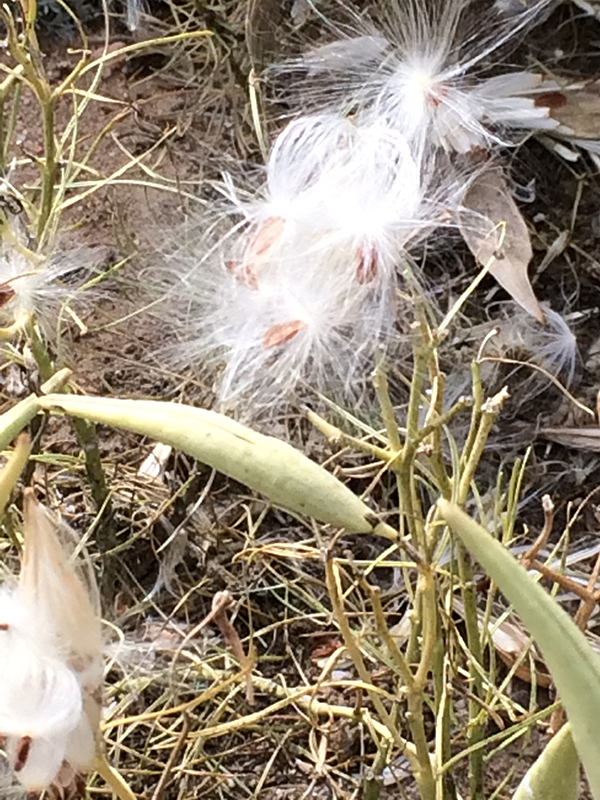
Prairie Milkweed (Asclepias sullivanti). Photo by Beth Stone, © 2014.
Here are just two pictures from a beautiful fall day spent at the Plains Conservation Center. Our most informative and enthusiastic tour guides were Martha Narey and Susan Smith. Martha provided each of us with a booklet including background about the conservation center, plant lists…and several pages of various drawing papers! In addition to the last few wildflowers of the season, we saw a lot of wildlife. There were prairie dogs, rabbits, coyote, pronghorn (similar in appearance to antelope), prairie dogs, an immature bald eagle, a golden eagle, hawks, great horned owls and prairie dogs.
The Plains Conservation Center exists to bring the natural wonder of the prairie into the realm of personal experience by: preserving a remnant of the eastern Colorado High Plains, educating the public about its natural and cultural heritage and nurturing sound conservation and environmental ethics.

Russian Thistle (Salsola australis). Photo by Beth Stone, © 2014.
 BAGSC News