You are currently browsing the category archive for the ‘Member News’ category.
by Gilly Shaeffer, posted by Deb Shaw
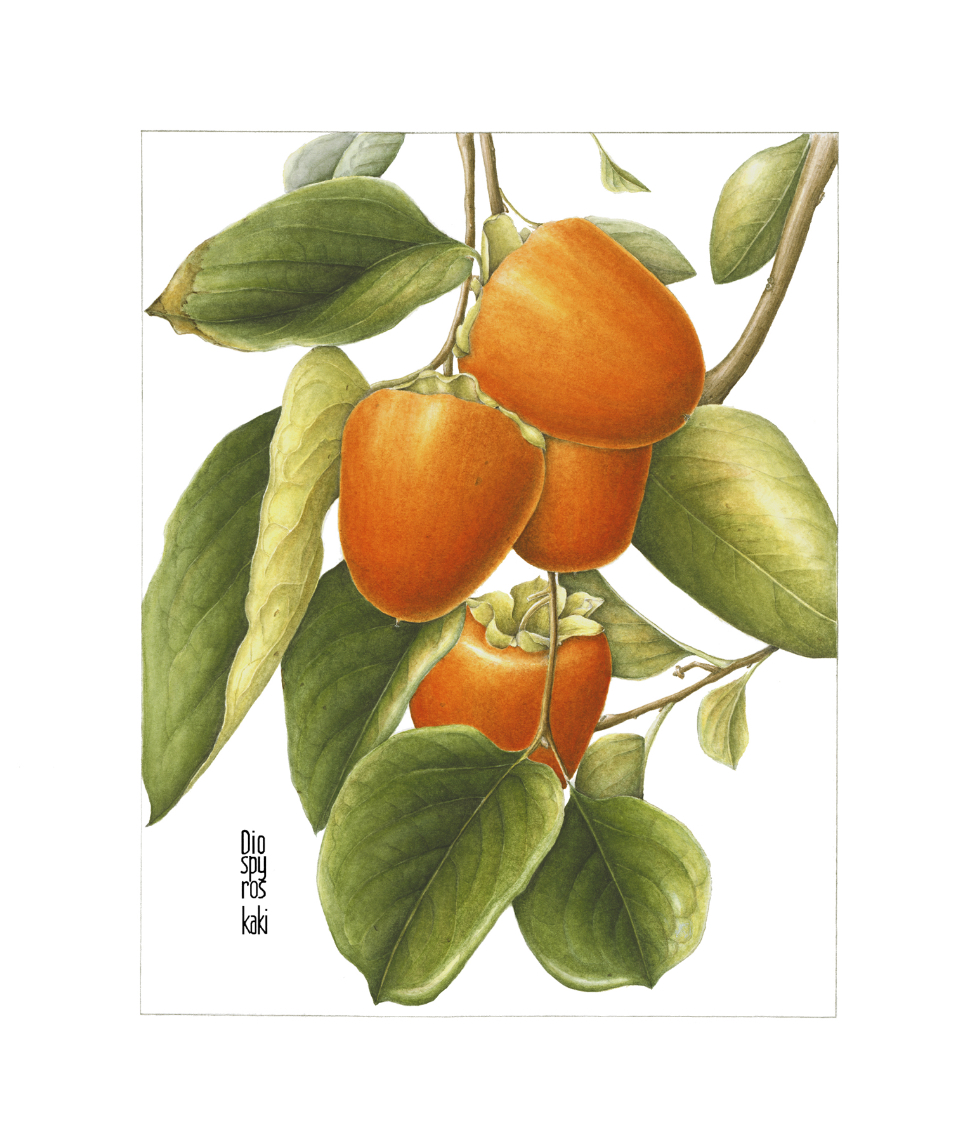
Persimmons, watercolor on paper, Gilly Shaeffer, © 2014, all rights reserved.
Gilly Shaeffer has invited us to an Art Show and Sale during the 22nd Annual Arroyo Arts Collective Tour at the Shaeffer’s Home and Garden, 825 Elyria Drive, Los Angeles, 90065.
The show will be held during the tour:
Saturday, November 22, 2014
9:30 am – 5:00 pm
The show at the Shaeffer’s will feature the works of three artists:
- Robert Layport: Oil Paintings of the American West
- Carol Yin: Handmade Functional Pottery
- Gilly Shaeffer: Botanical Watercolor Paintings, Tiles & Prints
There is special pricing during the Annual Arroyo Arts Collective Tour on Saturday only.
by Suzanne Kuuskmae, posted by Deb Shaw
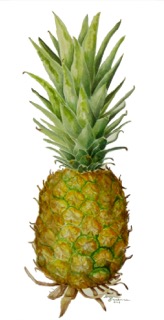
Ripe Pineapple, watercolor on paper by Suzanne Kuuskmae, © 2014, all rights reserved.
Imagine my surprise when I was the only artist to get botanical work into the Torrance Art Museum Exhibition to be held through December. The paintings are: Ripe Pineapple (watercolor) and Epiphyllum (watercolor and pastel). There was a walk-around with the Juror, Scott Canty; and he quizzed me about painting from the actual plant, fruit or vegetable. I assured him there were many more than myself who were in the practice of painting this way!
The exhibition, “South Bay Focus 2014” is on view November 8 – December 5, 2014.
South Bay Focus is Torrance Art Museum’s annual contemporary and traditional juried art exhibition and is presented in conjunction with the Torrance Artists Guild and the South Bay Watercolor Society. This year’s Juror is Scott Canty, Director and Curator of the Los Angeles Municipal Art Gallery.
The Torrance Art Museum is located at: 3320 Civic Center Drive, Torrance, CA 90503, 310-618-6388. Hours are Tuesday – Saturday, 11 am – 5 pm, during exhibition dates only. Closed Sunday, Monday, and all major holidays.
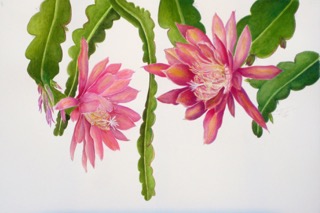
Epiphyllum, watercolor and pastel on paper by Suzanne Kuuskmae, © 2014, all rights reserved.
by Janice Sharp and Deb Shaw

Camellia japonica, taken by
fir0002, flagstaffotos.com.au, from Wikimedia Commons. Licensing/copyright: This image is not in the public domain. Under the CC BY-NC: free to copy, distribute, transmit and adapt this work provided that correct attribution is provided.
As posted in previous BAGSC News blog articles, BAGSC will be holding an exhibition on Camellias at Descanso Gardens, in conjunction with the flower show of the Camellia Societies in Southern California (for more information go to www.socalcamellias.org).
This wonderful opportunity is a two-day event in Van de Kamp Hall, coinciding with the Camellia show and judging, on Friday, January 16, 2015 – Saturday, January 18, 2015. This is not a juried show, however, we have been offered the opportunity to extend the show until October, 2015, in the Boddy House. While the initial show is not juried, the Boddy House will not accommodate all the paintings expected and therefore, a selection process will be used when the show is moved to the Boddy House. All accepted artists will have the choice as to whether they would like to have their artwork exhibited until October in the Boddy House.
All current BAGSC members in good standing (dues paid) are eligible to enter up to three (3) original works of art of botanical specimens of Camellias (no prints). There is no size limitation, and works may have been shown in previous BAGSC, ASBA, Filoli or other exhibitions.
Download the PDF Entry Form by clicking this link: bagscDescansoCamillas15f. Questions? Contact Janice.
by Deb Shaw
Cristina Baltayian will be teaching Botanical Art & Illustration at the Los Angeles County Arboretum:
Tuesdays, November 4, 11, 18, 25, 2014
10am-2pm; Oak Room
$275 members; $295 non-members
These classes will explore color pencil, graphite, pen and ink, and watercolor on various papers, vellum and other surfaces. The emphasis will be on plant observation, drawing, composition, color theory and matching, and medium techniques. All levels of experience are welcome, and participants will find a very high degree of personalized attention. Class participation is limited to a minimum of 5 students and a maximum of 12.
The class fee is for four (4) Tuesdays each month. The next session will be: December 2, 9, 16, 23, 2014. You may bring your lunch or purchase it at the Peacock Café. A Materials List will be provided upon registration.
In addition, an exciting project has begun, in which, in conjunction with the Botanical Artists Guild of Southern California, students will be studying and portraying many of the Arboretum plant introductions from the last 50 years. The goal is to build a collection of paintings that will celebrate and document the invaluable contribution of the Los Angeles Arboretum to the state of California.
Class fees include admission to the LA Arboretum. For more information, visit the class website page. Pre-registration is required; call 626.821.4623. The Los Angeles County Arboretum and Botanic Garden is located at: 301 North Baldwin Ave, Arcadia, CA 91007.
And one more for all you photography buffs out there…
The LA Arboretum will also hold a workshop on “Night Photography in the Garden”
Saturday, November 22; 7-9pm
Instructor: Frank McDonough
$30 members; $35 non-members
Photographers don’t miss this opportunity to photograph the Arboretum when it’s at its most interesting and unusual; at night. Bring your cameras, LED lights, lasers and specialty light sources and go on the hunt for unique, unusual, and beautiful nighttime picture-taking opportunities. Note: Headlamp required; tripod and DSLR recommended. Please call the class register line at 626-821-4623 to register.
by Melanie Campbell-Carter, posted by Deb Shaw

Wine & Books, acrylic on canvas by Melanie Campbell-Carter, © 2014, all rights reserved.
My painting was just selected as the first place winner for The Friends of the Sierra Madre Library 45th annual Wine and Cuisine Tasting fundraising event to be held on Friday, February 20, 2015. The theme was “Wine pairs well with a good book.” It is acrylic on canvas.
The painting will be the featured painting at the silent auction as well as the image used on the publicity posters here in the local area. I appreciate so much everyone’s support as I’ve struggled and studied, and my success is a shared success with all of you who have believed in me for so long! Thank you!
Onward to the next project!
[If you are interested in buying tickets and attending the event in February, 2015, you will be able to find information on the Friends of the Sierra Madre Library website as the date gets closer.]
by Sue Kuuskmae, posted by Deb Shaw
Something New in Old Torrance
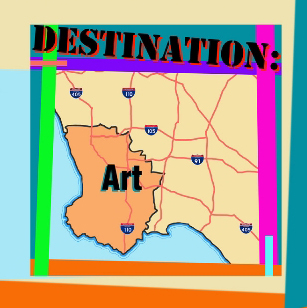
Everyone is invited to the Grand Opening of Destination: Art!
Saturday, November 15, 2014
4:00 – 8:00 pm
Celebrate with us the culmination of a year’s effort to establish a venue for studios and gallery for local South Bay artists, a facility from which to share the value of appreciating and creating fine art, to support our goal to be a nurturing, cooperative environment for local artists, art students, and potential art collectors.
- See the studios and gallery
- Enjoy the Fine Art
- Sample appetizers and wine
- Try for a Gift Basket
- Celebrate the Ribbon Cutting with Torrance Mayor and City Council at 6pm
- Support Destination: Art to get classes and workshops started
Please come to show your support and find out more about Destination: Art’s Studios and Gallery, and our future plans. Destination: Art is creating a unique Art facility that will house studios for local Artists, who will flourish in the creative synergy that comes from working with other Artists, as well as demonstrating their craft to the public, thus fulfilling their mission to promote Arts education.
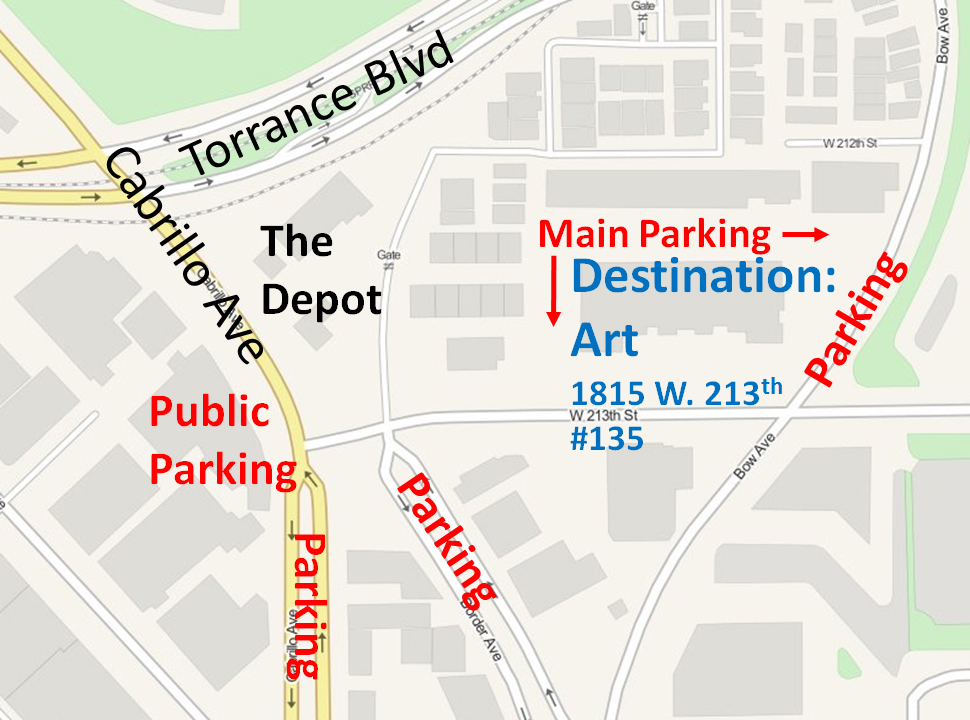
Map to Destination: Art
Destination: Art is located at 1815 West 213th Street, Torrance, California 90501.
Primary sponsors of the Grand Opening are Chef Shafer of the Depot, Buffalo Fire Department, and the gracious participation of other downtown Torrance establishment. If you would like to become a sponsor, or donate online, please go to our website.
by Deb Shaw

Detail of Cucurbita Maxima, watercolor by Deborah Shaw, © 2014, all rights reserved.
The Ultimate Color Mixing Workshop has moved to Wednesday, January, 14 – Thursday, January 15, 2015 at the Virginia Robinson Gardens.
The workshop details are the same, as posted on a previous BAGSC News Blog article. You may find it at: https://bagscblog.com/2014/10/12/deborah-shaw-to-teach-the-ultimate-color-mixing-workshop-at-the-virginia-robinson-gardens/
9:30 am – 3:30 pm
Cost: $225 for Virginia Robinson Gardens members and Botanical Artists Guild of Southern California (BAGSC) members; $275 for non-members.
$50 deposit is non-refundable.
The Virginia Robinson Gardens has just installed online registration! Register for this workshop by going to: http://www.robinsongardens.org/product/ultimate-color-mixing-class/
You also can still make reservations by calling (310) 550-2068; or mail a check, made payable to: FRIENDS OF ROBINSON GARDENS. The Virginia Robinson Gardens are located at 1008 Elden Way, Beverly Hills, California 90210.
By Diane Daly and Deb Shaw
The plans for the BAGSC/Chapman University Leatherby Library Legume Exhibition are coming together! Once again, January 2015 will be a busy month for BAGSC members, with exhibition deadlines and shows all arriving at the same time.
The theme of this Chapman exhibition will focus on botanical specimens of plants in the Legume Family (Leguminosae or Fabaceae). The third largest of all the vascular, flowering plants, legumes have approximately 630 genera and 18,000 species. Legumes are herbs, vines, shrubs and trees—all highly diverse and spread throughout most of the world.
Jennifer Funk‘s research students will be contributing to the educational outreach for this exhibition, writing descriptions of:
- The family characteristics (what makes a legume a legume);
- Their importance to agriculture and soils;
- The legumes of the desert and survival adaptations in dry conditions;
- The legumes that are nasty weeds in our yards;
- The legumes that grow to be trees; and more.

Caesalpinia pulcherrima, Red Bird of Paradise, or Mexican Bird of Paradise, watercolor by Diane Daly, © 2013, all rights reserved.
We are hoping to show the widest variety possible of this fascinating and massive botanical plant family, and are coordinating our paintings with the research and educational outreach. Towards that goal, we would like to hear what plants BAGSC members are painting (or have painted) and are planning to submit. We will publish the list, along with any “gaps” and suggestions for plants that would fill those gaps if members are interested in adding those to their submissions. Please send information about your artwork (or artwork you are thinking about) to Diane Daly.
This exhibition will coincide with the Tenth Anniversary of the Leatherby Libraries. In conjunction with the Leatherby Libraries staff, we are planning invitations, brochure handouts, signage and a reception, as well as other possible educational and botanical art programs. We will need lots of volunteers; please let Diane know if you can help.
Important dates to remember:
Submission deadline: January 16, 2015
Acceptance notification: January 23, 2015
Artwork delivery: On or before February 17, 2015
Exhibition set-up: February 17, 2015
Tentative reception date: February 25, 2015, Leatherby Library, 2nd Floor, 5:30 pm
Exhibition end (and take down): March 26, 2015
Download the Entry Form by clicking this link: bagscChapmanLegume15. Have some ideas for a title? Send those to Diane too! (And yes, you may also send poems and lyrics along the lines of the children’s tune “Beans, beans, the musical fruit…”)
Happy painting!
by Deb Shaw
John Cogley and Kathrine Taylor of Daniel Smith, gave a fascinating presentation on the pigments and processing methods they use to create Daniel Smith paints.

John Cogley, President/CEO and Founder of Daniel Smith, talks over some paint tests with ASBA Conference attendees.
How rocks become pigments
The multiple-step process begins with the Daniel Smith geologist adventuring out all over the world to search for mineral resources. Acquiring material is rife with problems: countries may decide they no longer want to export minerals; borders close; or mines run dry.
Sugilite, rhodonite, serpentine, ryanite, garnet and more—mountains of minerals arrive for processing. Many start out the size of a person’s torso. John explained that they fracture the rock, rather than grind it. His analogy was the difference between table sugar and powdered sugar: fracturing the rock until it is very fine keeps the crystalline structure intact, so it refracts light. Grinding would make the pigments dull and lifeless, like powdered sugar.
The challenge in creating quality pigments is overcoming the electric static of the individual particles, which makes them want to attract and clump together. This natural tendency to agglomerate creates pigment “lumps,” which leave hot and cold spots in the paint application. Multi-stage machine processing enables the pigments to lay in an orderly row, giving maximum refraction and maximum color.
The rocks are squeezed in the first machine until they fracture. Successive machines gently hammer them, and then roll them through balls, until they are the size of grains of rice. From there, they are run through heavy, hardened steel rollers. The hardened steel rollers have a hardness of 7, and some of the rocks have a hardness of 8 or 9; so the massive rollers need to be replaced annually (at least!). Each roller costs upwards of $50,000.00.
Once the pigment is at its final size, the mineral is run through various solutions. Specific gravity separates out the impurities, and the pure pigment is ready to be mixed with gum arabic and packaged.
Daniel Smith only uses medicinal grade gum arabic for binding, as it is consistent in quality.
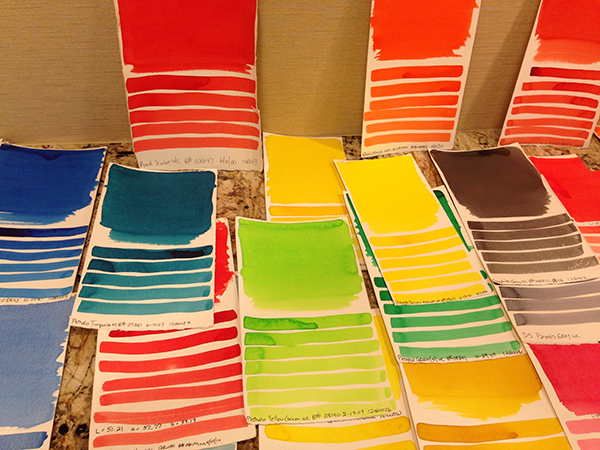
Each batch of color is tested and carefully recorded at Daniel Smith. Photo by Deb Shaw.
It’s all about the size of the particles
Different minerals are reduced to different sizes, depending on the color desired. For example, French Ultramarine has larger pigment particles than Ultramarine. This means that French Ultramarine particles have more surface area and will reflect more “red” back to the viewer than Ultramarine.
The smoother the pigment and the purer the pigment, the less granulation will occur when applying the paint.

Garnets in their matrix, on top of Daniel Smith Garnet Genuine test page. Photo by Deb Shaw.
Granulation, or reticulation occurs when three or more pigments in a color behave differently when applied to the paper. If you look at a greatly enlarged side view of a sheet of paper, it’s apparent that it isn’t smooth and flat, but has hills and valleys. The pigments in a granulating color will separate out and settle out at different points on the paper, based on the specific gravity or density. The lightest pigment (frequently synthetic pigments) will “float” and stay on the top of the hill. The next heaviest pigment might flow downhill a little further, settling in on the “side” of the hill. The very heaviest pigment will sink all the way to the valley and remain there. The purer the pigment and the smoother the paper, the less granulation there will be.
Synthetic colors, such as the Quinacrodones, are very pure, very smooth, and have exceptional lightfastness. They are used by (and dictated by) car and other industries. In the Quinacrodone family, different colors are created by moving the bonds around in the molecule.
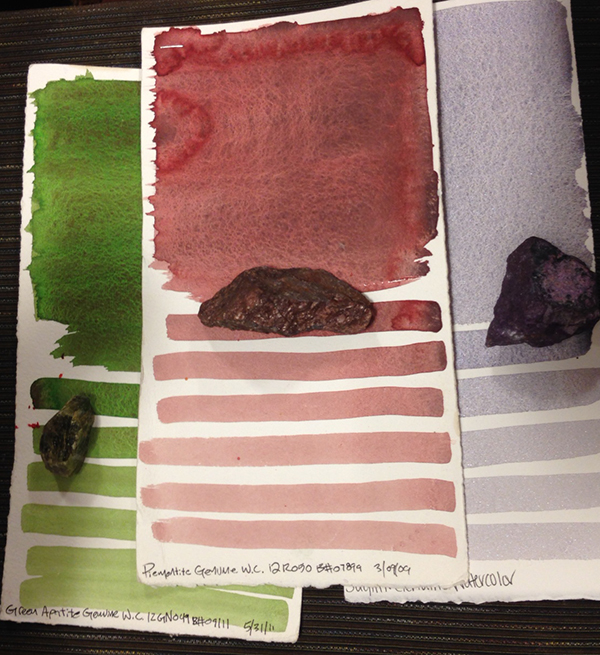
Testing of pigment, showing the original pigment “rock” with the swatch test. Photo by Deb Shaw.
Testing the paint
The Daniel Smith chemist carefully tests each batch of paint. An equal amount of pigment and distilled water (one part pigment to one part distilled water) is mixed and one full brush load is then painted on a sheet of cold pressed watercolor paper. The brush is then fully loaded once more, and stripes are painted on the lower portion of the paper to see each successive reduction in color strength as the paint is used up.
Gifts!
Daniel Smith generously handed out brochures showing their watercolor lines; a “Try It” sheet of 66 dots of watercolor; and nuggets of Turquoise from Arizona. Treasures!

Different pigment and mixing tests on cold pressed paper, and turquoise nuggets from Arizona. Photo by Deb Shaw.
TIPS
If your cap breaks
Call or email Daniel Smith. They’ll send you more, no charge.
If your tube of paint dries up
1) Unfold and open the crimped end; 2) add a little distilled water at a time until you get the desired consistency; 3) if desired, you may also add a little bit of gum arabic; 4) you may also add a tiny drop of glycerin.
If you have any questions/problems with that one tube of paint
There’s a batch number at the bottom. Include that number with your comments or questions and the folks at Daniel Smith will be able to look up that batch and help you out.
Use distilled water
Tap water is pure and safe to drink, but contains chemicals and minerals which may affect the paint and how it behaves. Use distilled water to ensure you have as much control as possible.
by Beth Stone, posted by Deb Shaw
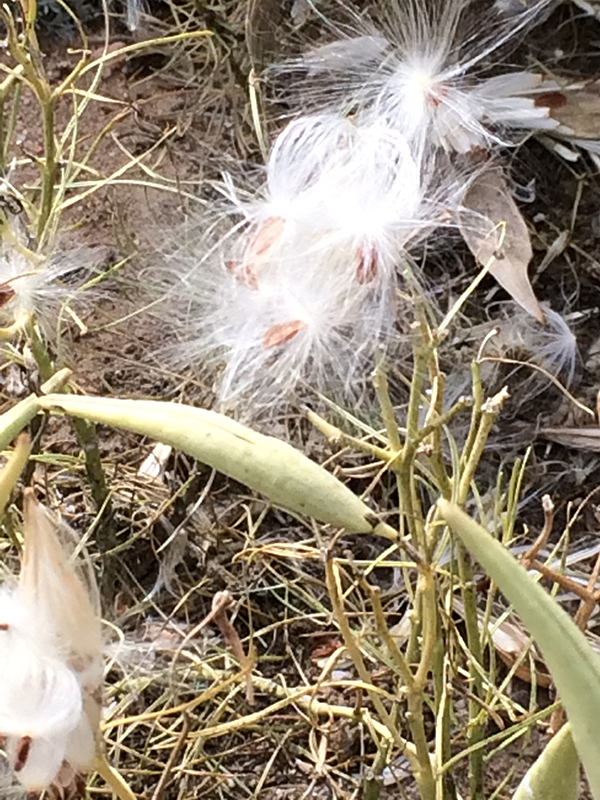
Prairie Milkweed (Asclepias sullivanti). Photo by Beth Stone, © 2014.
Here are just two pictures from a beautiful fall day spent at the Plains Conservation Center. Our most informative and enthusiastic tour guides were Martha Narey and Susan Smith. Martha provided each of us with a booklet including background about the conservation center, plant lists…and several pages of various drawing papers! In addition to the last few wildflowers of the season, we saw a lot of wildlife. There were prairie dogs, rabbits, coyote, pronghorn (similar in appearance to antelope), prairie dogs, an immature bald eagle, a golden eagle, hawks, great horned owls and prairie dogs.
The Plains Conservation Center exists to bring the natural wonder of the prairie into the realm of personal experience by: preserving a remnant of the eastern Colorado High Plains, educating the public about its natural and cultural heritage and nurturing sound conservation and environmental ethics.

Russian Thistle (Salsola australis). Photo by Beth Stone, © 2014.
by Deb Shaw
The presentations from ASBA Grant Recipients is always one of my favorite sessions at the ASBA conference. It’s inspiring to hear the many different ways members reach out into the community using botanical art as a vehicle.

Jan Boyd Haring presents Estelle De Ridders project during the Grants presentation at the ASBA conference. Photo by Deb Shaw.
This year was no different. Moderator Jan Boyd Haring presented for our own BAGSC member Estelle De Ridder. As we know here in Southern California, Estelle’s project is to assist with the creation of reusable plant identification cards featuring illustrations of plant life cycle phases for the top 35 native plant species of the Madrona Marsh Preserve in Torrance, California. [See our previous blog posting about Estelle’s exhibition and opening in December of this year.]
Jody Williams presented her project: extending the reach of ASBA’s “Following in the Bartrams’ Footsteps” exhibition to the St. Francois Mountains of Southeastern Missouri. Jody documented and illustrated the plants listed by the Bartrams in the diverse habitats of the St. Francois Mountains by finding, drawing, painting and lecturing about the plants.
Lisa Coddington went from her home base in New Mexico to teach botanical art workshops to elementary students, K – 6 on the island of Grenada with a support partnership involving the Peak Institute. She overcame teacher wariness and students’ shyness to have a final art exhibition created by enthusiastic students, many of whom hadn’t known about their local plants and fruits, or how they grew.
Marsha Bennett with members of the Southwest Society of Botanical Artists funded a five minute video highlighting their Citizen Scientist project, scientific identification and documentation of the flora of the Phoenix Mountains Preserve, a permanent rotating exhibition of artwork of the flora, and public education outreach.
Thank you all!
by Deb Shaw
BAGSC member Lisa Pompelli will be teaching a botanical art class about carnivorous plants at The Huntington during the month of November:

Nepenthe, watercolor by Lisa Pompelli, © 2014, all rights reserved.
Botanical Watercolors: Carnivorous Plants
Saturdays, November 1 – November 15, 2014
9 a.m. – 3 p.m.
Members: $245. Non-Members: $275.
Explore the unusual world of sarracenias, nepenthes, sundews, and other carnivorous plants while honing your botanical watercolor skills. Prior drawing experience recommended. Register online with Brown Paper Tickets, or call 800-838-3006. A supply list will be sent upon registration.
The Huntington Library, Art Collections, and Botanical Gardens is located at:
1151 Oxford Road
San Marino, CA 91108
by Gayle Uyehara, posted by Deb Shaw

Carol Govan delivered a fast-paced, exciting lecture about botany. Photo by Gayle Uyehara.
Carol Govan’s Thursday “Wow, Botany Is Exciting” workshop really was that, WOW!
Carol contacted the class participants a few weeks earlier and sent us a very informative email and handout with all the technical terms we would learn so we wouldn’t have to stop and look them up during class. She also told us to relax but hang on tight because the workshop was structured from her 8-week course at Wellesley College Botanic Gardens. In three hours we learned the parts of a plant and their function in a humorous, informative manner that only Carol can deliver.
After we learned the names of the plant parts, we quickly sketched the specimen before us and labeled them. “Quick” being the emphasis and it was amazing how many things we had captured in our short observation. What a treat this class was!

Learning the plant parts. Photo by Gayle Uyehara.
Carol’s botany workshop built on this newbie’s vocabulary in a manner that will allow me to pick up a book and know what to look for in the field. She pointed out several older reference books because of their descriptive words of the plant rather than their non-visual clues like DNA and chemical properties.
Toward the end of class, Carol demonstrated how she uses sketch paper, hard pencil and grid frame to capture a quick but accurate gesture composition of a plant; keeping in mind the negative spaces she creates. The grid was only a few marks on paper and frame but gave her a visual clue about placement on the paper. From there she does a quick contour drawing which she will work with the rest of the time—while making any corrections to her gesture drawing. The color she adds as part of her sketch is made from a three-color palette made up of the primaries. She mixes up her watercolor swatch on a white plate to include the shadow and highlights.
Carol finished up this delightful workshop by telling us how she uses her sketches to create a composition and showed us examples of her finished pieces.
Let me mention again what a treat this class was!
I am sure that I will think of her many times as I continue on my botanical art journey. Thank you Carol!
by Beth Stone, posted by Deb Shaw

Laurence Pierson demonstrating her beautiful egg tempera technique. The camera/light in the foreground is the one mentioned in the article. Photo by Beth Stone.
At the Denver Botanic Gardens, Laurence Pierson demonstrated egg tempera on gesso panel. She mixes dry pigment with water using a colour shaper, adds a bit of alcohol if the particular pigment requires it to dissolve, and mixes in a bit of egg yolk.
Laurence’s background is in painting icons, typically on wood panel prepared with gesso and often including gold leaf. She applies her skill with tempera to botanical subjects with beautiful results!
The camera used in this photo seemed particularly effective for teaching, see the Ladibug DC192 on http://www.lumens.com.tw/product_1.php?big_id=1

Ladibug lamp detail. Photo by Beth Stone.
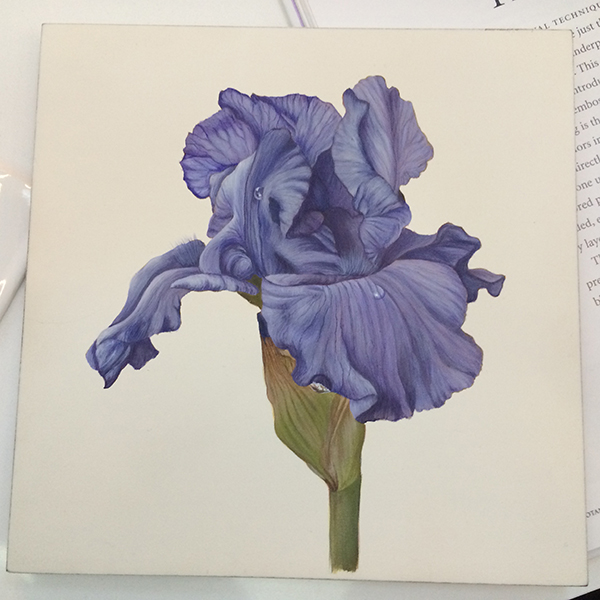
Iris painting in egg tempera by Laurence Peirson. Photo by Beth Stone.

Laurence Pierson’s palette looks like a jewel box. Photo by Beth Stone.
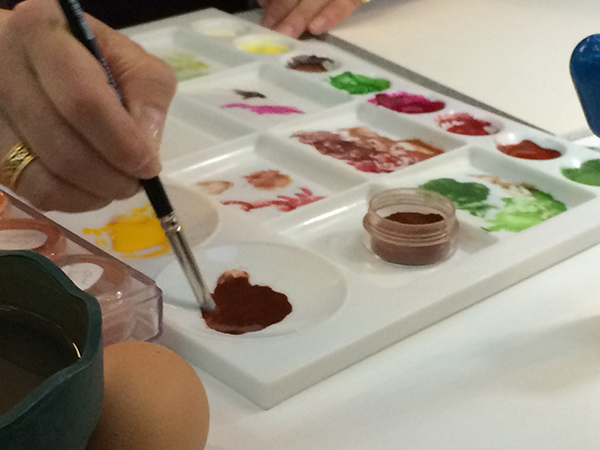
Laurence Peirson mixing egg tempera. Photo by Beth Stone.
by Deb Shaw
Some of our BAGSC members are lucky to stay for the post-conference workshops, but many of the rest of us have gotten home. We had a great response to our “Live from the Conference” postings; many sent emails letting us know how much they enjoyed the posts. I’m sorry I was struggling with a technology meltdown and couldn’t get all of them up sooner. I believe I now have the technology (mostly) behaving, and will get things posted as quickly as possible.
![[Brush holder] The Rocky Mountain Chapter made (yes, HANDMADE) pine brush holders for each of the conference attendees. Photo is of my new brush holder, happily ensconced in its new home on my work table. Photo by Deb Shaw.](https://bagscblog.com/wp-content/uploads/2014/10/brushholderfront.jpg)
[Brush holder] The Rocky Mountain Chapter made (yes, HANDMADE) pine brush holders for each of the conference attendees. Photo is of my new brush holder, happily ensconced in its new home on my work table. Photo by Deb Shaw.
Thank you to the Rocky Mountain Society of Botanical Artists and ASBA for all your hard work. And thank you to the roving BAGSC reporters who sent in stories and photos. If you have any more, keep ’em coming and I’ll get them posted. For readers; lots more to come.
See you next year at the Weird, Wild & Wonderful Symposium at the Huntington in the Summer, and at the ASBA Annual Meeting and Conference in Miami in October.
Happy painting!
![[Brush holder back] Susan Fisher explained that the wood came from pine trees harvested after being killed by Mountain Pine Beetles (Dendroctonus ponderosae), native to the forests of western North America. The blue color of the wood is the result of staining from the beetle infestation. Libby Kyer designed the logo on the back, which was also on the water bottles donated by Libby and her husband. Photo by Deb Shaw.](https://bagscblog.com/wp-content/uploads/2014/10/brushholderback.jpg)
[Brush holder back] Susan Fisher explained that the wood came from pine trees harvested after being killed by Mountain Pine Beetles (Dendroctonus ponderosae), native to the forests of western North America. The blue color of the wood is the result of staining from the beetle infestation. Libby Kyer designed the logo on the back, which was also on the water bottles donated by Libby and her husband. Photo by Deb Shaw.
 BAGSC News